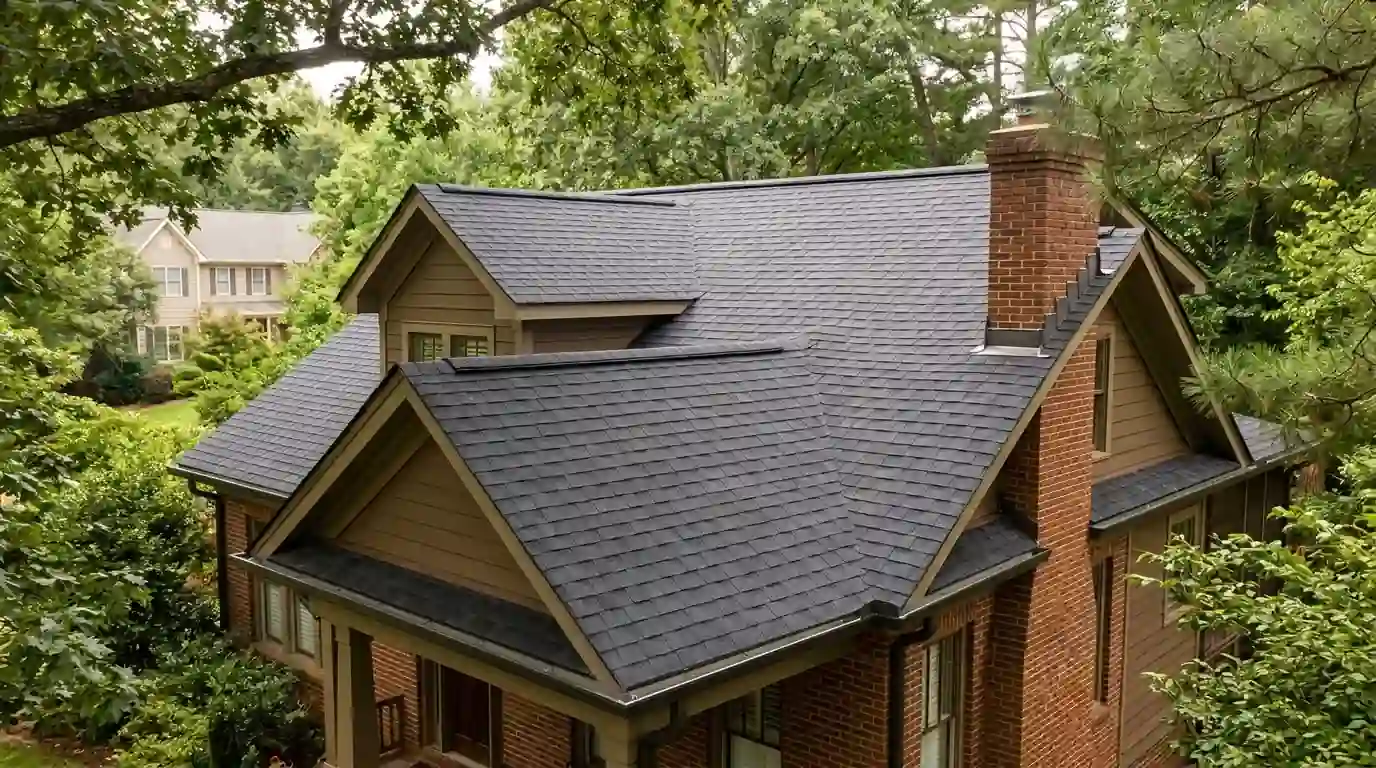
In 2026, most metro Atlanta homes with architectural asphalt shingles land somewhere between $11,640 and $21,380 for a full tear-off and replacement. Smaller ranches can come in lower, and large, steep two-stories with multiple layers or rotten decking can run well past that. The biggest drivers are roof size, pitch, how many layers come off, decking repairs, the material you choose and how easy the roof is to reach.
How roofers price a roof in squares
Roofers price by the square, which is 100 square feet of roof surface. Your roof is bigger than your floor plan because of pitch and overhangs, so a 2,000 square foot two-story might carry 18 to 22 squares while a 2,000 square foot ranch can carry 26 to 32. For architectural shingles installed on a typical walkable roof around Atlanta, we usually see $463 to $687 per square in 2026. That range covers tear-off, disposal, new underlayment, starter strips, drip edge, ridge cap, pipe boots and labor. It does not include decking repairs or upgrades like ridge vent.
This is why two neighbors with similar houses can get very different numbers. The roof plan, not the living space, sets the price. A simple gable roof with two big planes goes fast. A 1990s Gwinnett or north Fulton house with a dozen hips, valleys, dormers and a turret takes more cutting, more waste and more flashing. Every valley needs metal or woven shingles, and every wall where a roof meets siding needs step flashing. On complicated roofs, waste alone can climb from about 10 percent to well over 15 percent of the shingles ordered.
The five things that move the price most
Once we know the number of squares, a handful of factors decide if you land at the low or high end of the range. None of them are hidden fees. They are what the roof actually takes to do properly, and a written estimate should show each one as its own line so you can compare bids fairly. If one roofer's number is far below everyone else's, the difference usually sits in one of these items: skipped decking repairs, reused flashing, or new shingles quietly laid over the old ones.
- Pitch. Steep roofs, roughly 8/12 and up, need roof jacks, harnesses and slower work. Expect steep charges of about $38 to $96 more per square on the steepest planes.
- Layers. Each extra layer of old shingles adds tear-off time, labor and dump weight. Removing a second layer often adds $47 to $83 per square to the job.
- Decking. Soft or delaminated plywood and OSB gets cut out and replaced. Sheets typically run $72 to $118 each, installed, and we only replace what has failed.
- Material. Architectural asphalt is the baseline. Impact-resistant shingles, standing seam metal, synthetic slate and natural slate each move the price up in clear steps.
- Access. Tight lots, steep driveways, pools, fences and big landscaping beds slow tear-off and cleanup, and sometimes mean hand-carrying debris to the dumpster.
Rough 2026 ranges by material
Material choice sets the ceiling. These are typical installed ranges we see around metro Atlanta, assuming a single-layer tear-off on a walkable roof, and they shift with the roof. Architectural asphalt shingles from brands like GAF, Owens Corning or CertainTeed sit at the base. Class 4 impact-resistant asphalt shingles usually add about $54 to $129 per square, and some insurers offer a premium discount for them. Stone-coated steel lands around $9.40 to $13.85 per square foot. Standing seam metal often runs $11.65 to $17.90 per square foot, because the panels are custom run and fastened with hidden clips.
Synthetic slate from makers such as DaVinci or Brava commonly lands between $13.40 and $19.75 per square foot, and natural slate on a historic Inman Park or Druid Hills home can go much higher once copper flashing and specialty labor are added. Low-slope sections over porches or additions are priced separately, usually with modified bitumen or TPO. If you are comparing materials, think in cost per year. A metal roof that lasts twice as long as asphalt can make sense on a house you plan to keep, and less sense on one you plan to sell in three years.
Costs that show up after tear-off
The one number nobody can promise before tear-off is decking. We can feel soft spots when we walk a roof and see stains from the attic, but the full picture only shows once the old shingles are off. Houses built in the 1970s and 1980s around Marietta, Tucker and Stone Mountain sometimes have plank decking with gaps, or old plywood that has delaminated from decades of attic heat. A fair estimate lists a per-sheet price in writing, so you know exactly what a surprise will cost before the crew finds it.
Ventilation is the other common add. Many older Atlanta attics have a few box vents and painted-over soffits, which cooks shingles from below in July. Adding ridge vent and opening soffit intake during a replacement is usually far cheaper than doing it later. Other items that can appear on the final bill are new drip edge where the old one was missing, chimney flashing or a cricket behind a wide chimney, skylight flashing kits, rotten fascia boards, and permit fees, which vary by city and county across the metro. We list each one before work starts.
How to compare estimates and plan the job
Get at least two or three written estimates and line them up item by item. The same squares, the same shingle line, the same underlayment and the same flashing plan should be on each one. Ask how decking is priced and how many sheets are included. Ask whether old flashing is being replaced or reused. Spring and fall are the busiest seasons around Atlanta, so booking in late winter or midsummer can mean more open dates on the calendar. Most single-family roofs are torn off and dried in within one to two days, weather permitting.
- Ask about squares and waste. The estimate should list the roof size in squares and the waste factor, so you can see that every bid is pricing the same amount of shingles.
- Get decking prices in writing. A per-sheet replacement price stops surprises at tear-off. Ask how many sheets, if any, are already included in the base price you were given.
- Check the flashing plan. New step flashing, pipe boots and valley metal cost little during a tear-off and save you expensive leak calls a few years down the road.