Emergency Roof Tarping in Atlanta, GA
When a storm or fallen limb opens your roof and more rain is on the way, you need a tarp on fast, fastened well enough to survive the next gust.
- Phones answered 24/7 at (470) 876-1496
- Photos of every problem spot before any work
- Line-item written scope
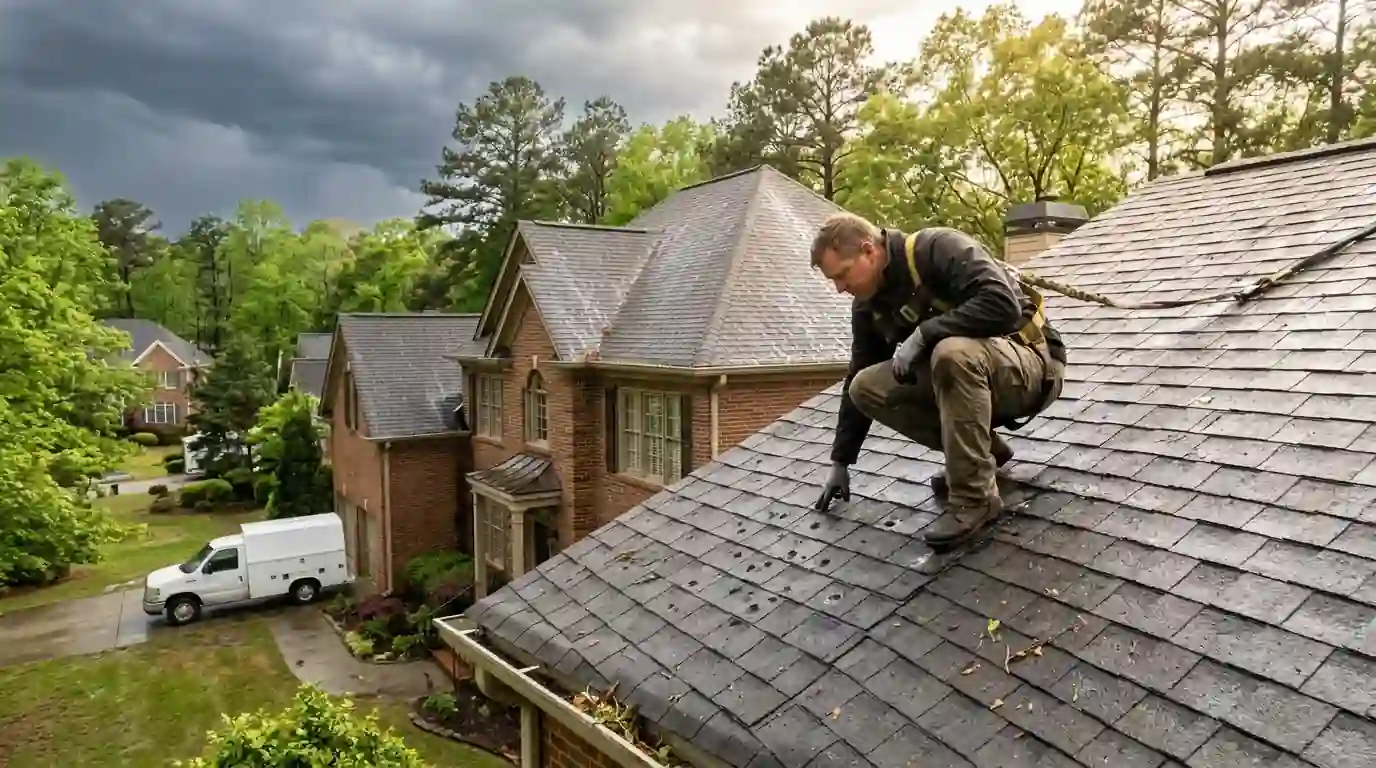
Emergency roof tarping covers a damaged roof with a heavy tarp fastened by wood battens to keep water out until permanent repairs are made. In Atlanta you need it after thunderstorms, wind, hail or falling trees leave openings or missing shingles, especially when more rain is in the forecast. Most tarping jobs run about $415 to $1,365 based on the size of the area, roof pitch and how quickly we need to be there.
A tarp seems simple until you see one that has failed. Tarps held down with bricks or sandbags slide off, flap and tear apart in the first strong wind. Tarps that do not reach over the ridge let water run under the top edge. Tarps nailed directly through the plastic rip at the nail holes. A good emergency tarp is a heavy-duty sheet sized well past the damaged area, run over the ridge when possible and fastened with wood battens screwed through the tarp into the roof deck, so the load spreads along the boards instead of tearing at single points.
We keep tarps, battens, screws and membrane on our trucks for this reason. When you call, we ask about the damage, the forecast and whether water is getting in, then send a crew as quickly as conditions allow. Before the tarp goes on, we photograph the damage for your insurer. Afterward, we check inside to make sure water has stopped. A well-installed tarp buys time to sort out the claim, order materials and schedule the permanent repair. It is not a fix in itself, and we always plan the next step before we leave.

Emergency Roof Tarping on a metro Atlanta home.
When should you call for an emergency roof tarp?
Missing shingles before rain
If wind stripped shingles and more rain is forecast, a tarp over the exposed underlayment keeps water out until the shingles can be replaced properly.
Hole from a fallen limb
Punctures from branches go straight through the decking. Any opening that lets you see the attic from the roof needs cover right away, before nightfall if possible.
Active leak after a storm
Water dripping into the house after a storm means the roof is open somewhere. Tarping the suspect area stops further damage while we find the source.
Torn underlayment showing
When shingles and underlayment have both torn away, bare decking soaks up water quickly and can swell or delaminate within just a few rainy days.
Waiting on insurance or materials
If the permanent repair must wait for an adjuster visit or special order shingles, a tarp protects the house in the meantime and helps show you limited further damage.
Old tarp failing
A tarp put on by someone else that is flapping, torn or held down with bricks should be replaced with a properly battened one before it lets water in.
How we install an emergency roof tarp that holds
Assess and photograph
We look at the damaged area, check for hazards like downed lines or broken framing and photograph the damage before covering it, for your insurance file.
Clear the surface
Loose debris, branches and broken shingle pieces are cleared so the tarp lies flat and nothing sharp punctures it once it is pulled tight over the area.
Size and position the tarp
We choose a heavy-duty tarp that extends well beyond the damage on all sides, ideally running over the ridge so water cannot get under the top edge.
Fasten with wood battens
The tarp edges are wrapped around wood battens and screwed into the decking, spreading the hold along each board so wind cannot rip it loose at single points.
Seal the edges
Where needed, we add membrane tape or extra battens along edges and seams to keep wind-driven rain from creeping under the tarp during a long, heavy storm.
Check inside and plan next steps
We confirm water has stopped inside, then talk with you about the permanent repair, the insurance timeline and when we will check the tarp again.
We install and repair shingles from GAF, Owens Corning, CertainTeed and Atlas, metal panels from Englert, membranes from Carlisle and skylights from Velux, matched to the roof already on your house.
What emergency roof tarping costs in metro Atlanta
Size of the damaged area
A small puncture needs a modest tarp and a few battens. A large section across a slope needs bigger tarps, more lumber and more crew time.
Roof pitch and height
Tarping a steep second-story roof safely requires harnesses and anchors. Low, walkable roofs over porches or ranch homes go faster.
Time and conditions
Calls in the middle of the night, during ongoing weather or right after a major storm cost more because crews are dispatched urgently.
Structural bracing
If a limb cracked rafters, temporary bracing may be needed before a tarp can go on safely, adding lumber and time to the visit.
Tarp checks and replacement
If the permanent repair is delayed for weeks, we may need to check, retighten or replace the tarp after strong storms, which adds visits.
These are typical ranges from recent Atlanta-area jobs, not a quote. See every service side by side on our roof prices page, or call (470) 876-1496 for a visit.
Why tarping matters during Atlanta storm season
Storms in the Atlanta metro often come in clusters. A spring squall line can be followed by more storms the next day, and summer afternoon thunderstorms tend to repeat during hot, humid stretches. That means a roof damaged on Tuesday may face another heavy downpour on Wednesday. After widespread events, roofers and adjusters get busy, and permanent repairs can take a little while to schedule. In that gap, a good tarp is what keeps water out of attics, insulation and ceilings. Our humidity makes the stakes higher, because wet insulation and drywall can start growing mold within a couple of days. Tarping quickly after damage is often the single most useful step a homeowner can take.
Not sure whether last night's storm did real damage? Try our hail damage check first, then call and we will look in person.
Temporary roof cover options
Battened poly tarp
The standard emergency cover. A heavy-duty reinforced poly tarp fastened with wood battens screwed into the decking. It handles most storm damage and can hold for several weeks in typical Georgia weather.
Peel-and-stick membrane cover
For smaller openings on solid decking, a self-adhering underlayment patch bonds directly to the roof. It lies flatter than a tarp, resists wind well and often lasts longer while you wait on repairs.
Temporary decking plus tarp
When a limb has broken through the decking, we screw in temporary plywood over the hole first, then tarp over it. That gives the tarp a solid surface and keeps animals out.
Shrink-wrap roof cover
For very large or complex damage, a heat-shrunk plastic film can wrap a section tightly. It costs more and is less common on homes, but it suits long delays on bigger roofs.
Emergency Roof Tarping across the Atlanta metro
These are the largest places we cover. Every one of our 71 service areas gets the same service.
- Atlanta 30305
- Sandy Springs 30328
- Roswell 30075
- Johns Creek 30022
- Alpharetta 30004
- Marietta 30060
- Smyrna 30080
- Dunwoody 30338
- Brookhaven 30319
- Duluth 30096
- Lawrenceville 30043
- Kennesaw 30144
- Peachtree Corners 30092
- Decatur 30030
- Milton 30004
- Woodstock 30188
- Cumming 30028
- Stockbridge 30281
- McDonough 30252
- Douglasville 30134
Emergency Roof Tarping questions from Atlanta homeowners
How long can an emergency roof tarp stay on in Georgia weather?
A properly battened heavy-duty tarp can typically hold for several weeks, sometimes a few months. Georgia sun breaks down the plastic over time, and strong storms can loosen it, so it is not a long-term fix. We aim to make the permanent repair as soon as the claim, materials and weather allow, and we check the tarp after big storms.
Does homeowners insurance cover emergency roof tarping costs?
Many policies cover reasonable steps to prevent further damage after a covered event, and emergency tarping commonly falls under that. Coverage depends on your policy. Keep the receipt and photos we provide, and let your insurer know the tarp was installed to protect the home. It also helps show you acted quickly to limit damage.
Can I tarp my own roof after a storm?
We strongly recommend against climbing onto a wet, damaged roof, especially at night, in wind or on a steep pitch. Falls from roofs cause serious injuries. A tarp held by bricks or a few nails often fails quickly anyway. If water is coming in, protect the inside with buckets and plastic, and let a roofing crew handle the tarp.
Will an emergency roof tarp damage my shingles?
Battens screwed through the tarp leave small screw holes in the shingles or decking beneath. Those are sealed or covered when the permanent repair is done, and on damaged areas the shingles are usually being replaced anyway. We place battens to limit how many holes are needed, keeping them on the damaged section where we can.
Services that often go with this one
Emergency Roof Repair
Emergency roof repair around the clock when water is coming in, a section is torn open or a storm just hit.
Learn more ›Tree Damage Roof Repair
Tree damage roof repair after limbs or whole trees fall on the house, from tarping and framing to new decking and shingles.
Learn more ›Storm Damage Roof Repair
Storm damage roof repair after wind, hail, heavy rain or falling limbs, with clear photos for your insurance claim.
Learn more ›Need emergency roof tarping in Atlanta?
Call (470) 876-1496. A person answers 24/7 and a roofer from our Alpharetta office follows up with a visit and photos.