Roof Decking Replacement in Atlanta, GA
The roof feels soft when you walk it, the ceiling stain keeps spreading, or the old boards under the shingles are rotting, and new shingles alone will not fix that.
- Phones answered 24/7 at (470) 876-1496
- Photos of every problem spot before any work
- Line-item written scope
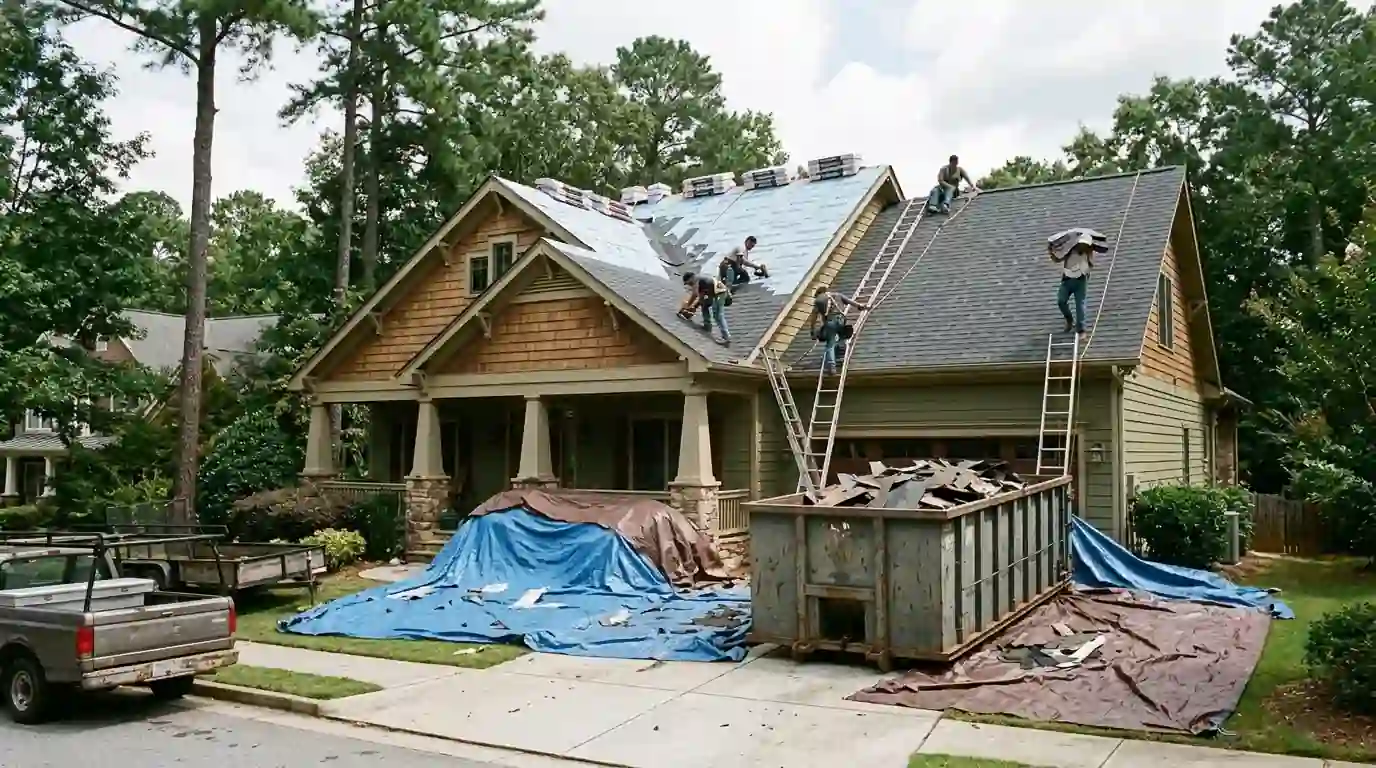
Roof decking replacement means cutting out rotted, soft or delaminated plywood, OSB or plank boards and installing new sheathing before the roof is shingled. Atlanta homes usually need it around old leaks, chimneys, valleys and poorly vented attics, and almost always during a replacement. Each replaced 4-by-8 sheet typically runs $78 to $136 installed, with whole-roof redecking priced separately.
Decking, also called sheathing, is the layer of plywood, OSB or boards nailed to your rafters. Everything else on the roof depends on it. Shingle nails need solid wood to grip, underlayment needs a flat surface, and the deck itself carries snow, wind uplift and the weight of anyone working up top. When decking gets wet over and over, it softens, swells and eventually rots. You can feel it as a spongy spot underfoot or see it from the attic as dark, flaking sheathing. Shingling over bad decking is the most common shortcut we find when we tear off a younger roof that failed early.
Most of the time we replace decking during a full tear-off, because that is when the whole deck is exposed and easy to inspect. We walk every sheet, mark the soft ones and show you photos before cutting. Your scope lists a per-sheet price ahead of time, so the number is never a surprise. We also replace smaller sections during leak repairs, such as around a chimney or skylight where water has been sneaking in. Wherever we find a lot of rot, we look for the cause, whether it is a missing kickout flashing, a bathroom fan venting into the attic or simply too little ventilation.
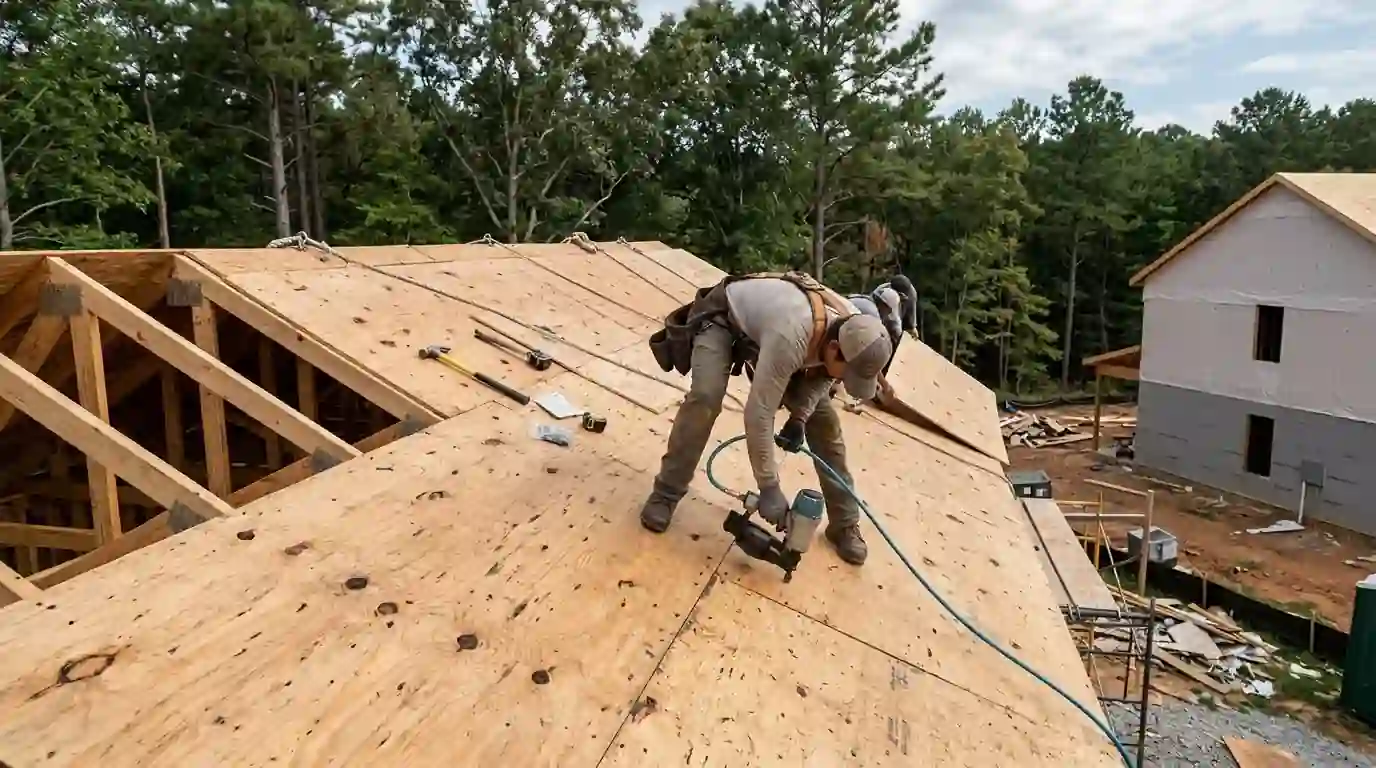
Roof Decking Replacement on a metro Atlanta home.
Decking materials and approaches we use
CDX plywood sheathing
Exterior-grade plywood holds nails well, tolerates brief wetting better than OSB and stays stiff. It costs a bit more, and we often recommend it around valleys, chimneys and other areas prone to leaks.
OSB sheathing
Oriented strand board is the most common decking on 1990s and newer Atlanta homes. It is cost-effective and strong when dry, but it swells if it stays wet, so ventilation and good flashing matter.
Plywood overlay on plank decking
On older homes with board decking, we can install a full layer of plywood over the planks. That gives modern shingles a solid surface with no gaps, without removing the original boards.
Full roof redecking
When most of the deck is damaged or delaminated, replacing every sheet gives the new roof a uniform, flat base. It costs more upfront but avoids patching dozens of separate spots.
What roof decking replacement costs in metro Atlanta
Number of sheets replaced
A few sheets around a chimney cost far less than redecking an entire slope. Larger quantities sometimes lower the per-sheet price a little, since setup time is shared.
Plywood or OSB thickness
Most homes use 7/16 or 1/2 inch sheathing. Thicker 5/8 inch plywood costs more but gives a stiffer deck for heavy roofing like slate or tile.
Plank deck overlays
Old homes with gapped plank boards may need a full layer of new plywood over the planks, which is priced by the whole roof instead of per sheet.
Rafter and fascia damage
When rot has spread into rafter tails, fascia boards or framing, those repairs are added to the decking work and priced by the piece or foot.
Roof pitch and access
Carrying sheets up steep or tall roofs takes more labor. Cutting and fitting decking around chimneys, skylights and dormers also slows each sheet down.
These are typical ranges from recent Atlanta-area jobs, not a quote. See every service side by side on our roof prices page, or call (470) 876-1496 for a visit.
We install and repair shingles from GAF, Owens Corning, CertainTeed and Atlas, metal panels from Englert, membranes from Carlisle and skylights from Velux, matched to the roof already on your house.
Our process for finding and replacing bad roof decking
Attic inspection first
Before any tear-off, we check the attic for stains, soft spots, mold and daylight, and look at the vents and bath fans that may have caused moisture problems.
Strip and expose the deck
During the tear-off we remove shingles, felt and nails down to bare wood, so every single sheet can be seen, walked and tested by hand.
Mark and photograph damaged sheets
Soft, rotted or delaminated areas are marked with paint and photographed. We show you the photos and the sheet count before cutting so you know the cost up front.
Cut out and replace
Damaged sheathing is cut back to the rafters, and new plywood or OSB of the same thickness is installed with proper spacing, staggered joints and edge clips where required.
Fasten to the rafters
We nail the new sheets on the correct pattern for edges and field, and renail any loose existing sheets, which helps the whole deck resist wind uplift.
Fix the cause and dry in
We address the leak source or ventilation problem, then cover the new decking with drip edge and underlayment the same day, before any shingling begins.
Why Atlanta attics are hard on roof decking
Moisture is what ruins roof decking, and Atlanta has plenty of it. Our humid summers push warm, damp air into attics, and when ventilation is weak that moisture condenses on the underside of the sheathing. We see this often in 2000s subdivisions across Forsyth and Gwinnett where OSB decks were paired with too few vents and bath fans dumped steam straight into the attic. Long-standing leaks at chimneys and valleys, especially under pine needle buildup, add more rot. On intown bungalows in Kirkwood and East Atlanta, the decking is often original plank boards with gaps that were fine for wood shakes but not for modern asphalt shingles.
We serve the whole metro from our Alpharetta office, so north Fulton, Forsyth and east Cobb calls are usually the quickest to schedule.
How can you tell your roof decking has gone bad?
Soft or bouncy spots on the roof
If one area flexes when you step on it, the plywood or OSB below has likely softened or rotted. Shingles there will not stay nailed or sealed for long.
Sagging between rafters
Gentle dips that follow the rafter lines show the deck has lost stiffness. On older homes this can also mean undersized boards carrying too much weight from extra layers.
Dark stains on attic sheathing
Look up in the attic with a flashlight. Black, gray or water-ringed spots on the underside of the deck mean moisture has been getting in from leaks or condensation.
Mold or musty smell in the attic
A damp, musty attic often means poor ventilation is trapping moisture against the decking. Over time that weakens the wood and grows mold on the sheathing.
Shingles that will not lie flat
Ripples, bulges or nails backing out across one area often point to swollen OSB or warped boards. New shingles laid on that will show the same lumps.
Daylight through the roof boards
Light visible between old plank boards, or through holes in sheathing, means the deck is no longer solid. It will also let wind-driven rain reach the attic.
Roof Decking Replacement across the Atlanta metro
These are the largest places we cover. Every one of our 71 service areas gets the same service.
- Atlanta 30305
- Sandy Springs 30328
- Roswell 30075
- Johns Creek 30022
- Alpharetta 30004
- Marietta 30060
- Smyrna 30080
- Dunwoody 30338
- Brookhaven 30319
- Duluth 30096
- Lawrenceville 30043
- Kennesaw 30144
- Peachtree Corners 30092
- Decatur 30030
- Milton 30004
- Woodstock 30188
- Cumming 30028
- Stockbridge 30281
- McDonough 30252
- Douglasville 30134
Roof Decking Replacement questions from Atlanta homeowners
How do roofers know how much decking replacement a roof will need before tear-off?
We can estimate from the attic and from soft spots we feel on the roof, but the exact count is known only after tear-off. That is why your scope lists a per-sheet price. We photograph every marked sheet and show you before replacing it, so you can see the damage and the count are real.
Is OSB or plywood better for roof decking in Georgia's humidity?
Both work well when the roof is properly flashed and the attic is vented. Plywood handles brief wetting a bit better and holds nails slightly tighter. OSB costs less and is stiff and uniform. We often use plywood near valleys and chimneys and OSB in the field, or plywood throughout if you prefer.
Can you replace roof decking without replacing all the shingles?
Yes, for small areas. We remove the shingles around the damaged spot, replace the decking, then reinstall new underlayment and shingles that blend with the existing roof. On older roofs, finding a close color can be hard, so we will show you the best available option before starting.
Does my plank board roof decking need to be replaced for new shingles?
Not always. If the boards are solid with small gaps, we can often overlay them with plywood. If many boards are rotted, broken or have wide gaps, replacing or overlaying them is required for shingle nails to hold and for most shingle makers to back their material warranty.
Services that often go with this one
Roof Tear-Off
Full roof removal down to bare decking, with careful site protection, nail cleanup and a clear look at the wood underneath.
Learn more ›Roof Replacement
Full reroofing for Atlanta homes: tear-off, decking repair, new underlayment, flashing, vents and shingles, done right in one visit.
Learn more ›Attic Insulation
Blown-in and batt attic insulation added or replaced to cut summer heat, lower cooling bills and protect the roof deck.
Learn more ›Need roof decking replacement in Atlanta?
Call (470) 876-1496. A person answers 24/7 and a roofer from our Alpharetta office follows up with a visit and photos.