Chimney Cricket Installation in Atlanta, GA
When water, pine needles and leaves pile up on the uphill side of a wide chimney, the flashing there sits in a puddle every storm and eventually lets water into the attic.
- Phones answered 24/7 at (470) 876-1496
- Photos of every problem spot before any work
- Line-item written scope
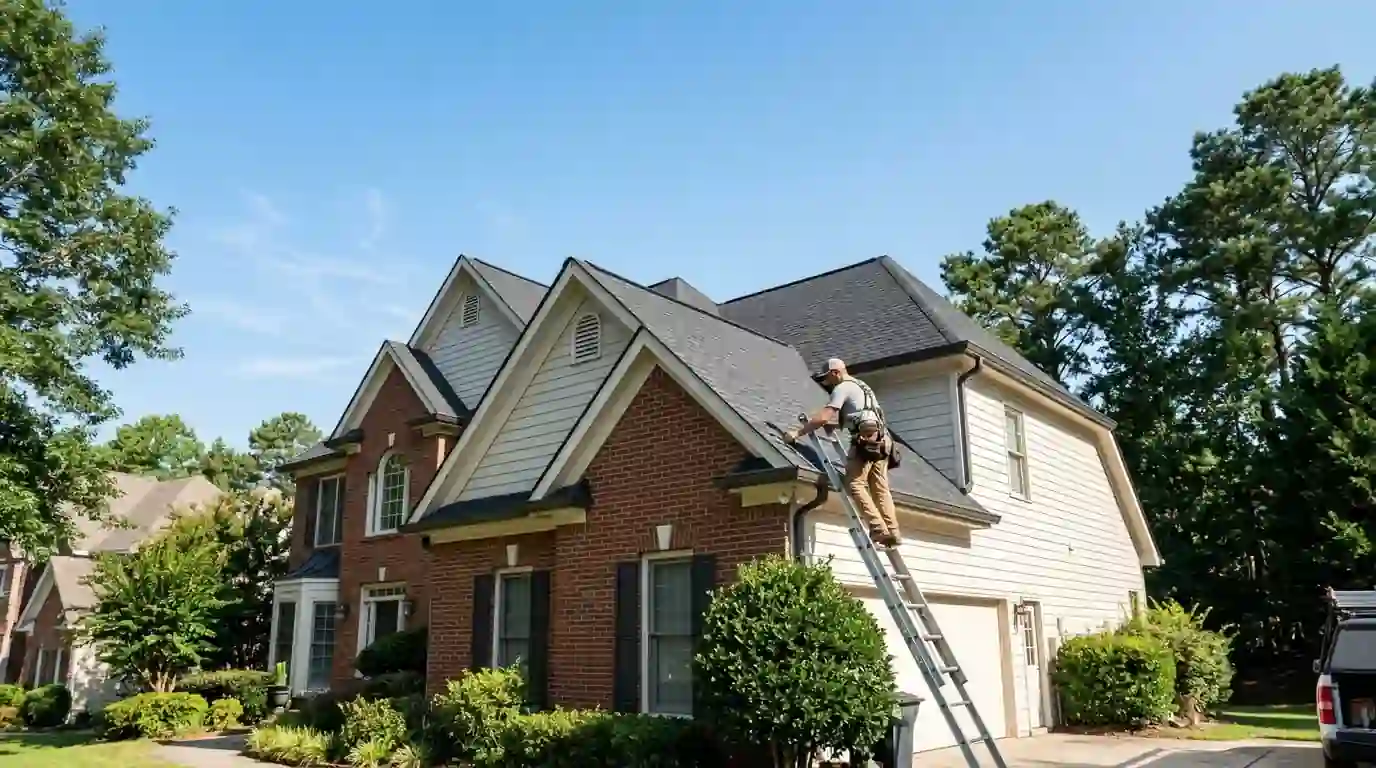
A chimney cricket, sometimes called a saddle, is a small peaked structure built on the uphill side of a chimney to divert water around it. In Atlanta you need one when a chimney is wider than about 30 inches, debris collects behind it or leaks keep coming back at the back flashing. Installed crickets typically run about $865 to $2,485 per cricket.
Picture rain running down a roof slope and hitting the broad back wall of a chimney. With nowhere to go, the water pools, slows down and soaks into whatever gaps it can find in the flashing. Leaves and pine needles settle there too, holding moisture against the brick and the counterflashing for days after a storm. A cricket fixes that with a simple shape. It is a small framed ridge, sheathed and roofed, that splits the flow and sends water around both sides of the chimney. Wide chimneys on many older Atlanta homes never had one, and leaks behind them are among the most common calls we get.
Building a cricket is real carpentry and flashing work, not a patch. We frame it from lumber to fit the chimney width and roof pitch, sheath it with plywood and cover it with ice and water membrane before shingles or metal go on. The flashing where the cricket meets the chimney is the critical part. We install new step flashing and counterflashing cut into the mortar joints so the whole back of the chimney is sealed. Some homeowners choose a fully metal cricket, which holds up well and sheds debris easily. Either way, the result is a chimney that no longer sits in standing water.
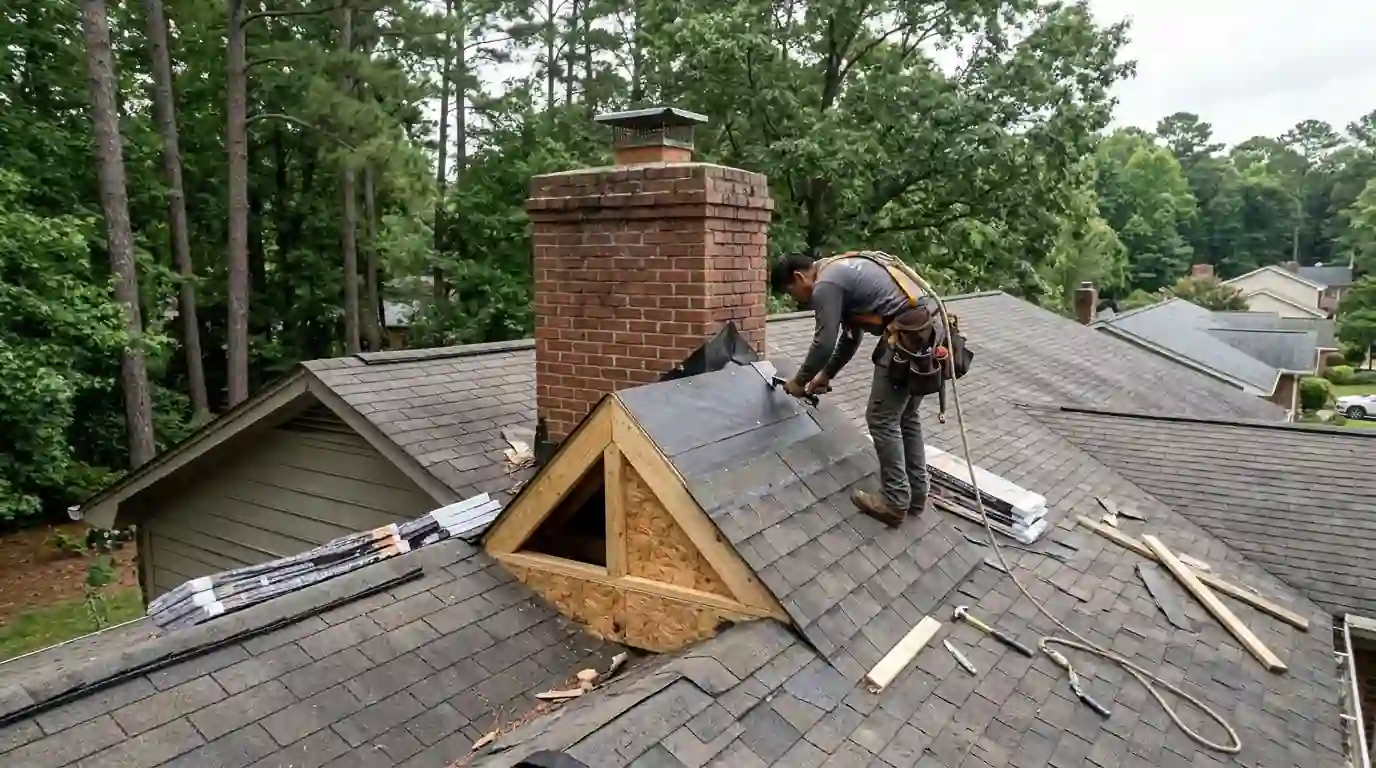
Chimney Cricket Installation on a metro Atlanta home.
Does your chimney need a cricket to stop water from pooling?
Wide chimney with no saddle
Chimneys wider than about 30 inches across the uphill side should have a cricket. If you see a flat area of shingles behind the brick, water is collecting there.
Recurring back-side leaks
Leaks that show up on the ceiling or attic framing near the back of the chimney, even after flashing repairs, often mean water is pooling faster than any flashing can shed.
Debris piling behind chimney
Pine needles, leaves and twigs that collect in a pile behind the chimney after every storm hold moisture against the flashing and speed up rot underneath.
Rotted deck behind brick
Soft spots in the roof deck directly uphill from the chimney, or dark staining on the sheathing in the attic there, point to long-term standing water.
Moss or algae at the chimney
Green growth on the shingles right behind the chimney shows that area stays wet much longer than the rest of the roof after each rain.
Mortar and brick damage
Crumbling mortar, spalled brick or white staining on the back face of the chimney can come from water that splashes and soaks there during storms.
Why Atlanta chimneys collect so much water and debris
Big brick chimneys are common on Atlanta homes from the 1920s through the 1970s, from intown Craftsman bungalows in Virginia-Highland and Inman Park to wide ranch chimneys in Tucker and Stone Mountain. Many were built before crickets were routinely required, so they sit with a flat back side facing up the slope. Add the metro's tree cover, and the area behind the chimney becomes a catch basin for pine needles, oak leaves and sweetgum balls. Summer thunderstorms then push heavy water into that pile. Humidity keeps it from drying out between storms. A cricket keeps water moving around the chimney, which protects the flashing, the brick and the deck below, and it cuts down on how often the area needs clearing.
If you are comparing scopes from more than one roofer, ask each for the same line items: underlayment, flashing, vents, decking allowance and disposal. It makes the numbers comparable.
We install and repair shingles from GAF, Owens Corning, CertainTeed and Atlas, metal panels from Englert, membranes from Carlisle and skylights from Velux, matched to the roof already on your house.
How we build and flash a chimney cricket
Measure the chimney
We measure the chimney width, roof pitch and the space behind it, then work out the cricket ridge height and slope that will shed water cleanly.
Strip the area
Shingles, old flashing and underlayment behind and beside the chimney come off. We check the exposed deck for rot and replace any damaged plywood before building.
Frame the cricket
We cut and set a ridge board and valley framing that fit the chimney, fastening everything to the roof deck and rafters so it is solid underfoot.
Sheath and membrane
The frame is covered with plywood, then the entire cricket and the area around it get ice and water membrane, lapped up the brick for extra protection.
Shingle or metal cover
We roof the cricket with shingles woven into the main roof, or with formed metal, and install new step flashing where each slope meets the brick.
Counterflashing and check
Counterflashing is cut into the mortar joints and sealed so it laps over the step flashing. We water test the area and clear away all debris.
What chimney cricket installation costs in metro Atlanta
Chimney width
A chimney just over 30 inches needs a small cricket. Very wide chimneys on older homes need longer framing, more sheathing and more flashing material.
Roof pitch
Steeper roofs need a taller cricket and more careful staging for safe work. Low slopes need a cricket shaped to move water without creating a new low spot.
Shingle or metal cover
Shingle-covered crickets cost less. Metal crickets in aluminum, steel or copper cost more but last longer and shed pine needles and leaves very well.
Deck repair
Standing water behind old chimneys often rots the deck. Replacing that plywood before framing the cricket adds material and time to the job.
Flashing and masonry
New step flashing and counterflashing are standard. Repointing crumbling mortar or repairing brick so counterflashing can seat properly adds masonry cost.
These are typical ranges from recent Atlanta-area jobs, not a quote. See every service side by side on our roof prices page, or call (470) 876-1496 for a visit.
Cricket materials and building methods
Framed shingle cricket
A wood frame sheathed with plywood, covered with ice and water membrane and shingled to match the roof. It is the most common choice and blends in with the surrounding shingles.
Formed metal cricket
A cricket covered in aluminum, painted steel or copper. Metal sheds needles and leaves quickly and resists rot, and it works well behind wide chimneys on homes surrounded by trees.
Copper cricket
Copper crickets suit historic homes with copper flashing and gutters. They weather to a warm brown and then green patina, last a very long time and look right at home on older brick chimneys.
Cricket with roof replacement
Adding a cricket during a full roof replacement costs less, because the shingles are already off. The cricket and its new flashing then tie directly into the fresh underlayment and the rest of the new roof.
Chimney Cricket Installation across the Atlanta metro
These are the largest places we cover. Every one of our 71 service areas gets the same service.
- Atlanta 30305
- Sandy Springs 30328
- Roswell 30075
- Johns Creek 30022
- Alpharetta 30004
- Marietta 30060
- Smyrna 30080
- Dunwoody 30338
- Brookhaven 30319
- Duluth 30096
- Lawrenceville 30043
- Kennesaw 30144
- Peachtree Corners 30092
- Decatur 30030
- Milton 30004
- Woodstock 30188
- Cumming 30028
- Stockbridge 30281
- McDonough 30252
- Douglasville 30134
Chimney Cricket Installation questions from Atlanta homeowners
What size chimney needs a chimney cricket?
Most building codes call for a cricket on chimneys wider than 30 inches along the uphill side, though some roofers add them to narrower chimneys on low slopes or under heavy tree cover. If water or debris collects behind your chimney, a cricket is worth considering no matter what the exact width is.
Can a chimney cricket installation be done without a new roof?
Yes. We remove the shingles and flashing behind and around the chimney only, build the cricket and tie it into the surrounding roof with new shingles and flashing. It is a contained job. If the roof is close to replacement, adding the cricket at that time costs less overall.
Will a cricket stop my chimney leak for good?
A cricket removes the standing water that causes many leaks behind the chimney. If the leak also comes from cracked crowns, failing mortar or bad side flashing, those need repair too. We check the whole chimney while we build the cricket, so you know whether anything else needs attention to stop the leak.
Does a metal chimney cricket make noise in the rain?
A metal cricket over solid plywood sheathing and underlayment is not noticeably louder than the rest of the roof. The deck and attic insulation dampen the sound. The noise people associate with metal roofs comes from metal installed over open framing, which is not how we build crickets.
Services that often go with this one
Chimney Flashing Repair
Chimney flashing repair with new step, counter and cricket flashing that keeps water out of the joint between brick and roof.
Learn more ›Roof Leak Repair
Roof leak repair that traces the water back to where it really gets in, then fixes that spot for good.
Learn more ›Flashing Repair
Flashing repair at walls, dormers, chimneys and roof edges, replacing rusted or caulked metal with properly layered new flashing.
Learn more ›Need chimney cricket installation in Atlanta?
Call (470) 876-1496. A person answers 24/7 and a roofer from our Alpharetta office follows up with a visit and photos.