Flat Roof Repair in Atlanta, GA
Water dripping from the ceiling under a flat roof, a carport or a rear addition usually means a seam, drain or wall flashing has opened up, and low slopes leak fast once that happens.
- Phones answered 24/7 at (470) 876-1496
- Photos of every problem spot before any work
- Line-item written scope
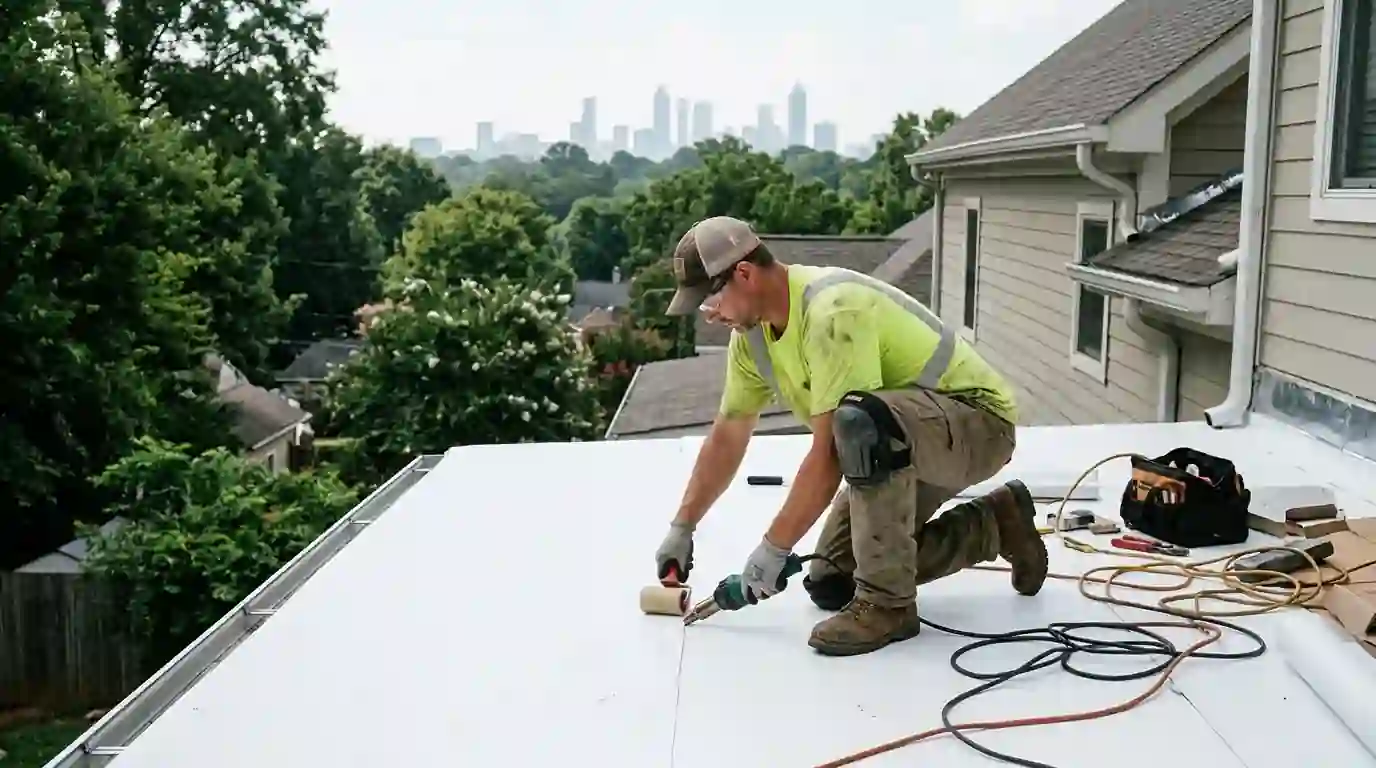
Flat roof repair fixes leaks and wear on low-slope roofs covered in TPO, EPDM, modified bitumen, built-up tar and gravel, or roll roofing. In Atlanta you need it when water stains appear under an addition, porch or carport, when water stands for days after rain, or when seams and flashings split. Most flat roof repairs here cost $465 to $2,380, based on material and damage.
A flat roof is never truly flat. It needs a slight pitch toward drains, scuppers or gutters, and when that pitch is lost or the drain clogs, water sits and looks for a way in. Unlike a shingle roof, where water runs off in seconds, a low-slope roof has to stay watertight while puddles sit on it for hours. That is why small defects matter so much. A loose seam, a nail pop through roll roofing or a crack at the wall flashing can soak insulation and decking long before you see a stain on the ceiling below.
We repair every common flat roof material in the metro, including TPO, EPDM rubber, modified bitumen, older built-up tar and gravel, and the roll roofing that often shows up on porches and additions. Our roofers start by finding where water actually enters, which is often several feet from where it drips inside. Then we patch with the same material family, heat-welding TPO, using EPDM primer and tape on rubber, and torching or cold-applying modified bitumen. When the roof has more patches than original surface, we will tell you honestly that replacement may cost less over time.
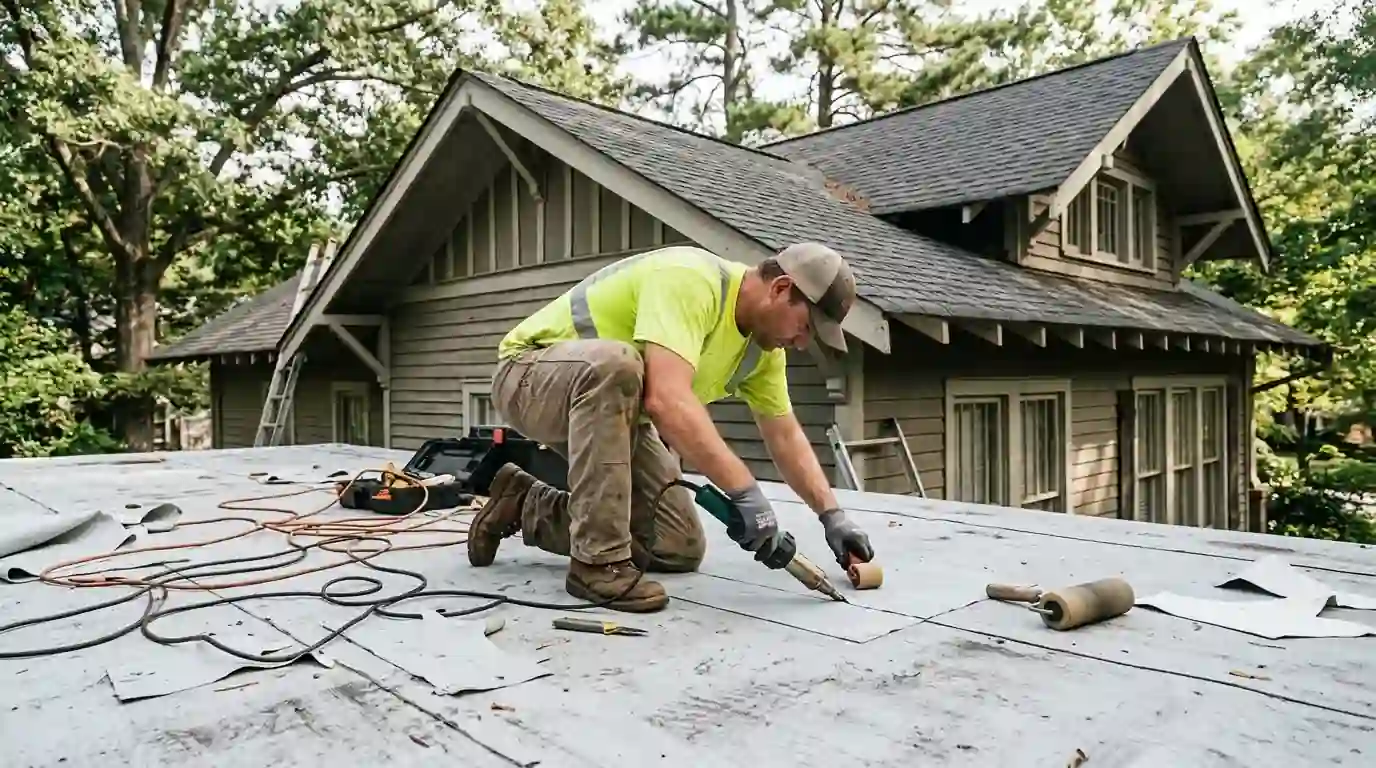
Flat Roof Repair on a metro Atlanta home.
What are the clearest signs your flat roof needs repair now?
Ponding that lasts two days
Water that is still standing 48 hours after rain means the slope has sagged or a drain is blocked. Long ponding breaks down membranes and adds weight to the framing.
Blisters and bubbles
Raised pockets in modified bitumen or built-up roofs show up when moisture or air is trapped between layers. Once a blister cracks, water gets straight into the felts below.
Split or lifting seams
Seams on EPDM and TPO can peel back with age, heat and movement. A lifted edge you can slip a finger under is an open door for wind-driven rain.
Cracks at walls and curbs
Where a flat roof meets a brick wall, siding or an HVAC curb, flashing and sealant crack over time. These transitions cause more low-slope leaks than open field areas.
Soft spots underfoot
A spongy feel when you step means insulation or decking under the membrane is wet. The longer it stays wet, the more decking will need replacing during repairs.
Stains under additions and carports
Brown rings on a ceiling below a sunroom, den addition or carport roof usually trace back to the low-slope roof above, even when the main shingle roof is sound.
How we track down and fix flat roof leaks
Trace the leak path
We look at the stain inside, then inspect the roof above, checking seams, drains, flashings and penetrations upslope of the drip, where the water actually gets in.
Clear drains and dry the area
We clean out scuppers, drains and gutters, sweep off debris and push standing water away so we can see the membrane and work on a dry surface.
Probe for wet material
We press, cut test spots where needed and check for wet insulation or soft decking, so we repair the damage underneath instead of patching over rot.
Cut out and replace damage
Wet insulation and rotted decking come out and get replaced. Blisters are cut open, dried and sealed, and torn membrane is trimmed back to sound material.
Patch with compatible material
We heat-weld new TPO patches, use primer and seam tape on EPDM, and torch or cold-apply modified bitumen, always lapping new material well past the damaged area.
Reflash edges and water test
Wall flashing, edge metal and pipe boots in the area get resealed or replaced. When it helps, we water test the repair and leave you photos of the finished work.
We install and repair shingles from GAF, Owens Corning, CertainTeed and Atlas, metal panels from Englert, membranes from Carlisle and skylights from Velux, matched to the roof already on your house.
What flat roof repair costs in metro Atlanta
Roof material
TPO and EPDM patches usually cost less than torch-down modified bitumen repairs, while old tar and gravel roofs need extra prep to reach a clean surface.
Wet insulation and decking
Cutting out soaked insulation board or rotted plywood under the membrane adds both material and labor, and it is the most common reason repairs grow.
Size of the damaged area
A single seam or pipe boot is a short visit. Several blisters, long split seams or a damaged wall run take more patch material and more hours.
Drains and scuppers
Clearing a clogged drain is quick, but rebuilding a rusted scupper or replacing a failed drain body adds parts and more detail work to the repair.
Roof height and access
A one-story carport is easy to reach. A flat section above a third floor or tucked behind parapet walls needs more ladders, staging and careful material handling.
These are typical ranges from recent Atlanta-area jobs, not a quote. See every service side by side on our roof prices page, or call (470) 876-1496 for a visit.
Why flat roofs around Atlanta leak in summer storms
Atlanta gets plenty of rain, and much of it comes in short, heavy summer thunderstorms that dump an inch or more in an hour. Low-slope roofs have to move all that water through a few drains and scuppers, and when those are packed with pine needles, oak leaves or sweetgum balls, water rises fast. Flat roofs show up on mid-century modern homes in places like Northcrest and Decatur, on rear additions and sunrooms added to 1920s bungalows, and over carports and porches on 1960s ranches. Many were built with minimal slope and patched with tar over the years. Hot afternoons followed by cooler nights also work seams loose, which is why so many flat roof calls we get come right after a summer storm.
If you are comparing scopes from more than one roofer, ask each for the same line items: underlayment, flashing, vents, decking allowance and disposal. It makes the numbers comparable.
Repair approaches for each flat roof material
TPO heat-welded patch
We clean and prep the old TPO, then heat-weld a new piece of membrane over the damage. A good weld becomes one piece with the roof, as long as the old sheet is not worn thin.
EPDM tape and primer patch
For rubber roofs we clean the surface, apply primer and use cured EPDM cover tape or patches. It is reliable when done on dry, clean rubber and pressed firmly with a roller.
Modified bitumen patch
Torch-applied or cold-applied cap sheet patches handle blisters, splits and worn granules. We cut out the damaged area first, then lap new material well past it on every side. It holds well.
Built-up roof restoration
Older tar and gravel roofs can be patched with new felts and asphalt, or spot-repaired and coated. On very old built-up roofs, repairs often buy time until a planned replacement.
Flat Roof Repair across the Atlanta metro
These are the largest places we cover. Every one of our 71 service areas gets the same service.
- Atlanta 30305
- Sandy Springs 30328
- Roswell 30075
- Johns Creek 30022
- Alpharetta 30004
- Marietta 30060
- Smyrna 30080
- Dunwoody 30338
- Brookhaven 30319
- Duluth 30096
- Lawrenceville 30043
- Kennesaw 30144
- Peachtree Corners 30092
- Decatur 30030
- Milton 30004
- Woodstock 30188
- Cumming 30028
- Stockbridge 30281
- McDonough 30252
- Douglasville 30134
Flat Roof Repair questions from Atlanta homeowners
Can you patch a flat roof in the rain during an Atlanta storm?
We can make an emergency patch or tarp to slow the water during wet weather, but most permanent membrane repairs need a dry surface to bond or weld. We usually stop the active leak first, then return when the roof is dry to make the proper repair and replace wet material.
How long does a flat roof repair last on a home addition?
A properly done patch on a membrane that still has life left often lasts as long as the rest of the roof. If the surrounding membrane is brittle, cracked or full of old patches, a repair may only buy a few seasons. We tell you which situation you are in before we start work.
Why does water keep pooling on my low-slope porch roof?
Ponding usually means the framing has sagged, the roof was built with too little slope, or the drain path is blocked. Clearing gutters and scuppers helps right away. Lasting fixes can include tapered insulation, adding a scupper or rebuilding the low spot so water heads toward the edge.
Is it worth repairing an old tar and gravel flat roof?
For small leaks on a roof with a decade or so left, repair makes sense. On a built-up roof that is 25 years old or more, with blisters and alligator cracking across the surface, repairs become a cycle. That is often the right time to price a replacement with TPO, EPDM or modified bitumen.
Services that often go with this one
Flat Roof Replacement
Full flat and low-slope roof replacement with TPO, EPDM or modified bitumen, plus tapered insulation to stop ponding for good.
Learn more ›Roof Leak Repair
Roof leak repair that traces the water back to where it really gets in, then fixes that spot for good.
Learn more ›Porch Roof Repair
Repairs for leaking porch roofs, sagging beams, rotted decking and failed tie-ins where the porch roof meets the house.
Learn more ›Need flat roof repair in Atlanta?
Call (470) 876-1496. A person answers 24/7 and a roofer from our Alpharetta office follows up with a visit and photos.