Storm Damage Inspection in Atlanta, GA
A storm just rolled through, a few shingles are in the yard or the gutters are dented, and you need to know if the roof is actually hurt before the next round of rain arrives.
- Phones answered 24/7 at (470) 876-1496
- Photos of every problem spot before any work
- Line-item written scope
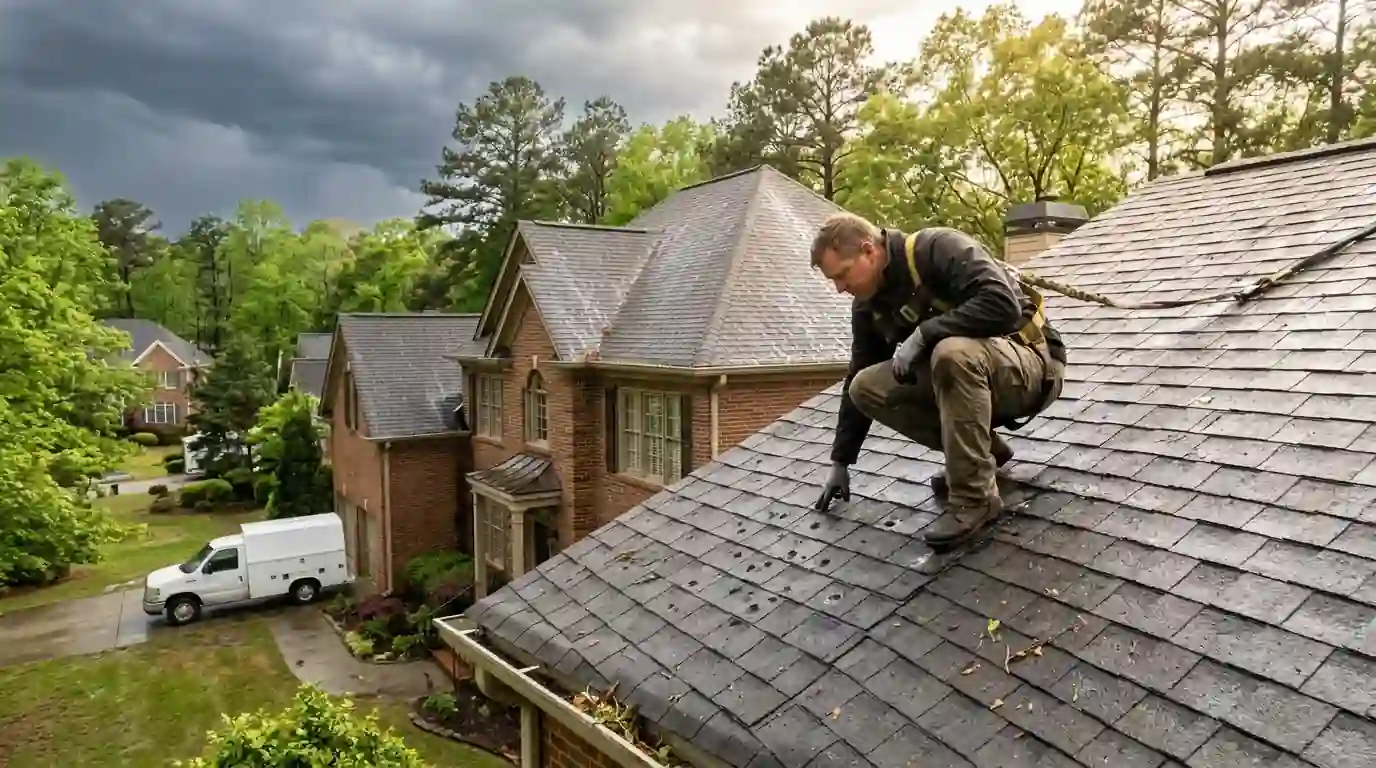
A storm damage inspection is a close look at every slope, vent, flashing and the attic after hail, high wind or a falling tree, with photos of anything the storm broke. In Atlanta it makes sense after any spring hail line, a severe thunderstorm warning with gusts, or a limb strike. A typical storm inspection with a photo report runs $165 to $385, based on roof size and pitch.
Storm damage hides well. Hail bruises on a dark architectural shingle look like nothing from the driveway, and a wind-lifted tab drops right back into place once the gust passes. The broken seal underneath is what lets the next storm peel it off. So we get on the roof. We check each slope in a set pattern, look at the ridge, the hips and the valleys, tap soft metal for dents, and inspect pipe boots, skylights and chimney flashing for fresh cracks. Then we go into the attic with a light and a moisture meter, because water that got in last night is often still sitting on the decking.
You get a short written report with dated photos and a plain answer: no real damage, minor damage worth a quick repair, or enough damage that a full claim conversation makes sense. We call it the way we see it, including when the roof is just old rather than storm-hit. If something is actively leaking, we can tarp or patch it the same visit so the inside of the house stays dry. If the damage looks significant, the photos from this inspection become the starting record for your insurance carrier, so nothing has to be reconstructed weeks later from memory.
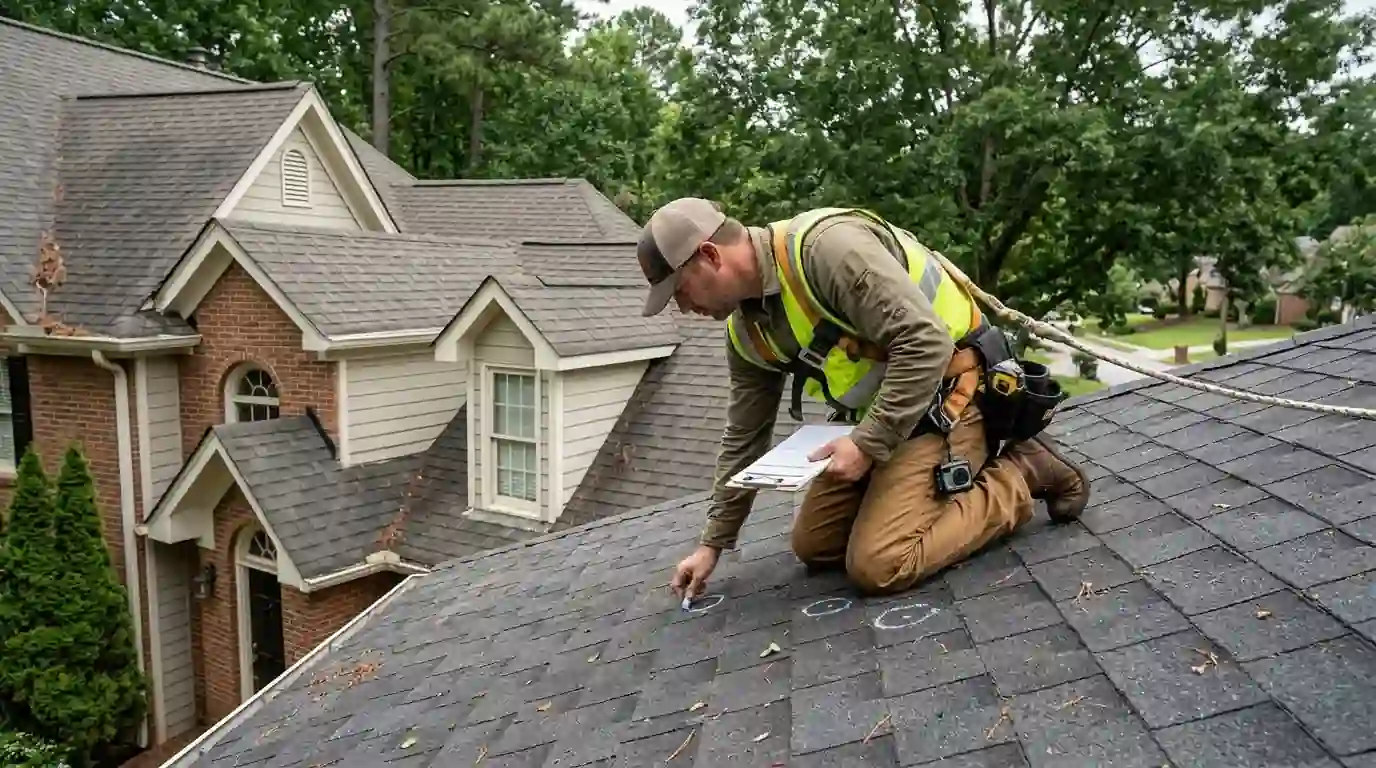
Storm Damage Inspection on a metro Atlanta home.
What tells you a storm inspection is worth scheduling?
Hail big enough to notice
If you heard hail on the roof or saw pea-size or larger stones bouncing in the yard, the shingles likely took hits. Dents on the mailbox or car hood are a good clue.
Shingle pieces on the ground
Torn tabs, ridge cap chunks or loose granule-covered strips in the lawn mean wind pulled material off. Nearby shingles often lost their seal too, even though they still look flat.
Limbs landed on the roof
Even a limb that rolled off can crack shingles, gouge a valley or bend a gutter. Bigger pine and oak limbs can split decking you cannot see from outside.
Dented gutters and vents
Soft aluminum gutters, box vents and turbine tops show hail strikes plainly. If they are dimpled, the shingles around them took the same hits, only harder to spot.
Water spots or drips inside
A fresh stain, a damp closet ceiling or water running down a window frame after a storm means water found a new way in. Finding the entry point quickly saves drywall and insulation.
Flashing or caps that moved
A chimney cap tilted, a pipe boot cracked or a skylight flashing lifted after high wind can leak for weeks before the ceiling shows it. We check every penetration.
Why Atlanta storms call for a close roof inspection
Atlanta gets its hail mostly in spring, when strong cells track across the metro and drop stones on narrow paths. One cul-de-sac in Marietta might be untouched while the next ridge over in East Cobb is full of bruised shingles. Summer brings a different problem: afternoon thunderstorms with short, sharp wind bursts that break shingle seals and topple limbs. Our tree cover makes the second problem much worse. Tall loblolly pines and big water oaks sit over a lot of roofs here, and a single dropped limb can puncture decking. Because the storm damage pattern changes from street to street, we would rather inspect your own roof than guess from the news or from what the neighbors found.
Not sure whether last night's storm did real damage? Try our hail damage check first, then call and we will look in person.
We install and repair shingles from GAF, Owens Corning, CertainTeed and Atlas, metal panels from Englert, membranes from Carlisle and skylights from Velux, matched to the roof already on your house.
How our storm damage inspection runs, start to finish
Ground walk and safety check
We start in the yard, looking at gutters, downspouts, window screens, siding and fences for hail marks and debris, and checking for downed lines or loose limbs before anyone climbs.
Slope-by-slope roof review
On the roof we check each slope in order, marking test areas and photographing hail bruises, cracked shingles, lifted tabs, missing ridge cap and any punctures from limbs.
Flashing, vents and penetrations
We inspect chimney flashing, step flashing at walls, pipe boots, exhaust vents, skylights and satellite mounts, since storms loosen these parts more than most people expect.
Attic and interior check
Inside, we look at decking, rafters and insulation for fresh water, use a moisture meter on suspect spots and photograph any daylight showing through the roof deck.
Temporary protection if needed
If we find an open hole or an active leak, we can tarp or seal it on the spot so the house is protected while you decide on the permanent repair.
Photo report and next steps
You get a written summary with dated photos, a map of where we found damage, and our honest take on repair, claim conversation or simply keeping an eye on it.
What storm damage inspection costs in metro Atlanta
Square footage and facets
A small hip roof takes much less time than a large home with many facets, dormers and intersecting valleys, where each surface needs its own photos.
Roof pitch
Walkable 4/12 to 6/12 slopes go quickly. Steeper roofs need harness tie-offs and slower movement, which adds time on site and to the report.
Debris and tree impact
When a limb is still on the roof or wedged in a valley, we may need to clear it carefully before we can inspect the surface underneath.
Temporary repairs on the visit
Tarping a punctured slope or sealing a lifted flashing during the inspection adds material and labor, priced separately from the inspection itself.
After-hours timing
A night or weekend visit during an active leak costs more than a scheduled daytime inspection set for the following week.
These are typical ranges from recent Atlanta-area jobs, not a quote. See every service side by side on our roof prices page, or call (470) 876-1496 for a visit.
Which kind of storm inspection fits your situation
Post-hail inspection
Focused on bruised and fractured shingles, granule loss, dented metal and soft spots. We chalk test squares on each slope and photograph the hits so the pattern and size of the hail are easy to read.
Post-wind inspection
Focused on lifted, creased and missing shingles, broken seal strips, loose ridge cap and flashing that pulled away from walls. We check the windward slopes closely, since that is where seals give out first.
Tree and limb strike inspection
We look at the impact point, check the decking and rafters from the attic and examine nearby gutters and fascia. This one often includes tarping and a structural opinion before any repair.
Interior leak tracing after a storm
When the main symptom is water inside, we start in the attic and trace the stain back to its source, then confirm the entry point on the roof surface above it.
Storm Damage Inspection across the Atlanta metro
These are the largest places we cover. Every one of our 71 service areas gets the same service.
- Atlanta 30305
- Sandy Springs 30328
- Roswell 30075
- Johns Creek 30022
- Alpharetta 30004
- Marietta 30060
- Smyrna 30080
- Dunwoody 30338
- Brookhaven 30319
- Duluth 30096
- Lawrenceville 30043
- Kennesaw 30144
- Peachtree Corners 30092
- Decatur 30030
- Milton 30004
- Woodstock 30188
- Cumming 30028
- Stockbridge 30281
- McDonough 30252
- Douglasville 30134
Storm Damage Inspection questions from Atlanta homeowners
How soon after a storm should I get a roof storm damage inspection?
As soon as it is safe and convenient, ideally within a few days to a couple of weeks. If anything is leaking, call right away so we can protect the house. Waiting months makes it harder to tell storm damage from normal wear and gives small breaks time to let water reach the decking.
Can a storm damage inspection be done from a drone or the ground?
Drone photos help on very steep or fragile roofs, and we use binoculars from the ground for a first look. But hail bruises and broken seal strips are usually found by hand, on the roof. When the roof is safe to walk, we inspect it in person, slope by slope.
Does a storm inspection mean I have to file an insurance claim?
No. The inspection just tells you what happened to the roof. Plenty of our storm inspections end with no damage found, or a small repair that costs less than the deductible. You decide what to do with the report, and we will give you our honest opinion either way.
What is the difference between hail bruising and normal shingle wear?
Hail bruises are random, round soft spots where the mat underneath was crushed, often with granules knocked loose in a circle. Normal wear is more even, with granule loss spread across the roof, blistering, curling or cracking from age. We photograph both so the difference is clear in the report.
Services that often go with this one
Roof Insurance Claim Help
We document roof damage, meet your adjuster on the roof and write a clear line-item repair scope for your claim.
Learn more ›Emergency Roof Tarping
Emergency roof tarping that stops rain after storm damage, fastened with battens so it holds until permanent repairs are done.
Learn more ›Wind Damage Roof Repair
Wind damage roof repair for blown-off, creased and unsealed shingles, lifted ridge caps and loose edge metal after Atlanta storms.
Learn more ›Need storm damage inspection in Atlanta?
Call (470) 876-1496. A person answers 24/7 and a roofer from our Alpharetta office follows up with a visit and photos.