Drip Edge Installation in Atlanta, GA
On roofs without drip edge, rainwater curls back under the shingle edge, soaks the deck and fascia and runs behind the gutter instead of into it, quietly rotting the roof edge.
- Phones answered 24/7 at (470) 876-1496
- Photos of every problem spot before any work
- Line-item written scope
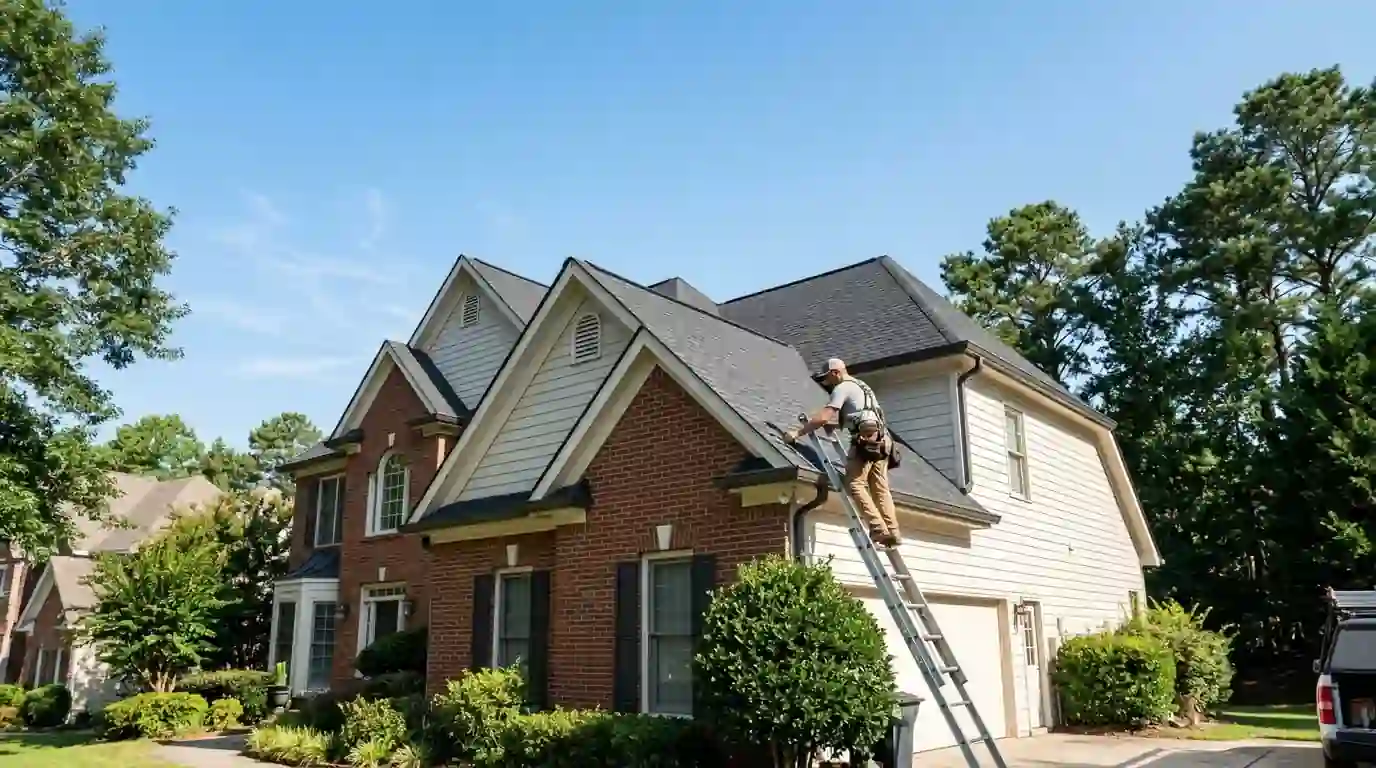
Drip edge is an L-shaped or T-shaped metal flashing installed along the eaves and rake edges of a roof. It directs water into the gutter and away from the fascia and deck. In Atlanta you need it if the roof was built without it, the old edge is bent or rusted, or fascia keeps rotting. Retrofit installs run about $3.15 to $6.45 per linear foot.
Drip edge is one of the cheapest parts of a roof and one of the most overlooked. Many older Atlanta homes were roofed without it, and some newer ones had it left off to save time. Without that strip of metal, water running off the shingles clings to the underside of the edge through surface tension and wicks back toward the house. It soaks the edge of the roof deck, runs down the face of the fascia and slips behind the gutter. Over years that adds up to soft decking at the eaves, rotted fascia and gutters that never seem to catch all the water.
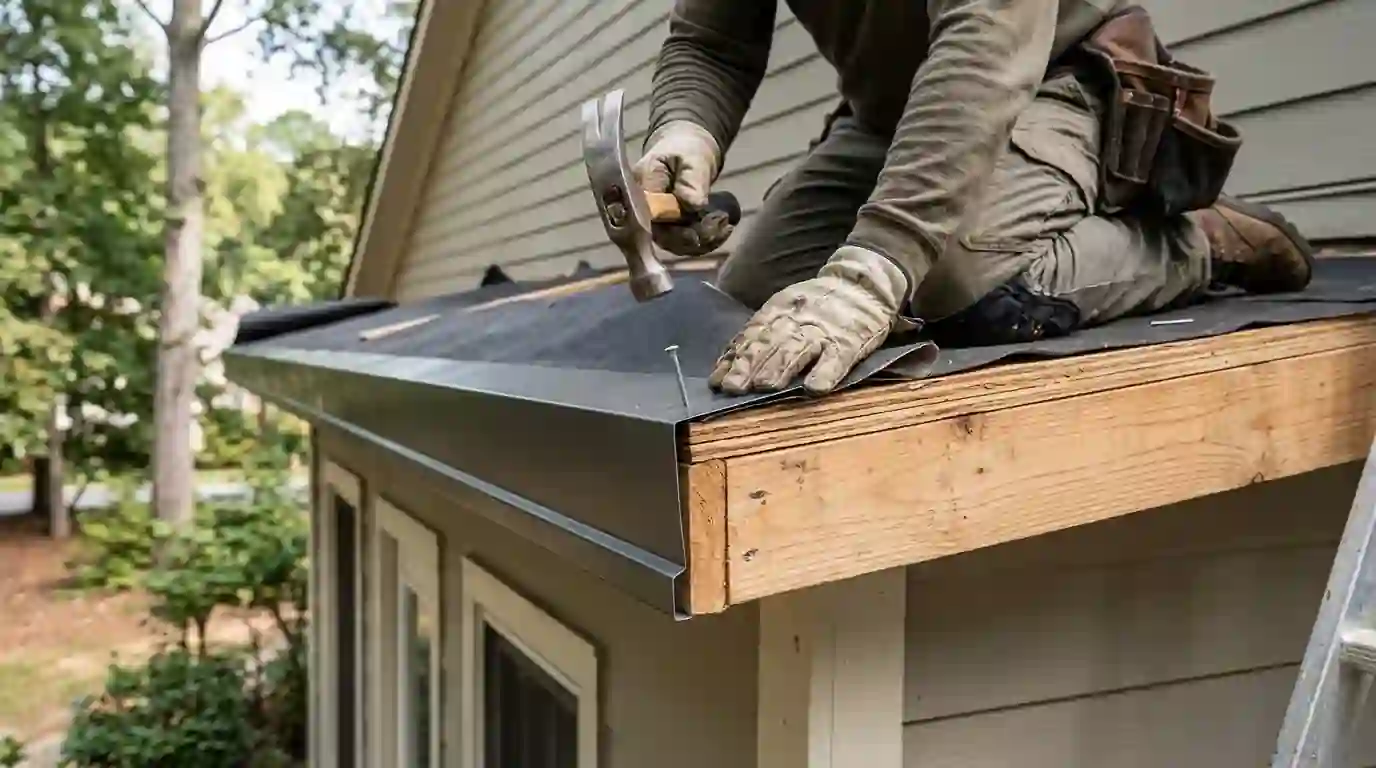
Adding drip edge to an existing roof takes care, because the metal has to sit in the right layer. At the eaves it goes under the underlayment, and on the rakes it goes over it, so water always laps onto the metal and off the roof. We lift the first course of shingles, slide the drip edge into place, fasten it to the deck and reseal the shingles so wind does not catch them. On a full roof replacement we install it as a standard part of the job. Either way, the gutter ends up catching runoff the way it was meant to, and the wood stays dry.
Drip Edge Installation on a metro Atlanta home.
Is your roof edge missing the protection drip edge gives?
No metal at the edge
Looking up at the roof edge, you see shingles hanging directly over the fascia with no metal strip between them, which means water has nothing to guide it off the roof.
Water behind gutters
Stains, streaks or algae on the fascia face behind the gutter show that runoff is curling under the shingles and running down the board instead of into the gutter.
Soft deck at the eaves
Spongy spots along the lowest few feet of the roof, or crumbling plywood visible from the attic at the eaves, point to years of water wicking into the deck edge.
Rotting fascia corners
Fascia that rots first at corners and along the top edge, right below the shingles, is a classic sign of roof water running back onto the wood.
Bent or rusted old edge
Old drip edge that is dented by ladders, rusted through or pulled loose by gutter work no longer sheds water and should be replaced while it can be done neatly.
Wind-lifted shingle edges
Rake edges where shingles flap or lift in gusty storms lack the stiff edge support that metal drip edge gives, and they are often the first shingles to tear off.
Why Atlanta roofs need a proper drip edge
Atlanta storms tend to be intense rather than gentle. A summer thunderstorm can push a lot of water across the roof in a short time, and gusty winds drive rain sideways under shingle edges on the rakes. Without drip edge, that water finds the deck and fascia fast. Many intown bungalows and 1950s ranches in neighborhoods like Oakhurst, Avondale Estates and Sandy Springs were roofed before drip edge was routine, and some have been reroofed several times without it ever being added. Humidity then keeps the wet wood from drying out. Adding drip edge, especially when the roof is replaced, is a low-cost way to protect the edge from the heavy rain this region gets every year.
If you are comparing scopes from more than one roofer, ask each for the same line items: underlayment, flashing, vents, decking allowance and disposal. It makes the numbers comparable.
We install and repair shingles from GAF, Owens Corning, CertainTeed and Atlas, metal panels from Englert, membranes from Carlisle and skylights from Velux, matched to the roof already on your house.
How we add drip edge to an existing roof
Inspect the edges
We walk the roof and look at the eaves and rakes from below, checking for existing edge metal, rot in the deck and fascia, and how the gutters sit against the board.
Pick the profile
We choose an L-style or T-style drip edge sized for your fascia and gutter setup, in a color that suits the trim and the existing gutters.
Lift the shingles
Working in short sections, we carefully release the sealant on the first shingle course and lift it gently, avoiding creases or cracks in cooler weather.
Repair the deck edge
Any rotted deck edge gets cut back and replaced with sound plywood. Soft fascia is also noted and replaced so the new metal sits on solid wood.
Set and fasten
Drip edge slides under the underlayment at the eaves and over it on the rakes, fastened to the deck, with overlapping joints and neat corners at each transition.
Reseal and check
We reseal lifted shingles with roofing cement so they lie flat and resist wind, then check that runoff drops cleanly into the gutter along each eave.
What drip edge installation costs in metro Atlanta
Retrofit or new roof
Drip edge on a full replacement costs little extra. Adding it to an existing roof takes careful shingle lifting and resealing, which adds labor.
Shingle age and condition
Brittle old shingles crack when lifted, so they may need spot replacement. Newer shingles lift cleanly and keep the retrofit work quicker.
Hidden rot
Soft deck edges and rotted fascia found under the shingles must be fixed before metal goes on, and those repairs are priced by the amount of wood replaced.
Profile and gauge
Wider faces, heavier gauge metal and custom colors cost more than standard white or brown aluminum drip edge in common sizes.
Roof height and access
Two-story eaves, steep rakes and areas over porches or decks take more setup and slower work than a low ranch roof.
These are typical ranges from recent Atlanta-area jobs, not a quote. See every service side by side on our roof prices page, or call (470) 876-1496 for a visit.
Drip edge profiles and metals
L-style drip edge
A simple right-angle profile that covers the deck edge and laps down over the fascia. It is common on rakes and on eaves where the gutter sits tight against the fascia board below.
T-style or D-style edge
This profile has an extra outward kick at the bottom that throws water clear of the fascia and into the gutter. It is our usual choice at eaves on Atlanta homes with heavy runoff.
Painted aluminum
Lightweight, rustproof and sold in colors that blend with the most common gutter and trim finishes. Aluminum is the most popular drip edge metal for asphalt shingle roofs across the metro area.
Galvanized or copper edge
Galvanized steel is stiffer and better resists dents from ladders and falling limbs. Copper drip edge suits copper gutters and historic homes, where it weathers along with the rest of the copper trim.
Drip Edge Installation across the Atlanta metro
These are the largest places we cover. Every one of our 71 service areas gets the same service.
- Atlanta 30305
- Sandy Springs 30328
- Roswell 30075
- Johns Creek 30022
- Alpharetta 30004
- Marietta 30060
- Smyrna 30080
- Dunwoody 30338
- Brookhaven 30319
- Duluth 30096
- Lawrenceville 30043
- Kennesaw 30144
- Peachtree Corners 30092
- Decatur 30030
- Milton 30004
- Woodstock 30188
- Cumming 30028
- Stockbridge 30281
- McDonough 30252
- Douglasville 30134
Drip Edge Installation questions from Atlanta homeowners
Is drip edge installation required on Atlanta roofs?
Current residential building codes generally call for drip edge at eaves and rakes on asphalt shingle roofs, and most shingle makers expect it in their installation instructions. Older homes were often roofed before that was common. If your roof lacks it, adding it during replacement is standard, and adding it to an existing roof is possible in many cases.
Can drip edge be added without replacing the whole roof?
Usually, yes. We lift the first course of shingles, slide the drip edge into place, fasten it and reseal the shingles. The shingles need to be flexible enough to lift without cracking, so very old or brittle roofs may be better served by waiting for replacement. We check the shingles before recommending a retrofit.
Does drip edge go over or under the roof underlayment?
At the eaves, drip edge goes under the underlayment so water running down the felt or synthetic laps onto the metal and off the roof. On the rakes, it goes over the underlayment to keep wind-driven rain from getting under the edge. Getting that order right is what makes drip edge work.
Will new drip edge fix water running behind my gutters?
In many cases it does. Drip edge carries runoff past the fascia and into the gutter. If water still gets behind the gutter afterward, the gutter may be hung too low or tilted away from the house, and we can adjust it so the back edge sits up under the drip edge where it belongs.
Services that often go with this one
Fascia & Soffit Repair
Replacement of rotted fascia boards and damaged soffit panels, closing the gaps that let water, squirrels and birds into the attic.
Learn more ›Gutter Installation
New seamless gutters and downspouts sized for Atlanta downpours, pitched right and routed to carry water away from your foundation.
Learn more ›Roof Decking Replacement
Rotted, soft or delaminated roof sheathing cut out and replaced so new shingles sit on solid, dry wood.
Learn more ›Need drip edge installation in Atlanta?
Call (470) 876-1496. A person answers 24/7 and a roofer from our Alpharetta office follows up with a visit and photos.