Modified Bitumen Roofing in Atlanta, GA
Low-slope porch and addition roofs that keep leaking where they meet the shingles often need a tougher, layered surface, and modified bitumen is built for exactly that kind of transition.
- Phones answered 24/7 at (470) 876-1496
- Photos of every problem spot before any work
- Line-item written scope
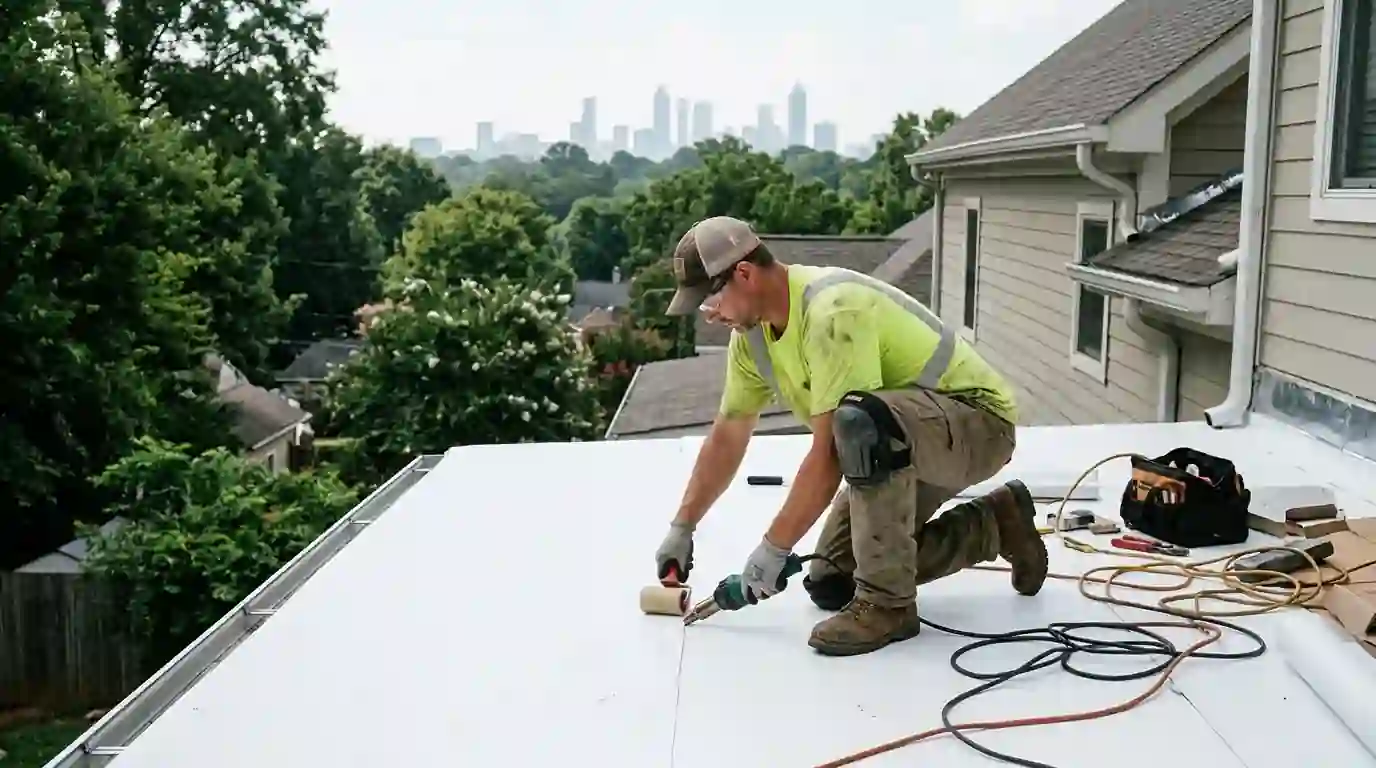
Modified bitumen is an asphalt roofing sheet blended with rubber or plastic modifiers and reinforced with polyester or fiberglass. It is torched, cold-glued or self-adhered in one or two plies on low-slope roofs. In Atlanta it fits porches, additions, dormers and flat sections that tie into shingle roofs. Installed modified bitumen here typically runs $7.45 to $12.35 per square foot, based on the number of plies.
Modified bitumen grew out of the old built-up tar and gravel roof, keeping the asphalt but adding modifiers that make it flexible and tougher in heat. It comes in rolls about three feet wide with a granule surface on top, so it looks a bit like a large, flat shingle. Because it is asphalt-based, it blends well with shingle roofs and is easy to tie into them at the transition where a low-slope porch meets a steeper main roof. That transition is exactly where many low-slope leaks begin. Getting that joint right is half the job.
We install modified bitumen in three ways. Torch-applied sheets are melted onto a base sheet with a propane torch and are very durable. Cold-applied systems use adhesive and suit roofs near walls and trim where open flame is not wise. Self-adhered, or peel-and-stick, sheets need no flame or glue and work well on small residential roofs. Two-ply systems with a base and cap sheet give the best long-term performance, and we often recommend them for porches and additions that see foot traffic or heavy runoff from the main roof. We help you pick the right one.
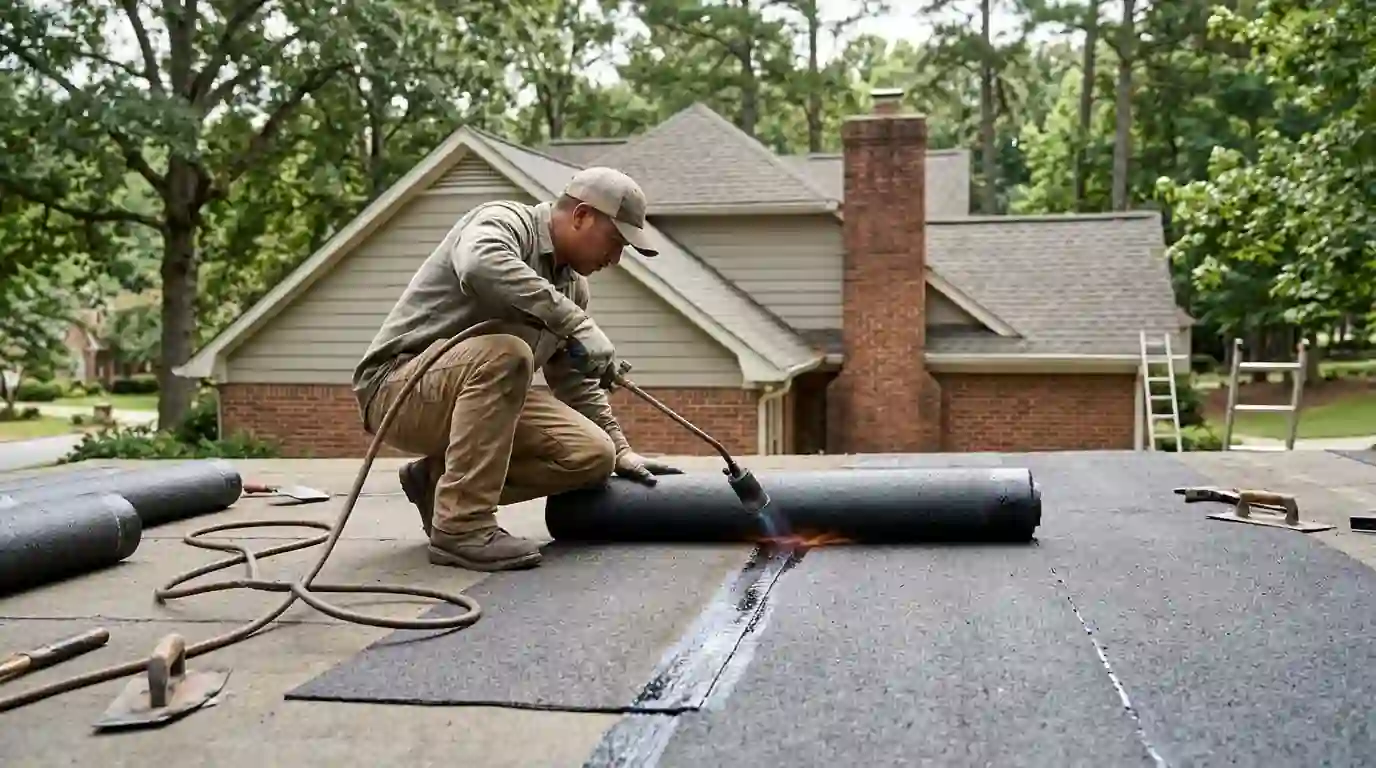
Modified Bitumen Roofing on a metro Atlanta home.
Modified bitumen systems and where each one fits
Torch-applied two-ply
A base and cap sheet melted together with a torch. It is one of the toughest low-slope roofs for porches and additions, as long as the crew follows strict fire-watch practices near wood.
Cold-applied modified
Sheets set in asphalt adhesive instead of heat. A good choice near siding, wood trim and tight spaces where open flame is risky, though it takes longer to cure in cool weather.
Self-adhered peel-and-stick
Sheets with a factory adhesive backing that bond when pressed down. They are clean and quick on small residential roofs and dormers, and need no torch or messy glue. They suit tight spaces.
Cool-roof cap sheets
Cap sheets with white or light granules reflect more sun than standard colors. They suit low-slope roofs over living space where summer heat in the rooms below is a concern.
What modified bitumen roofing costs in metro Atlanta
Single or two-ply
Single-ply cap sheets cost less, but two-ply systems with a base and cap sheet last longer and resist punctures from foot traffic and limbs.
Torch, cold or self-adhered
Torch-down is common and efficient, while cold-applied and self-adhered systems cost a bit more in materials but avoid open flame near wood trim.
Size of the roof
Small porch and dormer roofs carry setup costs spread over fewer square feet, so they price higher per foot than larger garage or addition roofs.
Tie-ins to shingles
Weaving a low-slope roof into the main shingle roof requires extra flashing, ice and water membrane and sometimes reworking a few courses of shingles.
Deck and old layers
Removing multiple layers of roll roofing or tar and replacing rotted boards adds labor and disposal before the new sheets go down.
These are typical ranges from recent Atlanta-area jobs, not a quote. See every service side by side on our roof prices page, or call (470) 876-1496 for a visit.
We install and repair shingles from GAF, Owens Corning, CertainTeed and Atlas, metal panels from Englert, membranes from Carlisle and skylights from Velux, matched to the roof already on your house.
How we install modified bitumen on low-slope roofs
Inspect and choose the method
We check the slope, deck, nearby walls and trim, then choose torch-applied, cold-applied or self-adhered sheets based on fire safety, access and the roof's use.
Tear off and repair deck
Old roll roofing, tar or worn membrane comes off down to the deck. We replace rotted boards and fix low spots so water drains toward edges or scuppers.
Install base sheet
A base sheet is nailed or adhered to the deck, giving the system a first waterproof layer and a clean surface for the cap sheet to bond to.
Apply the cap sheet
The granule-surfaced cap sheet is torched, glued or self-adhered over the base, with side and end laps staggered so seams never stack on top of each other.
Flash walls and transitions
We run modified bitumen flashing up walls and under siding, and tie the low-slope roof into the shingles above with metal flashing and ice and water membrane.
Seal edges and clean up
Edge metal is set, laps are checked and sealed with granules embedded where needed, and we leave the site clean with gutters and drains cleared.
Modified bitumen on Atlanta porches, additions and older homes
Many Atlanta homes have at least one low-slope section: a front porch on a 1920s Craftsman bungalow in Virginia-Highland or Kirkwood, a shed dormer added during a renovation, or a back porch on a 1960s brick ranch that was once screened in. Those sections were often finished with roll roofing or tar and gravel and have been patched for decades. Modified bitumen gives them a thicker, more flexible roof that handles the heat and heavy rains here, and it ties into shingles more naturally than single-ply membranes. On older homes with lots of wood trim and siding, we lean toward cold-applied or self-adhered sheets to keep open flame away from century-old framing and dry, painted trim.
We serve the whole metro from our Alpharetta office, so north Fulton, Forsyth and east Cobb calls are usually the quickest to schedule.
Signs your low-slope roof is a good fit for modified bitumen
Roll roofing worn to the felt
Mineral roll roofing on porches often loses its granules and cracks within 10 to 15 years. A two-ply modified roof gives that space a much thicker, longer-lasting surface.
Leaks where the porch meets shingles
When water enters at the junction of a low-slope porch and the main roof, a modified bitumen system with proper flashing ties the two together far better.
Blisters on an old built-up roof
Tar and gravel roofs with blisters and cracks often get replaced with modified bitumen, which keeps a familiar asphalt system with better flexibility and fewer layers.
Granule loss and bare spots
On an existing modified roof, bare black spots where granules have worn away expose the asphalt to sun, which speeds cracking and drying of the cap sheet.
Seams opening at laps
Torch or adhesive laps that have pulled apart or cracked along the edges let water travel under the cap sheet, especially where water runs across the seam.
Flashing failure at walls
Modified bitumen flashings at walls and parapets can crack, sag or pull loose with age. Those spots usually need rework before the field of the roof fails.
Modified Bitumen Roofing across the Atlanta metro
These are the largest places we cover. Every one of our 71 service areas gets the same service.
- Atlanta 30305
- Sandy Springs 30328
- Roswell 30075
- Johns Creek 30022
- Alpharetta 30004
- Marietta 30060
- Smyrna 30080
- Dunwoody 30338
- Brookhaven 30319
- Duluth 30096
- Lawrenceville 30043
- Kennesaw 30144
- Peachtree Corners 30092
- Decatur 30030
- Milton 30004
- Woodstock 30188
- Cumming 30028
- Stockbridge 30281
- McDonough 30252
- Douglasville 30134
Modified Bitumen Roofing questions from Atlanta homeowners
Is torch-down modified bitumen safe on an older wood-frame house?
It can be when done carefully, but we limit open flame near siding, trim and older wood framing. On many intown homes, we use cold-applied or self-adhered modified sheets around walls and edges, or for the whole roof. That gives the same type of system without the fire risk of a torch near dry wood.
How long does a modified bitumen porch roof last?
A two-ply modified bitumen roof with good slope and flashing commonly lasts 15 to 25 years in the Atlanta climate. Single-ply systems and roofs that pond or lose granules early tend to fall short of that. Keeping gutters and scuppers clear and fixing small blisters early helps it last.
Can modified bitumen be repaired, or does it need a new roof?
Small blisters, split laps and worn spots can be repaired with new modified bitumen patches, either torched, cold-applied or self-adhered. When the surface has widespread cracking, many blisters and soft decking, replacement makes more sense. We look for wet insulation and rot before suggesting repair.
Will a modified bitumen roof match my shingle roof color?
Modified bitumen cap sheets come in several granule colors, including grays, browns and white. They will not look identical to shingles, but on a low-slope porch or addition they usually blend well from the ground. We bring samples so you can see them next to your existing shingles.
Services that often go with this one
Flat Roof Replacement
Full flat and low-slope roof replacement with TPO, EPDM or modified bitumen, plus tapered insulation to stop ponding for good.
Learn more ›Porch Roof Repair
Repairs for leaking porch roofs, sagging beams, rotted decking and failed tie-ins where the porch roof meets the house.
Learn more ›Flashing Repair
Flashing repair at walls, dormers, chimneys and roof edges, replacing rusted or caulked metal with properly layered new flashing.
Learn more ›Need modified bitumen roofing in Atlanta?
Call (470) 876-1496. A person answers 24/7 and a roofer from our Alpharetta office follows up with a visit and photos.