Tile Roofing in Atlanta, GA
Cracked tiles, slipped pieces and ceiling stains under a tile roof that still looks fine from the street usually point to worn underlayment, and that hidden layer is where most tile repairs go wrong.
- Phones answered 24/7 at (470) 876-1496
- Photos of every problem spot before any work
- Line-item written scope
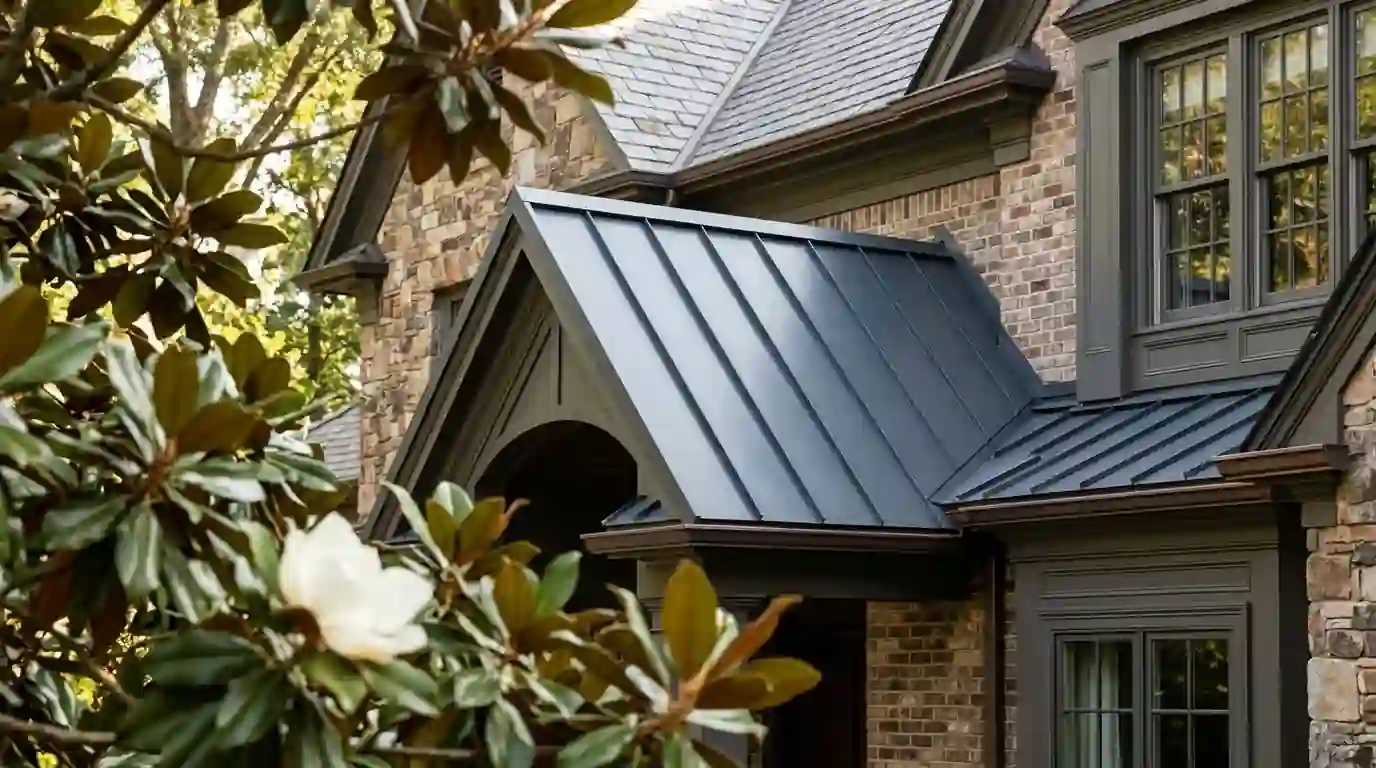
Tile roofing covers repair and installation of concrete and clay tile, a heavy, long-lived roof found on Mediterranean and Spanish-style homes around Atlanta. You need it when tiles crack from foot traffic or falling limbs, when leaks show up under intact tile, or when the felt beneath is 25 to 30 years old. A full concrete tile roof on an average Atlanta home typically runs $31,460 to $58,920.
Tile is one of the few roofing materials that can outlast the framing under it, but only when it is installed and kept up the right way. The tiles shed most of the water. The underlayment beneath them does the real waterproofing, and in Georgia heat that layer dries out and splits long before the tile itself wears. That is why a tile roof can look perfect from the driveway while a stain spreads across a bedroom ceiling. Our roofers lift tile by hand, stack it so it can go back in the same courses, and replace what has failed underneath instead of smearing sealant over cracks.
We work on concrete tile, which makes up most of the tile roofs in the metro, and on clay barrel and flat clay tile on older and custom homes. Some jobs are a handful of broken pieces after a storm. Others are a full lift and relay where we save the good tile, replace the underlayment and battens, and swap in close replacements for anything cracked. For homeowners thinking about a brand new tile roof, we check the framing first, because tile weighs several times more than shingles and not every Atlanta attic was built to carry that load.
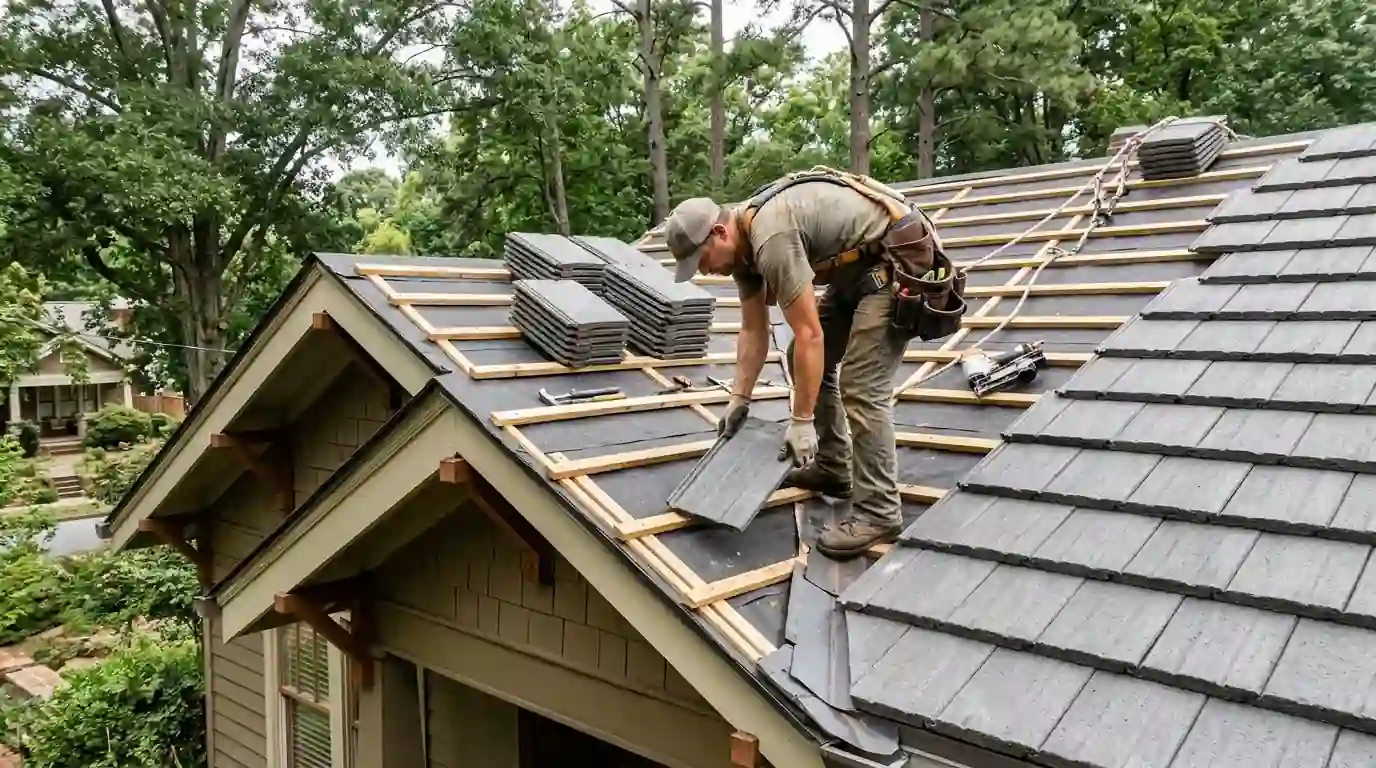
Tile Roofing on a metro Atlanta home.
Which tile and underlayment choices fit your home
Concrete tile
The most common tile in the metro. It comes in flat, low-profile and S-shaped styles, holds up well to Georgia weather, and costs less than clay while still lasting for decades with good underlayment.
Clay barrel tile
The classic Spanish look with half-round pieces. Clay keeps its color for generations and resists fading, but it is more brittle underfoot and replacement pieces for older runs can be hard to find.
Flat clay and shingle-style tile
Flat interlocking clay gives a cleaner, European look on newer custom homes. It sits lower than barrel tile and is easier to walk with care, though it still needs proper framing.
High-temperature synthetic underlayment
A modern synthetic or self-adhered underlayment rated for the heat under tile lasts far longer than old felt. It is the single best upgrade during any lift and relay we do.
What tile roofing costs in metro Atlanta
Concrete versus clay
Concrete tile costs less to buy and replace. Clay tile, especially barrel profiles, costs more per square and takes more careful handling on the roof.
Reusing existing tile
A lift and relay that saves most old tile costs far less than a full replacement, as long as the tile is sound and replacements can be found.
Structural reinforcement
Homes that never had tile may need added rafters or sheathing upgrades before tile goes on, and an engineer may need to review the framing.
Roof pitch and height
Steep two-story roofs need more staging and safety setup, and tile has to be lifted by conveyor or hoist, which adds labor hours to the job.
Ridges, hips and trim pieces
Every hip, ridge, rake and wall transition takes special trim tile and hand-set mortar or dry ridge parts, so cut-up rooflines cost more per square.
These are typical ranges from recent Atlanta-area jobs, not a quote. See every service side by side on our roof prices page, or call (470) 876-1496 for a visit.
We install and repair shingles from GAF, Owens Corning, CertainTeed and Atlas, metal panels from Englert, membranes from Carlisle and skylights from Velux, matched to the roof already on your house.
How we repair and relay a tile roof without wrecking it
Walk-safe inspection
We inspect from ladders, walk pads and known load points so we do not crack more tile looking for the problem. We photograph broken pieces, slipped rows and ridge mortar for you.
Find replacement tile
Concrete and clay profiles vary a lot. We identify the profile and color, then source close replacements from suppliers or salvage before any tile comes off the roof.
Lift and stack
Tiles in the work area come off by hand and get stacked in order on the roof or on padded staging, so the pattern goes back the way it was laid.
Replace underlayment and battens
We strip the failed felt, fix any soft decking, and install new high-temperature underlayment. Rotted battens get replaced with treated wood or raised battens that let water drain.
Relay and fasten
Tiles go back with stainless or coated fasteners and storm clips where the roof needs them. We swap cracked pieces for replacements and keep the courses straight and tight.
Rebuild ridges and clean up
Ridge and hip caps are reset with mortar or a dry ridge system, flashing is checked at walls and chimneys, and we haul off broken tile and debris before we leave.
Why tile roofs in the Atlanta metro need different care than in the desert
Tile gets marketed as a hot-climate roof, but Atlanta's heat comes with heavy humidity, shade and a lot of rain, which is a different problem than Phoenix or Southern California. Under tall oaks and pines, tile stays damp for days after a summer thunderstorm, and moss and algae creep into the laps. Pine needles pack into the valleys and channels and back water up under the pieces. Spring hail can crack older concrete tile, and limbs falling in a storm break tile in a cluster. Most tile roofs here sit on custom and Mediterranean-style homes in places like north Fulton and Buckhead, many from the 1990s and 2000s, which means a lot of that original felt is reaching the end of its life right now.
If you are comparing scopes from more than one roofer, ask each for the same line items: underlayment, flashing, vents, decking allowance and disposal. It makes the numbers comparable.
How can you tell a tile roof needs more than a few new pieces?
Cracked or broken tiles
Hairline cracks and snapped corners let water reach the underlayment. They usually follow someone stepping in the wrong spot, like a satellite installer or gutter cleaner, or a limb dropping onto the roof.
Leaks under intact tile
If the tile looks whole but water still shows up inside, the felt or synthetic layer beneath has likely cracked, slipped or rotted around the nails and needs to be replaced.
Slipped or sliding tiles
Tiles that creep down the slope mean a nail or clip has corroded or the batten under it has rotted. Left alone, one loose piece can knock the next row out of place.
Mortar falling from ridges
Ridge and hip tiles set in mortar crack loose over years of heating and cooling. Chunks of mortar in the gutters are a sign the cap pieces are no longer locked down.
Dark streaks and moss
Shaded tile holds moisture, and moss roots can lift pieces and trap water. Heavy growth on the north side often hides cracked tile and clogged weep paths beneath it.
Age of the underlayment
Many tile roofs in the metro went on with 30-pound felt in the 1990s and early 2000s. After 25 years or so, that felt is often brittle even where the tile is fine.
Tile Roofing across the Atlanta metro
These are the largest places we cover. Every one of our 71 service areas gets the same service.
- Atlanta 30305
- Sandy Springs 30328
- Roswell 30075
- Johns Creek 30022
- Alpharetta 30004
- Marietta 30060
- Smyrna 30080
- Dunwoody 30338
- Brookhaven 30319
- Duluth 30096
- Lawrenceville 30043
- Kennesaw 30144
- Peachtree Corners 30092
- Decatur 30030
- Milton 30004
- Woodstock 30188
- Cumming 30028
- Stockbridge 30281
- McDonough 30252
- Douglasville 30134
Tile Roofing questions from Atlanta homeowners
Can you replace just a few broken tiles on my concrete tile roof?
Yes, as long as we can find a close replacement for your tile profile and color. We lift the surrounding pieces, check the underlayment under the broken area, and slip new tiles into place with proper fasteners. If the underlayment there is already brittle, we will tell you, because new tile over failing felt only moves the leak a few feet.
Is my Atlanta home strong enough for a tile roof?
Not always. Concrete tile can weigh several times more than asphalt shingles, and many metro homes were framed only for shingles. We look at rafter size, spacing and the decking before quoting tile. Some homes need reinforcement and an engineer's review, and some are better served by a lighter tile-look option like stone-coated steel.
How long does a tile roof underlayment replacement take on a two-story house?
For an average two-story home, a full lift and relay usually takes one to two weeks of working days. The time goes into removing tile carefully, stacking it, replacing the underlayment and battens, and relaying each course. Weather, roof steepness and the number of ridges and hips all change the schedule.
Why do tile roofs leak when none of the tiles are broken?
Tile is mostly a sun and water shield. The waterproofing comes from the underlayment beneath it, and that layer breaks down from heat over 20 to 30 years. Water that gets past the tile in wind-driven rain then reaches cracked felt and finds the deck. Flashings at walls, chimneys and valleys are the other common culprit.
Services that often go with this one
Slate Roofing
Natural slate roof repair, restoration and new installation for older Atlanta homes, done with the right hooks, nails and flashing.
Learn more ›Stone-Coated Steel Roofing
Stone-coated steel roofs that look like shake, tile or shingle while standing up to hail, wind and falling limbs.
Learn more ›Roof Inspection
A detailed roof and attic inspection with photos and a plain-language summary of what we found and what can wait.
Learn more ›Need tile roofing in Atlanta?
Call (470) 876-1496. A person answers 24/7 and a roofer from our Alpharetta office follows up with a visit and photos.