Cedar Shake Roofing in Atlanta, GA
Cedar shakes that are curling, splitting or growing moss under the trees are losing their fight with Atlanta humidity, and waiting too long can turn a repair into a full roof.
- Phones answered 24/7 at (470) 876-1496
- Photos of every problem spot before any work
- Line-item written scope
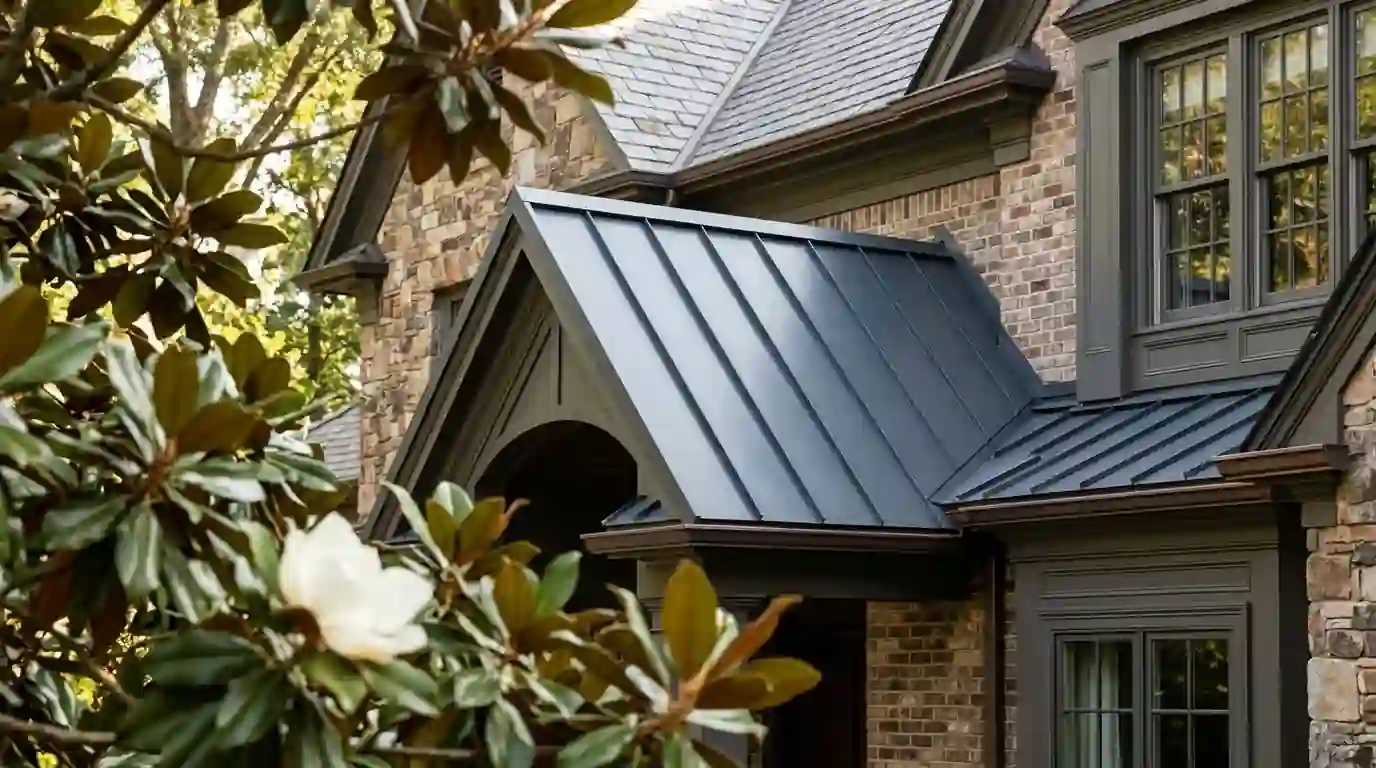
Cedar shake roofing means repairing or installing split or sawn cedar on homes that want a natural wood look. In Atlanta you need it when shakes curl, split, go soft under moss, or start letting light into the attic. Spot repairs often fix a section, but a full cedar roof on an average Atlanta home usually runs $26,380 to $44,750, based on grade, thickness and roof shape.
Cedar has a warmth no other roof copies exactly, which is why homeowners in older wooded neighborhoods keep choosing it. The catch is that wood moves. It swells when it is wet, shrinks when it dries, and in a humid climate it can stay damp long enough for moss, mildew and rot to take hold. A cedar roof that was installed tight, without breathing room or good ventilation, can fail years ahead of schedule. We see a lot of shake roofs that are 18 to 25 years old with one sunny side still sound and one shaded side that is soft, cupped and splitting.
Our roofers repair cedar by pulling individual shakes and slipping new ones in with stainless fasteners, so the patch does not rust stains down the roof. When a full roof is the better call, we strip to the deck, install spaced or vented underlayment, and lay new shakes or tapersawn shingles with the gaps and exposure cedar needs to dry out. We also talk honestly about upkeep. Cedar wants periodic cleaning and treatment in this climate, and if that does not fit your plans, we can show you synthetic shake and other wood-look options.
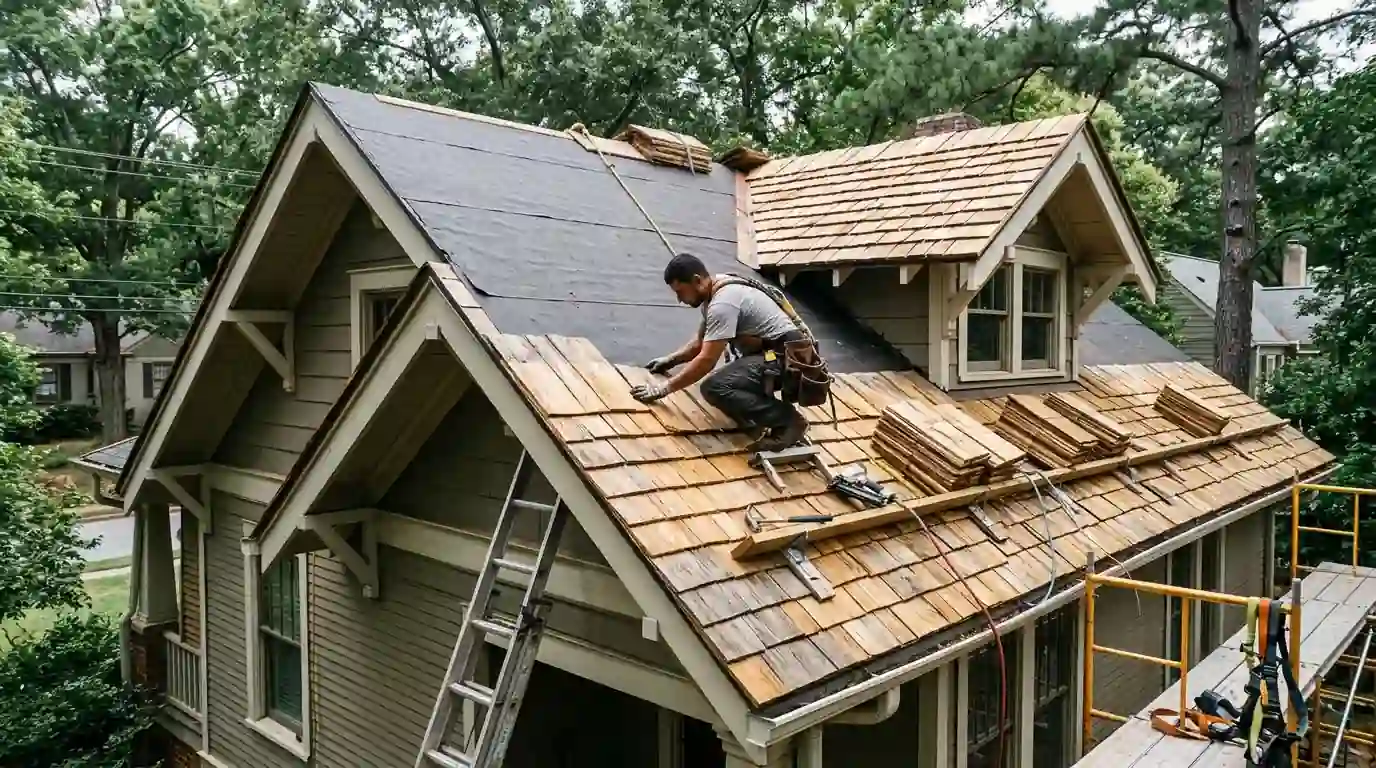
Cedar Shake Roofing on a metro Atlanta home.
Cedar grades and wood-look choices for your roof
Heavy hand-split shakes
Thick, rustic shakes with deep shadow lines and textured faces. They cost the most but last the longest, and their bulk helps them resist cupping in damp Atlanta summers when vented properly.
Medium shakes
A middle ground between price and look. Medium shakes still show natural texture and character, and they work well on ranches and cottages where a heavy shake would look oversized.
Tapersawn cedar shingles
Sawn on both faces for a cleaner, tailored line. They suit Cape Cods and traditional homes, and they lay flatter than split shakes, which helps on lower slopes. They also take paint or stain well.
Synthetic shake
Composite shakes molded from real cedar give the look without rot, moss or regular treatment. Brands like DaVinci and Brava are worth comparing if cedar upkeep does not fit your plans.
What cedar shake roofing costs in metro Atlanta
Shake grade and thickness
Premium heavy hand-split shakes cost more than medium shakes or tapersawn shingles, but thicker wood lasts longer and resists cupping in humid weather.
Fire-treated or untreated wood
Some neighborhoods, covenants or insurance carriers favor fire-treated cedar. Treated shakes cost more per bundle and need specific handling and fasteners.
Spaced sheathing or solid deck
Converting an old solid deck to spaced battens, or repairing rotted skip sheathing, adds labor and lumber before any new cedar goes on the roof.
Roof pitch and complexity
Every valley, dormer and wall line takes hand cutting and custom flashing in cedar, so a cut-up two-story roof costs more per square than a simple gable.
Stainless fasteners and flashing
Stainless nails and quality metal flashing cost more than basic galvanized parts, but they keep cedar from rust staining and add years of service life.
These are typical ranges from recent Atlanta-area jobs, not a quote. See every service side by side on our roof prices page, or call (470) 876-1496 for a visit.
We install and repair shingles from GAF, Owens Corning, CertainTeed and Atlas, metal panels from Englert, membranes from Carlisle and skylights from Velux, matched to the roof already on your house.
How we repair or replace a cedar shake roof the right way
Close-up roof inspection
We walk the roof where it is safe and probe shakes by hand, checking thickness, rot, splits and fasteners, then look from the attic for stains, light and soft decking.
Decide repair or reroof
If damage is local and most shakes are thick and sound, we repair. If rot is spread across slopes, we explain why spot work would only buy a season or two.
Remove failed shakes or strip the roof
For repairs we cut nails and slide out damaged pieces. For a reroof we strip shakes and old felt down to the deck and repair rotted sheathing.
Install breathable underlayment
We lay a vented underlayment or spaced battens so air can move under the cedar, plus ice and water membrane at valleys, eaves and wall transitions where water collects.
Lay new cedar with stainless fasteners
New shakes or shingles go down with correct exposure, side gaps and offset joints, fastened with stainless steel nails that will not rust or stain the wood.
Flash, vent and finish
We install new metal flashing at walls, chimneys and valleys, add or update ridge ventilation, and clean the site of shake scraps, nails and old felt.
What humidity and shade do to cedar roofs in the Atlanta area
Cedar does best where it can dry out fast, and much of the Atlanta metro makes that hard. Lots in Sandy Springs, Dunwoody, Brookhaven and Chastain Park are heavily shaded by oaks and loblolly pines, so north slopes stay damp well into the afternoon. Summer humidity slows drying even on sunny faces. Pine needles and oak tassels collect in the keyways between shakes and hold water against the wood. That is why we pay so much attention to venting, spacing and stainless fasteners here, and why trimming branches back off a cedar roof often matters as much as the roofing itself. Pollen season adds a yellow film that feeds mildew, so a gentle cleaning every few years goes a long way.
Photos from the ground, taken safely, help us plan the visit before we arrive.
Is your cedar roof weathering normally or starting to fail?
Curling and cupping shakes
Shakes that lift at the butt or cup in the middle no longer lie flat, so wind-driven rain gets under them. Heavy cupping usually means the wood is drying unevenly.
Splits that line up
A single split is normal for split cedar. Splits that line up with the joint in the course below open a straight path for water down to the underlayment and deck.
Moss, lichen and soft wood
Green and gray growth holds water against the wood. Press on shakes in shaded areas, and if they feel spongy or crumble at the edges, rot has started under the surface.
Missing or slipped shakes
Gaps after a storm or pieces sliding down the roof mean nails have rusted or the wood around them has rotted. Each gap exposes the felt interlayment underneath to weather.
Daylight in the attic
Some light through a cedar roof can be normal with skip sheathing, but new spots of light or water stains on rafters point to shakes that have shrunk, split or gone missing.
Black streaks and rust stains
Dark streaking can be mildew or tannin bleed, while orange lines often trace back to plain steel nails or flashing. Both are clues to what is failing and where.
Cedar Shake Roofing across the Atlanta metro
These are the largest places we cover. Every one of our 71 service areas gets the same service.
- Atlanta 30305
- Sandy Springs 30328
- Roswell 30075
- Johns Creek 30022
- Alpharetta 30004
- Marietta 30060
- Smyrna 30080
- Dunwoody 30338
- Brookhaven 30319
- Duluth 30096
- Lawrenceville 30043
- Kennesaw 30144
- Peachtree Corners 30092
- Decatur 30030
- Milton 30004
- Woodstock 30188
- Cumming 30028
- Stockbridge 30281
- McDonough 30252
- Douglasville 30134
Cedar Shake Roofing questions from Atlanta homeowners
Can individual cedar shakes be replaced or does the whole roof go?
If most of the roof has thick, sound wood, we can replace individual shakes and small sections. We cut the old nails, slide out damaged pieces and fit new ones with stainless fasteners. New cedar will look lighter at first and weathers to a similar gray within a year or two in Atlanta sun.
How long does a cedar shake roof last in Atlanta humidity?
A well-installed, well-ventilated shake roof here often lasts 20 to 30 years, sometimes more with heavy shakes and good upkeep. Roofs under dense shade, installed tight with no breathing room, or never cleaned can fail in 15 years or less. The shaded north side usually wears out first.
Should I pressure wash my cedar shake roof to remove moss?
No. Pressure washing tears wood fibers, opens splits and drives water into the laps. Cedar is better cleaned with a gentle, low-pressure wash and a wood-safe treatment, followed by a preservative if the roof is a good candidate. We can look at your roof and tell you whether cleaning is worth it.
Do cedar shake roofs need special ventilation under them?
They do. Cedar needs air on its underside to dry after rain, which is why we install vented underlayment or spaced battens and good ridge ventilation. A shake roof laid tight over solid decking with poor attic airflow tends to rot from below, even when the top looks fine.
Services that often go with this one
Historic Home Roofing
Careful roofing for older Atlanta homes, from Victorian and craftsman details to slate, standing seam and period-look shingles.
Learn more ›Synthetic Slate Roofing
Lightweight composite slate roofs that give Atlanta homes the classic slate look at less weight and cost than stone.
Learn more ›Roof Ventilation
Attic ventilation upgrades that balance soffit intake and roof exhaust to cut attic heat, moisture and shingle wear.
Learn more ›Need cedar shake roofing in Atlanta?
Call (470) 876-1496. A person answers 24/7 and a roofer from our Alpharetta office follows up with a visit and photos.