Attic Insulation in Atlanta, GA
Thin, packed-down or damaged attic insulation lets summer heat pour into upstairs rooms and drives the AC hard for months, while winter warmth slips right out through the ceiling.
- Phones answered 24/7 at (470) 876-1496
- Photos of every problem spot before any work
- Line-item written scope
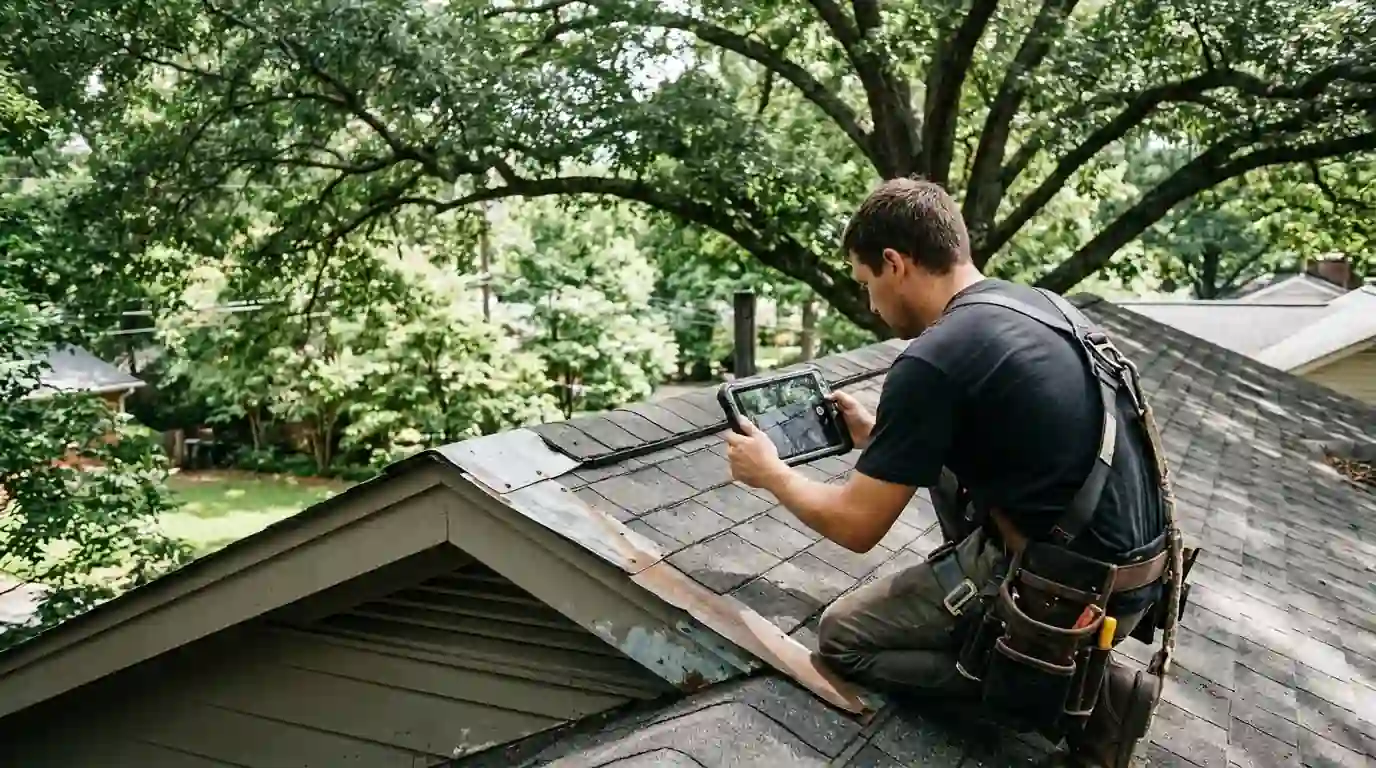
Attic insulation is the layer of blown-in or batt material on the attic floor that slows heat moving between the attic and your living space. In Atlanta you need more when insulation is thin, matted, wet or damaged by pests, or when upstairs rooms run hot. Blown-in attic insulation typically runs about $1.35 to $3.15 per square foot of attic floor.
In summer an Atlanta attic can get extremely hot, and the insulation on the attic floor is all that stands between that heat and your ceiling. Many homes have far less than they should. Older insulation settles over time, gets packed down by storage and foot traffic, or is pushed aside by HVAC and cable installers. Rodents and squirrels tunnel through it, and leaks soak and mat it down. When we are in an attic for roof work, thin or damaged insulation is one of the most common problems we see. Adding insulation to the right depth makes upstairs rooms more comfortable and eases the load on your cooling system.
Insulation works best as part of a system with the roof. Before adding any, we check for roof leaks, since there is no point burying a wet deck under new material. We make sure soffit vents stay open with baffles so intake air can still flow, and we seal the bigger air leaks around top plates, light fixtures and attic hatches. Then we blow in new insulation to an even depth across the floor. If old insulation is wet, moldy or full of droppings, we remove it first. Pairing insulation with good attic ventilation keeps the attic cooler and drier, which also helps your shingles last longer.
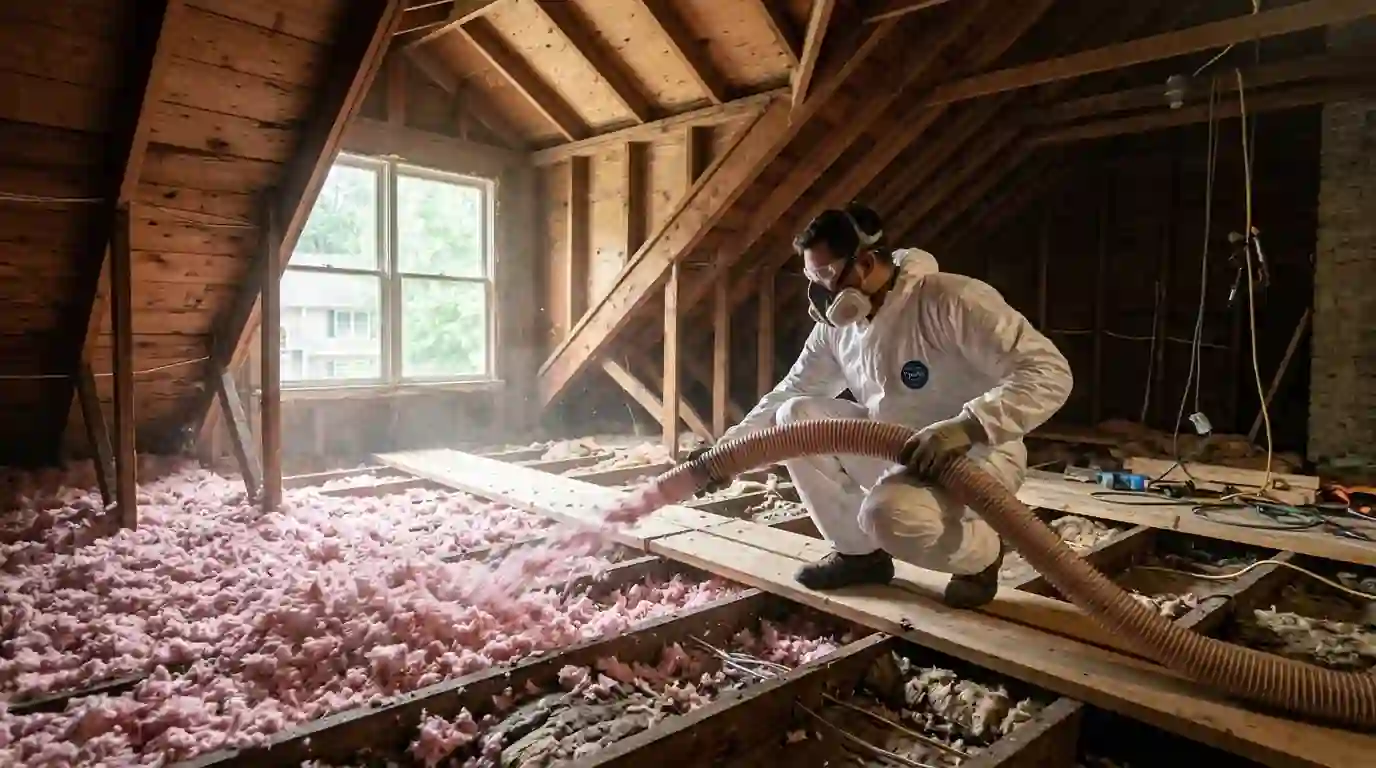
Attic Insulation on a metro Atlanta home.
Is your attic insulation holding back the Georgia heat?
Hot upstairs rooms
Second-floor rooms and bonus rooms that stay hot on summer afternoons, even with the AC running hard, often sit under thin or uneven attic insulation.
High cooling bills
Power bills that climb sharply each summer, especially compared with similar homes nearby, can point to heat pouring through the ceiling from a poorly insulated attic.
Visible ceiling joists
If you can see the tops of the ceiling joists poking up through the insulation in the attic, the layer is far thinner than current recommendations call for.
Matted or wet insulation
Insulation that is flattened, clumped, stained or damp has lost much of its value. Wet insulation also points to an active roof leak or a condensation problem.
Pest damage
Tunnels, droppings or nesting material in the insulation from squirrels, rats or raccoons mean it should be removed and replaced with clean material, not simply topped off.
Ice or condensation in winter
Frost on nails or damp sheathing in the attic on cold mornings can mean warm, moist air is leaking up from the house through gaps in the ceiling.
Why attic insulation matters in hot, humid Atlanta
Cooling is the main energy cost for most Atlanta homes, and the attic is where much of that heat comes from. Long, hot summers keep attics baking for months. Many homes built in the 1960s and 1970s across DeKalb, Clayton and south Fulton were built with very little attic insulation by today's standards, and even 1990s and 2000s homes in Gwinnett and Cobb often have bonus rooms surrounded by poorly insulated knee walls. Humidity is the other half of the story. Air leaking from the house into the attic carries moisture that can condense on the deck in winter. Adding insulation and sealing air leaks, along with proper roof venting, keeps upstairs rooms cooler and the roof deck drier.
We serve the whole metro from our Alpharetta office, so north Fulton, Forsyth and east Cobb calls are usually the quickest to schedule.
We install and repair shingles from GAF, Owens Corning, CertainTeed and Atlas, metal panels from Englert, membranes from Carlisle and skylights from Velux, matched to the roof already on your house.
How we insulate an attic the right way
Inspect the attic
We measure the current insulation depth, check its condition, look for roof leaks, pest damage and moisture, and note how the attic is vented at the eaves and ridge.
Fix the roof first
Any roof leaks or damaged decking get repaired before insulation goes in, so the new insulation is never soaked by water coming through the roof in the next storm.
Remove bad insulation
Wet, moldy or pest-contaminated insulation is vacuumed out and bagged. Clean, dry insulation is usually left in place and simply topped up with new material.
Air seal and baffle
We seal larger gaps around top plates, plumbing and wiring holes and the attic hatch, and install baffles at the eaves to keep soffit vents open.
Blow in insulation
We blow fiberglass or cellulose insulation evenly across the attic floor to the target depth, using depth markers so coverage is uniform across the space.
Final check
We check the depth throughout the attic, make sure vents and baffles are clear, insulate or weatherstrip the attic hatch and clean up any mess.
What attic insulation costs in metro Atlanta
Target depth
Topping off a thin layer costs less than building up from almost nothing, and deeper targets need more material blown across the attic floor.
Old insulation removal
Removing wet, moldy or pest-contaminated insulation adds labor, vacuum equipment and disposal cost before new material can be blown in.
Air sealing work
Sealing gaps around top plates, can lights, plumbing and wiring holes takes time but makes the new insulation far more effective in summer and winter.
Attic access and layout
Tight attics, low roof pitches, floored storage areas and HVAC equipment in the way make it harder to reach every part of the attic floor.
Material choice
Blown fiberglass and cellulose differ slightly in cost per square foot. Batts or rigid board for knee walls and hatches add their own material cost.
These are typical ranges from recent Atlanta-area jobs, not a quote. See every service side by side on our roof prices page, or call (470) 876-1496 for a visit.
Attic insulation materials we install
Blown-in fiberglass
Loose fiberglass blown across the attic floor. It does not absorb much moisture, resists settling, does not feed mold and fills around joists and wiring well. It is our most common choice for Atlanta attics.
Blown-in cellulose
Recycled paper fiber treated to resist fire and pests. It packs densely, fills gaps and slows air movement well, though it can settle more over time and should be kept dry.
Fiberglass batts
Pre-cut batts fit between joists and are common for knee walls, bonus room walls and areas where blowing loose insulation is not practical. They must be fitted snugly without gaps.
Attic hatch and knee wall insulation
Insulated hatch covers, weatherstripping and rigid foam board on knee walls close the weak spots that let heat into bonus rooms and upstairs closets even when the floor is well covered.
Attic Insulation across the Atlanta metro
These are the largest places we cover. Every one of our 71 service areas gets the same service.
- Atlanta 30305
- Sandy Springs 30328
- Roswell 30075
- Johns Creek 30022
- Alpharetta 30004
- Marietta 30060
- Smyrna 30080
- Dunwoody 30338
- Brookhaven 30319
- Duluth 30096
- Lawrenceville 30043
- Kennesaw 30144
- Peachtree Corners 30092
- Decatur 30030
- Milton 30004
- Woodstock 30188
- Cumming 30028
- Stockbridge 30281
- McDonough 30252
- Douglasville 30134
Attic Insulation questions from Atlanta homeowners
How much attic insulation does an Atlanta home need?
Current energy recommendations for the Atlanta climate zone generally suggest attic insulation in the range of R-38 or more, which works out to roughly 12 to 15 inches of blown-in material based on the type used. Many older homes have only a few inches. We measure what you have and recommend how much to add.
Should old attic insulation be removed before adding new insulation?
If the old insulation is dry, clean and has no pest contamination, we usually leave it in place and add new material on top. If it is wet, moldy, full of droppings or damaged by a leak, it should be removed first so the new insulation is not contaminated and the attic is clean.
Can attic insulation block my roof ventilation?
It can if it is not installed carefully. Insulation pushed into the eaves can cover soffit vents and cut off intake air. We install baffles at the eaves before blowing in insulation, which keeps a clear channel for air to flow from the soffits up along the underside of the roof deck to the exhaust vents.
Why does a roofing company handle attic insulation work?
Attic insulation and the roof work together. We are already in the attic checking ventilation, deck condition and leaks, and we know how insulation affects airflow under the roof. Handling both means we fix leaks first, keep vents open and make sure the roof and attic perform as a system instead of fighting each other.
Services that often go with this one
Roof Ventilation
Attic ventilation upgrades that balance soffit intake and roof exhaust to cut attic heat, moisture and shingle wear.
Learn more ›Solar Attic Fans
Roof-mounted solar fans that pull hot, damp air out of your attic on sunny Atlanta afternoons without adding to the power bill.
Learn more ›Fascia & Soffit Repair
Replacement of rotted fascia boards and damaged soffit panels, closing the gaps that let water, squirrels and birds into the attic.
Learn more ›Need attic insulation in Atlanta?
Call (470) 876-1496. A person answers 24/7 and a roofer from our Alpharetta office follows up with a visit and photos.