Roof Ventilation in Atlanta, GA
An attic that feels like an oven in July, damp in winter and smells musty most of the year is a ventilation problem, and it can cook shingles and decking years ahead of schedule.
- Phones answered 24/7 at (470) 876-1496
- Photos of every problem spot before any work
- Line-item written scope
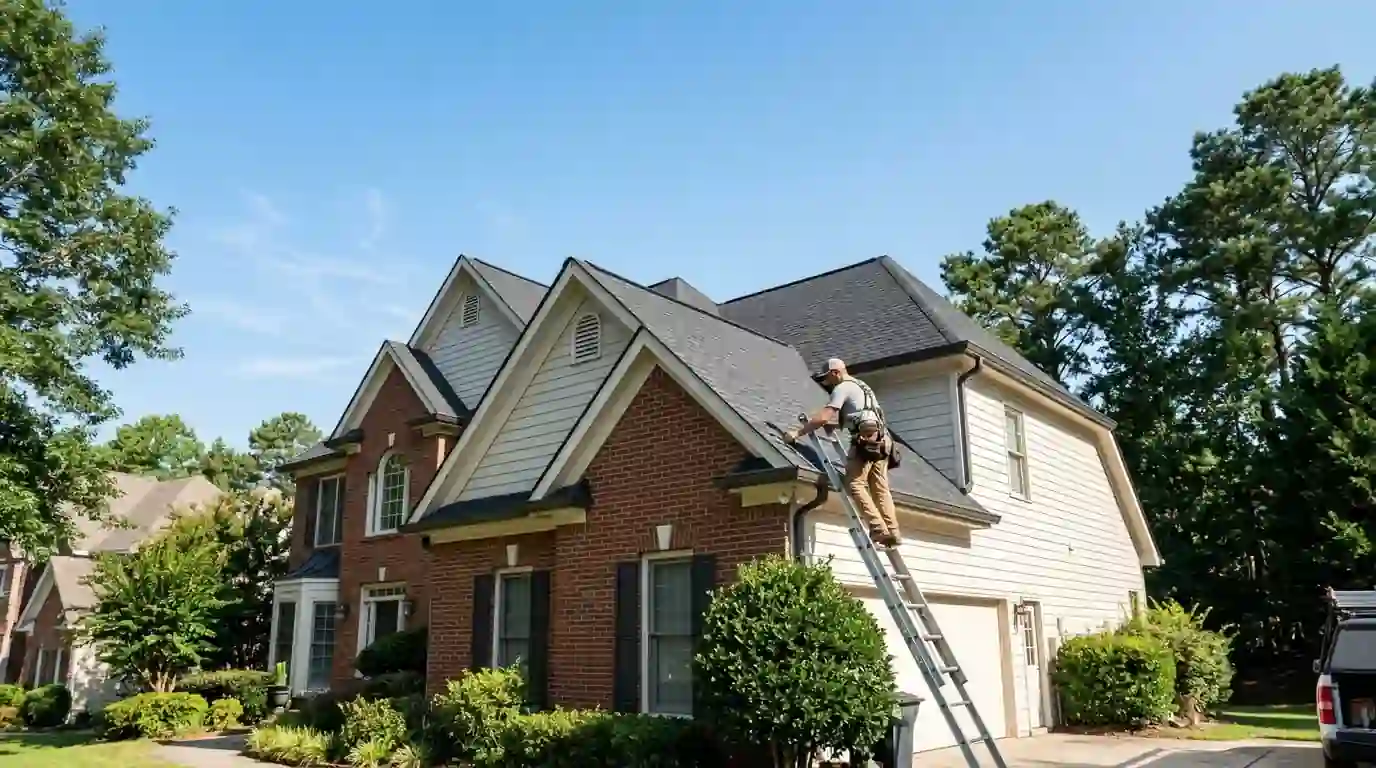
Roof ventilation means balancing intake vents at the soffits with exhaust vents near the ridge so air flows through the attic. In Atlanta you need it when the attic runs very hot in summer, you see condensation or mold, shingles age fast or rooms upstairs never cool. A typical ventilation upgrade on an Atlanta home runs $735 to $3,460, based on what is already there.
Most attics in the metro were built with some ventilation, but very few are balanced. A common setup is a handful of box vents, a gable fan and a few small soffit vents that were painted over or blocked by insulation years ago. Air needs to come in low along the eaves and leave high near the ridge. When that path is broken or mixed with competing vents, heat and moisture stay trapped. Shingles bake from below, decking can swell and delaminate, and the air conditioner fights a hot attic all summer.
We start with a close look at your attic and roof: how many vents you have, where they are, whether soffits actually let air in and if insulation is blocking the intake. Then we design a balanced system, usually soffit intake with ridge vent or low-profile exhaust, matched to the size of the attic. We remove or seal competing vents that short-circuit airflow and add baffles so insulation stays out of the soffits. Many ventilation upgrades fit into a roof replacement, but we also improve airflow on existing roofs where shingles still have years left.
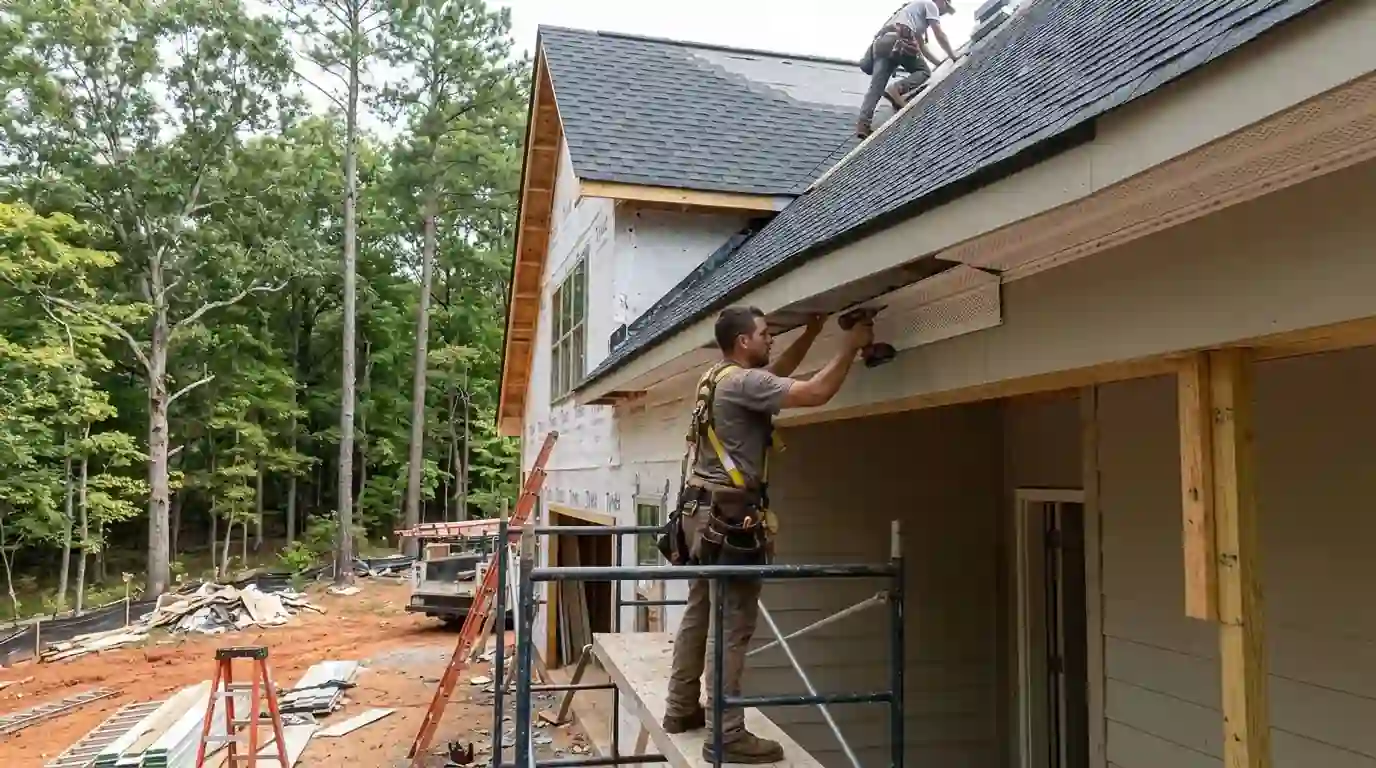
Roof Ventilation on a metro Atlanta home.
Is poor attic airflow wearing out your roof?
Attic heat that hits you
If the attic feels like a sauna on summer afternoons and stays hot into the evening, hot air is not leaving fast enough and is soaking into the shingles and ceiling.
Condensation and frost
Water droplets on nails, damp spots on decking or light frost in winter mornings mean warm, moist air from the house is condensing on cold attic surfaces.
Musty smells and mold
A musty odor, black spots on decking or mold on rafters often trace back to poor airflow and high humidity, made worse by bathroom fans venting into the attic.
Shingles aging early
Curling, blistering or brittle shingles on a roof that is not very old can be a sign the attic is overheating the roof from below in long Atlanta summers.
Upstairs rooms never cool
Second floor bedrooms that stay hot even with the AC running can be fighting heat soaking down from an attic that lacks good intake and exhaust venting.
Ice at the eaves in rare freezes
During the occasional hard freeze, uneven attic temperatures can melt snow or ice on the upper roof, then refreeze it at the eaves where water can back up.
Why ventilation matters so much in Atlanta's hot, humid climate
Atlanta attics face long, hot summers and high humidity, which makes ventilation more than a small detail. On a sunny July afternoon, attic temperatures can climb far above the outside air, especially under dark shingles on 1990s and 2000s homes in places like Alpharetta, Kennesaw and Lawrenceville. Those homes often have complex hip roofs with short ridges and a mix of box vents, gable vents and fans. Older 1960s ranches in neighborhoods such as Tucker and Chamblee may have tiny soffit vents or none at all. Humidity from the house finds its way into those attics and condenses on cooler surfaces at night and in winter. Balanced ventilation helps shingles last longer and keeps decking and framing dry.
Photos from the ground, taken safely, help us plan the visit before we arrive.
We install and repair shingles from GAF, Owens Corning, CertainTeed and Atlas, metal panels from Englert, membranes from Carlisle and skylights from Velux, matched to the roof already on your house.
How we design and install balanced roof ventilation
Attic and roof survey
We inspect the attic, measure its size, check insulation depth, look for stains or mold, and count every vent on the roof and in the soffits, noting any blocked areas.
Calculate airflow needs
Using the attic floor area and building codes, we calculate how much intake and exhaust ventilation your home needs and how to split it between soffits and the ridge.
Open and improve intake
We open painted-over soffit vents, add new soffit vents or continuous intake strips, and install baffles so insulation does not block the airflow at the eaves.
Install exhaust vents
Based on the roof shape, we install ridge vent, low-profile roof vents or turbines, cutting openings carefully and flashing each one to keep wind-driven rain out.
Remove competing vents
Gable vents, extra box vents or powered fans that short-circuit the main airflow path may be sealed or removed so air moves from soffit to ridge as designed.
Check results and moisture
After installation, we look again in the attic, check for proper airflow paths and discuss bathroom fan vents and insulation that also affect attic moisture.
What roof ventilation costs in metro Atlanta
Existing ventilation
Homes that already have some soffit and ridge vents need fewer changes. Attics with blocked soffits and mixed exhaust vents take more work to correct.
Soffit material and condition
Vinyl or aluminum soffits are easier to vent than solid wood or stucco. Rotted soffits may need repair or replacement before vents can be added.
Roof layout
Simple gable roofs are easier to vent than hip roofs with short ridges and many valleys, which may need extra low-profile vents to balance airflow.
Timing with roof replacement
Adding or upgrading ventilation during a new roof is efficient. On existing roofs, careful cutting and flashing around new vents adds labor.
Insulation and baffles
Installing baffles, moving insulation or adding more insulation for a balanced system increases cost but improves comfort and reduces moisture issues.
These are typical ranges from recent Atlanta-area jobs, not a quote. See every service side by side on our roof prices page, or call (470) 876-1496 for a visit.
Ventilation options we use on Atlanta homes
Soffit intake vents
Continuous or individual vents in the soffits that pull cooler outside air into the attic. Without good intake, no exhaust vent can work well, so we always check this first.
Ridge vent exhaust
A low-profile vent along the ridge that lets hot air escape evenly along the peak. It works best when paired with continuous soffit intake and fits many simple gable roofs.
Low-profile box vents
Individual roof vents near the top of the roof for hip roofs or homes with short ridges. Products from Lomanco or Air Vent can be arranged to balance airflow where ridge vent will not fit.
Powered and solar attic fans
Fans that pull air out of the attic. They help in some cases but can pull conditioned air from the house if intake is weak. We size and place them carefully when used.
Roof Ventilation across the Atlanta metro
These are the largest places we cover. Every one of our 71 service areas gets the same service.
- Atlanta 30305
- Sandy Springs 30328
- Roswell 30075
- Johns Creek 30022
- Alpharetta 30004
- Marietta 30060
- Smyrna 30080
- Dunwoody 30338
- Brookhaven 30319
- Duluth 30096
- Lawrenceville 30043
- Kennesaw 30144
- Peachtree Corners 30092
- Decatur 30030
- Milton 30004
- Woodstock 30188
- Cumming 30028
- Stockbridge 30281
- McDonough 30252
- Douglasville 30134
Roof Ventilation questions from Atlanta homeowners
Do I need more roof ventilation if my Atlanta attic feels hot?
A hot attic in summer is normal, but extreme heat that lingers into the evening, combined with high upstairs temperatures, usually means airflow is not adequate. We check intake at the soffits, exhaust near the ridge and insulation. Often, opening soffits and adding the right exhaust vents makes a noticeable difference.
Can roof ventilation help prevent mold in my attic?
Good ventilation is a key part of preventing attic mold, but it is not the only part. Bathroom and kitchen fans should vent outside, not into the attic, and air leaks from the house should be sealed. Balanced intake and exhaust then help move remaining moisture out before it condenses on wood.
Should I add a gable fan or more box vents to my roof?
Not always. Extra box vents or a gable fan can actually disrupt airflow if soffit intake is weak, pulling air from the wrong places. We start by improving intake, then add the right exhaust for your roof shape. In many attics, removing a competing fan helps more than adding new vents.
Is roof ventilation work worth doing before a roof replacement?
If your roof is close to the end of its life, it often makes sense to plan ventilation upgrades as part of the replacement. If your roof has many years left, fixing ventilation now can help extend shingle life and improve comfort. We can show you both options and what each would cost.
Services that often go with this one
Ridge Vent Installation
Shingle-over ridge vent installed along the peak to let hot, damp attic air escape evenly, paired with real soffit intake.
Learn more ›Solar Attic Fans
Roof-mounted solar fans that pull hot, damp air out of your attic on sunny Atlanta afternoons without adding to the power bill.
Learn more ›Attic Insulation
Blown-in and batt attic insulation added or replaced to cut summer heat, lower cooling bills and protect the roof deck.
Learn more ›Need roof ventilation in Atlanta?
Call (470) 876-1496. A person answers 24/7 and a roofer from our Alpharetta office follows up with a visit and photos.