TPO Roofing in Atlanta, GA
A dark, leaky flat roof that turns the room below into an oven every July is a good candidate for TPO, a bright white membrane with welded seams built for sun and standing water.
- Phones answered 24/7 at (470) 876-1496
- Photos of every problem spot before any work
- Line-item written scope
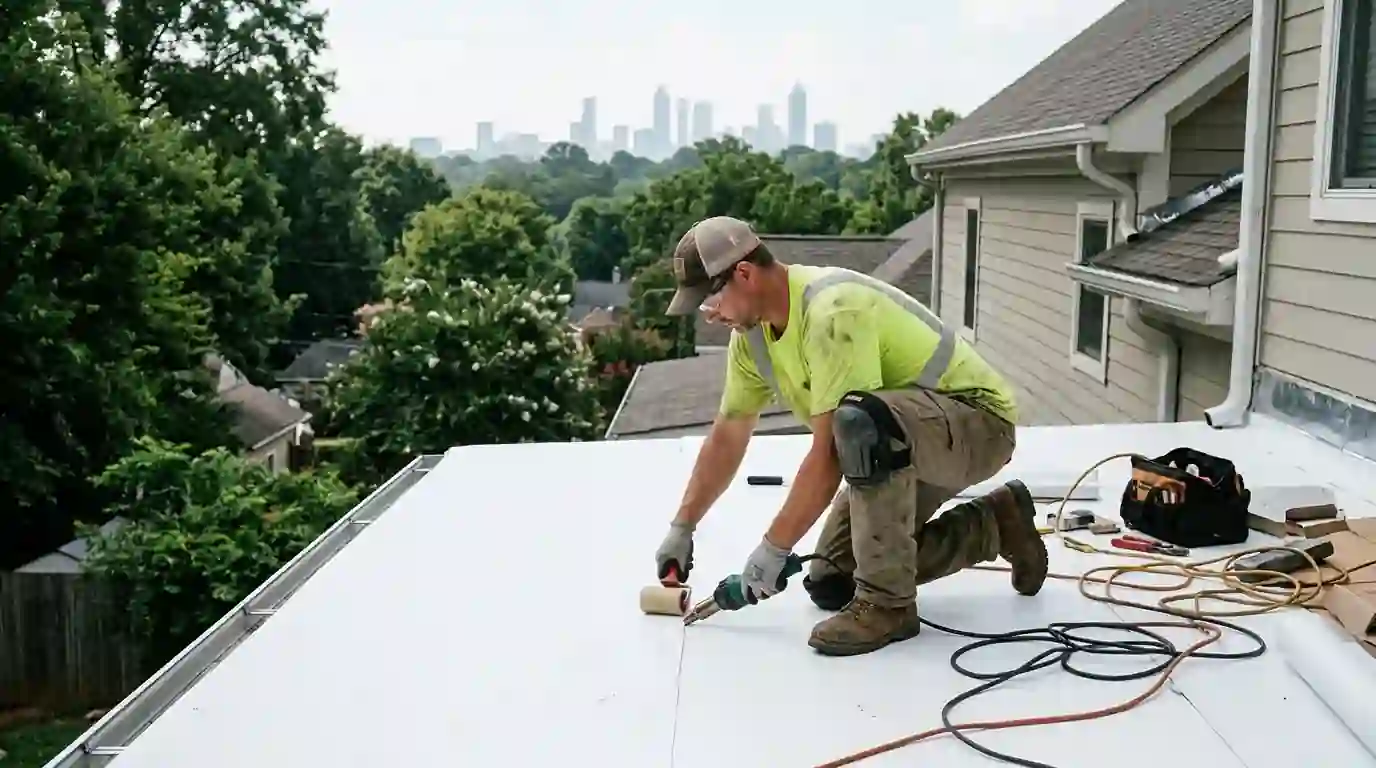
TPO roofing is a single-ply thermoplastic membrane, usually white, that is fastened or adhered to the deck and heat-welded at every seam. In Atlanta it suits low-slope additions, sunrooms, porches and light commercial roofs that bake in summer sun or keep leaking at old seams. Installed TPO here typically runs $7.85 to $12.60 per square foot, including tear-off and new insulation on most jobs.
TPO has become one of the most common flat roof membranes in the country, and it fits Atlanta conditions well. The white surface reflects a large share of the sun's heat instead of soaking it up, which can make a real difference in a room under a flat roof. Seams are joined with hot air, melting the two sheets into one, so there is no glue or tape to dry out over time. The sheet itself stays flexible, resists tearing, and holds up well where water lingers after a storm.
Our roofers install TPO from major makers such as Carlisle and GAF on homes and small commercial buildings. On residential jobs we often see TPO on rear additions, screened porches, carports, garages and the flat sections tucked between steep roofs on larger homes. On light commercial roofs, we install it over strip shops, offices and warehouses where cooling costs and leaks both matter. Getting the details right is most of the job: welding test seams each day, flashing walls and curbs with the right accessories, and setting edge metal so wind cannot catch the sheet.
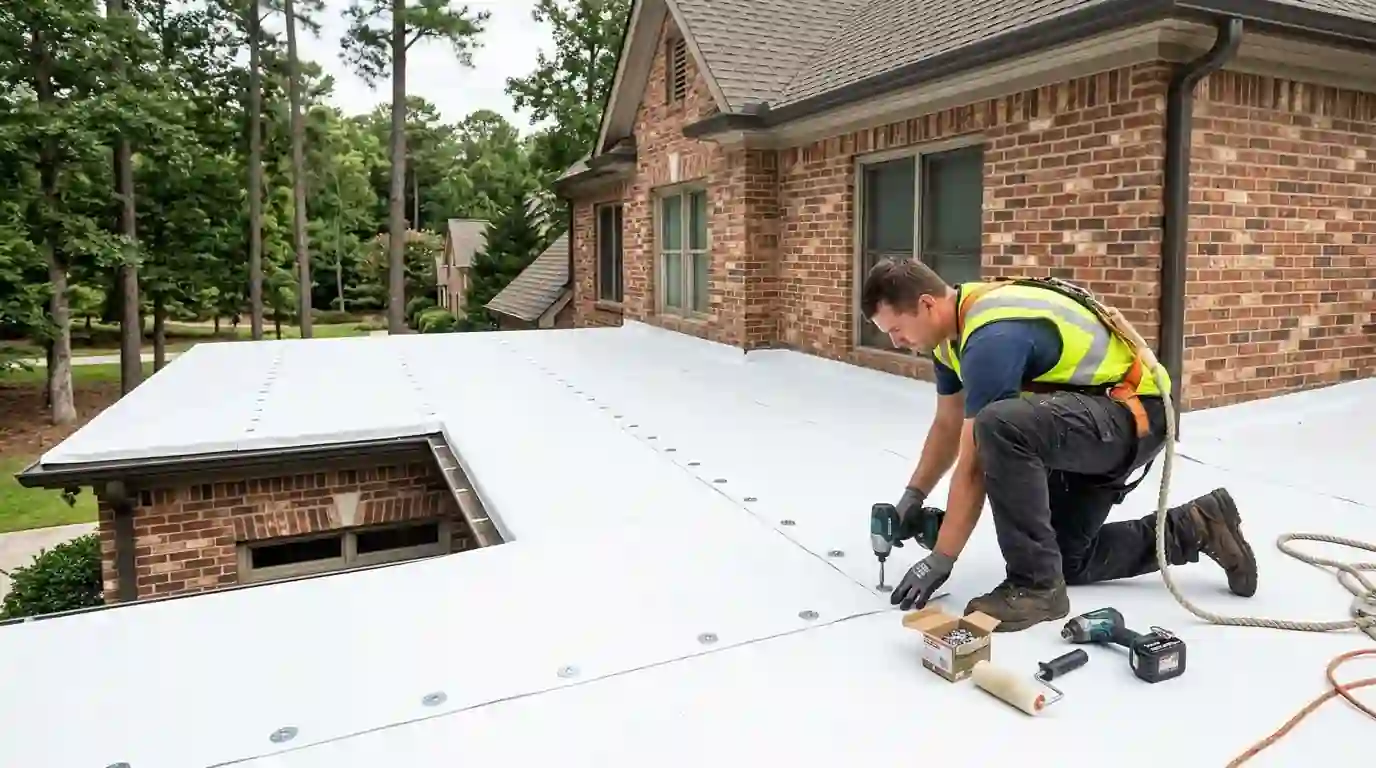
TPO Roofing on a metro Atlanta home.
TPO system choices for homes and light commercial roofs
Mechanically fastened TPO
Sheets fastened along the seams with plates and screws, then welded over the fasteners. It is efficient on larger roofs and light commercial buildings with plywood or metal decks. Installs go quickly.
Fully adhered TPO
The membrane is glued down across its full surface. It looks smoother, resists wind well and is our usual choice for residential additions, porches and roofs people see from upstairs windows.
Thicker 60 or 80 mil TPO
Thicker sheets add more weathering layer on top of the reinforcement. They cost more up front but are worth it on roofs with heavy sun, rooftop equipment or frequent foot traffic.
Tan or gray TPO
For roofs visible from the street or second-floor windows, tan and gray TPO soften the bright white look while still reflecting more sun than black rubber or dark roll roofing.
What tpo roofing costs in metro Atlanta
Membrane thickness
45 mil TPO costs less, while 60 and 80 mil sheets cost more but add durability and life, especially on roofs with foot traffic or heavy sun.
Insulation and taper
Adding polyiso or tapered insulation improves energy use and drainage but increases materials, and it may require taller edge metal and flashings.
Attachment method
Mechanically fastened systems are usually less expensive. Fully adhered TPO costs more but looks cleaner and works well on small, wind-exposed residential roofs.
Tear-off scope
Removing several old layers, gravel or soaked insulation adds labor and disposal, which affects the per square foot price more on smaller roofs.
Details and penetrations
Each pipe, curb, skylight and wall joint needs welded flashing, so a small but busy roof can cost more per foot than a large open one.
These are typical ranges from recent Atlanta-area jobs, not a quote. See every service side by side on our roof prices page, or call (470) 876-1496 for a visit.
We install and repair shingles from GAF, Owens Corning, CertainTeed and Atlas, metal panels from Englert, membranes from Carlisle and skylights from Velux, matched to the roof already on your house.
Our TPO installation process from tear-off to final weld
Inspect and measure
We measure the roof, check drainage and the deck from below where possible, and note every wall, curb and pipe that will need TPO flashing details.
Remove old roofing
The existing membrane, wet insulation and loose debris come off to the deck. Any rotted plywood or planks are replaced before the new system goes down.
Install insulation or cover board
We lay polyiso insulation or a cover board, often with tapered sections, fastened to the deck to create a firm, sloped base for the new membrane.
Fasten or adhere the TPO
Sheets are rolled out and either mechanically fastened along the seams or fully adhered with bonding adhesive, based on the roof's wind exposure and deck type.
Heat-weld every seam
Using hot air welders, we fuse each overlap and probe the welds by hand. Test welds at the start of each day keep the settings right for the weather.
Flash and finish edges
Walls, curbs, drains and pipes get TPO flashing, corners and boots. We install edge metal or termination bar, clean up and walk the finished roof with you.
How TPO handles Atlanta summers, storms and tree debris
Atlanta summers bring long stretches in the 90s with high humidity, and a black flat roof can get far hotter than the air around it. A white TPO roof stays much cooler on the surface, which helps rooms below and slows the aging of the membrane itself. Afternoon thunderstorms test every seam, and welded TPO seams handle that standing water better than glued laps. We also see a lot of tree debris on flat roofs in wooded areas like Decatur, Tucker and Smyrna. Leaves and needles stain white TPO and hold moisture, so we recommend a simple cleaning and drain check once or twice a year, especially before summer storm season starts.
If you are comparing scopes from more than one roofer, ask each for the same line items: underlayment, flashing, vents, decking allowance and disposal. It makes the numbers comparable.
Is TPO the right membrane for your low-slope roof?
Rooms under the roof run hot
If a sunroom or addition below a black or dark flat roof stays hot through summer evenings, a reflective white TPO surface can noticeably cut the heat coming through.
Old seams keep failing
Glued EPDM seams and torch-down laps that keep opening are a common reason to switch. TPO seams are welded into one piece, which holds better on roofs that move.
Water ponds after storms
TPO handles standing water better than many older roofs, and when we pair it with tapered insulation, it also fixes the low spots that caused the ponding.
Roll roofing on an addition
Mineral roll roofing on low-slope porches and additions often lasts only 10 to 15 years here. TPO gives that same area a longer-lasting, welded roof surface.
Rooftop HVAC and foot traffic
On light commercial buildings with rooftop units, TPO with walkway pads gives technicians a durable path and keeps service traffic from wearing holes in the roof.
Planned solar or skylights
TPO accepts welded flashing boots and curbs cleanly, which makes it a good base for future skylights, solar mounts or new vents on flat roofs.
TPO Roofing across the Atlanta metro
These are the largest places we cover. Every one of our 71 service areas gets the same service.
- Atlanta 30305
- Sandy Springs 30328
- Roswell 30075
- Johns Creek 30022
- Alpharetta 30004
- Marietta 30060
- Smyrna 30080
- Dunwoody 30338
- Brookhaven 30319
- Duluth 30096
- Lawrenceville 30043
- Kennesaw 30144
- Peachtree Corners 30092
- Decatur 30030
- Milton 30004
- Woodstock 30188
- Cumming 30028
- Stockbridge 30281
- McDonough 30252
- Douglasville 30134
TPO Roofing questions from Atlanta homeowners
How long does a TPO roof last in the Atlanta heat?
A well-installed 60 mil TPO roof commonly lasts 20 to 25 years here, and sometimes longer with good drainage and upkeep. Thinner sheets, poor seam welds and long ponding shorten that life. We pay close attention to welds and drainage because those are where TPO roofs usually fail early.
Can TPO roofing be installed over my existing flat roof?
Sometimes. If the existing roof is a single, dry layer over a sound deck, a cover board and TPO can go over it on some commercial buildings. On homes, we usually recommend tear-off so we can find wet insulation and rot. Moisture trapped under new TPO causes problems later.
Is TPO or EPDM better for a flat roof over a sunroom?
For sunrooms and additions that run hot, white TPO is often the better fit because it reflects more sun and keeps the space cooler. EPDM is very durable and easy to repair, and white EPDM exists too. We look at shade, use of the room and roof details before recommending one.
Does a TPO roof need maintenance after installation?
Yes, but not much. Keep drains, scuppers and gutters clear, rinse off leaf buildup, and have the seams, flashings and edge metal looked at every year or two. Catching a loose flashing or damaged spot early is far cheaper than drying out wet insulation later.
Services that often go with this one
EPDM Rubber Roofing
EPDM rubber roofing installs and repairs for flat garages, carports, porches and additions, with big sheets and few seams.
Learn more ›Flat Roof Replacement
Full flat and low-slope roof replacement with TPO, EPDM or modified bitumen, plus tapered insulation to stop ponding for good.
Learn more ›Commercial Roof Repair
Leak repair for small commercial roofs: strip centers, offices, churches and warehouses with TPO, EPDM, mod bit or metal.
Learn more ›Need tpo roofing in Atlanta?
Call (470) 876-1496. A person answers 24/7 and a roofer from our Alpharetta office follows up with a visit and photos.