Solar Attic Fans in Atlanta, GA
If your upstairs bedrooms stay hot long after sundown and the attic feels like an oven by noon, the heat trapped above your ceiling is working against your AC every summer day.
- Phones answered 24/7 at (470) 876-1496
- Photos of every problem spot before any work
- Line-item written scope
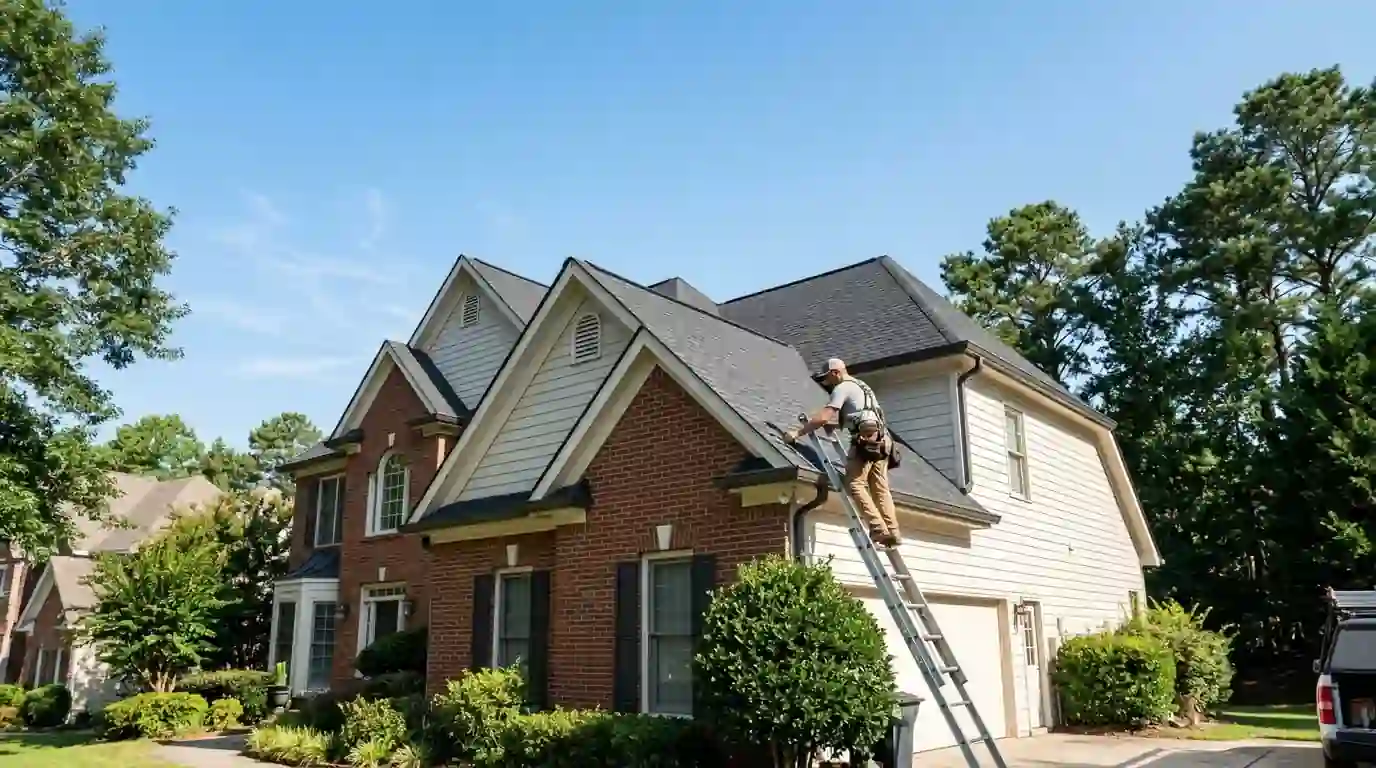
A solar attic fan is a roof-mounted exhaust fan powered by its own small panel. It pulls superheated air out of the attic when the sun is strongest. In Atlanta it makes sense when the attic lacks enough exhaust, the roof shape limits ridge vent, or upstairs rooms run hot. A typical installed fan runs about $685 to $1,345, and the roof and the model set the final number.
Attics around Atlanta can climb well past the outdoor temperature on a July afternoon. That heat soaks through the ceiling, keeps the second floor warm into the evening and bakes the underside of your shingles. A solar attic fan gives that hot air a fast way out. The panel on top powers the motor directly, so the fan runs hardest when the sun is beating down, which is exactly when the attic needs it. We cut the opening, set the fan on the roof deck, flash it into the shingles and seal it so it sheds a summer downpour like any other roof penetration.
A fan is only part of the answer, though. Exhaust needs intake, so before we recommend one we look at your soffit vents, any existing ridge or box vents and how air actually moves through the attic. Put a powerful fan on a roof with clogged soffits and it can pull conditioned air up through ceiling gaps and can lights instead. Some homeowners want a hybrid model with a plug-in backup or a thermostat tied to house power. For those, a solar electrician handles the electrical tie-in and any disconnect, while our roofers handle the roof cut, mounting, flashing and the fan installation itself.
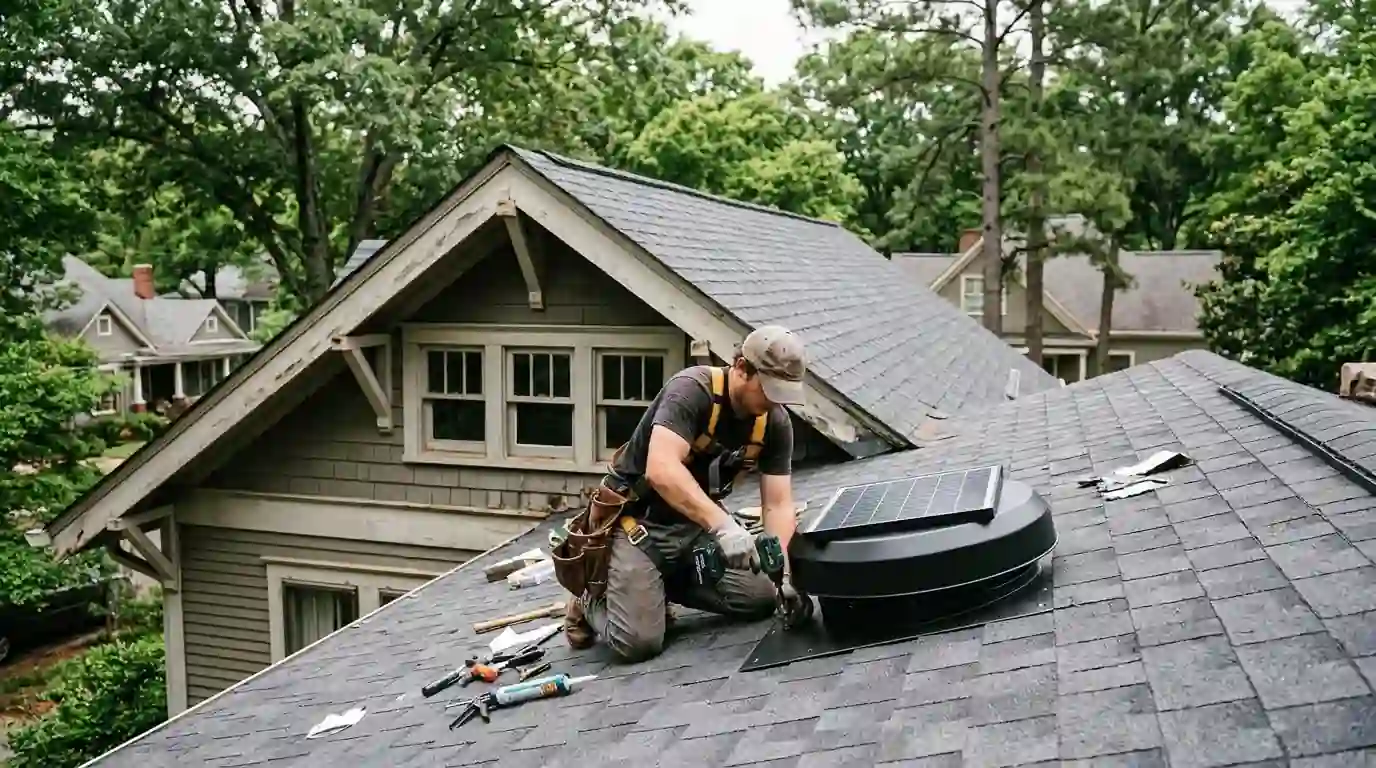
Solar Attic Fans on a metro Atlanta home.
Is your attic holding heat that a solar fan could clear out?
Hot upstairs rooms
Bedrooms over the garage or on the second floor stay several degrees warmer than downstairs even with the thermostat set low, and the AC seems to run almost nonstop on summer afternoons.
Attic feels like an oven
Stepping into the attic on a sunny day is hard to bear for more than a minute or two, and the rafters and roof deck feel hot to the touch well into the evening.
Limited ridge length
Hip roofs and chopped-up rooflines common on newer suburban homes leave little room for ridge vent, so the attic never gets the exhaust area it really needs to breathe properly.
Shingles aging early
Blistering, curling or granule loss on the south and west slopes can point to an attic running too hot, cooking the shingles from underneath as well as from the sun above.
Musty attic smell
A damp, stale smell or dark staining on the roof sheathing suggests humid air is sitting in the attic too long, which a properly placed exhaust fan can help move along.
Old wired fan failed
A dead electric attic fan with a burned-out motor or a tripped thermostat is a good time to switch to solar and drop the wiring and the monthly running cost entirely.
Why Atlanta attics benefit from solar exhaust
Atlanta summers bring long stretches of heat and thick humidity, and an attic with poor exhaust holds both. Many 1990s and 2000s two-stories in Alpharetta, Johns Creek and Marietta have hip roofs with short ridges, so ridge vent alone rarely moves enough air. Those homes also tend to have bonus rooms tucked into the roof framing, which are the hottest rooms in the house by late afternoon. A solar fan helps clear the heat when the sun is hardest on the roof. Shade matters here too. Lots with tall loblolly pines can block the panel for part of the day, so we check sun exposure before picking a spot, and sometimes a remote panel on a clearer slope is the better call.
We serve the whole metro from our Alpharetta office, so north Fulton, Forsyth and east Cobb calls are usually the quickest to schedule.
We install and repair shingles from GAF, Owens Corning, CertainTeed and Atlas, metal panels from Englert, membranes from Carlisle and skylights from Velux, matched to the roof already on your house.
How we install a solar attic fan on an Atlanta roof
Attic airflow check
We go into the attic, measure the space, count existing vents and look at the soffits to confirm there is enough intake air to feed a fan before anything goes on the roof.
Pick the spot
We choose a location high on a slope with strong sun, usually south or west facing, away from valleys and ridges and between rafters so the cut never weakens framing.
Cut the deck
Using the fan's template, we cut a clean round opening through the shingles and sheathing, then check from inside that no wiring, ductwork or framing sits in the way.
Set and flash
We slide the fan's base flange under the upper shingles and over the lower ones, fasten it to the deck and seal the nail heads so water runs over the flashing, not under it.
Panel and fan setup
We angle the panel for good afternoon sun, connect the panel to the motor and confirm the fan starts. Any house-power backup or thermostat wiring goes to a solar electrician.
Final test and cleanup
We watch the fan run, check the attic side for daylight gaps around the opening, clear all shingle scraps and nails, and walk you through what the unit should sound like.
What solar attic fans costs in metro Atlanta
Fan size and wattage
Larger panels and higher airflow motors cost more but clear bigger attics. A 2,400 square foot two-story usually needs more fan capacity than a compact ranch.
Number of fans
Some attics need two fans to move enough air. The second fan costs less than the first because we are already on the roof with ladders and gear.
Roof pitch and height
Steep or tall roofs need extra safety setup and slow the work down, which adds labor compared with a walkable single-story ranch roof.
Intake vent fixes
Painted-over or blocked soffit vents have to be opened or added, since a fan with no intake air can pull conditioned air from the living space below.
Hybrid or thermostat options
Fans with plug-in backup or thermostat control cost more, and any house-power connection adds a separate solar electrician charge on top of our roof work.
These are typical ranges from recent Atlanta-area jobs, not a quote. See every service side by side on our roof prices page, or call (470) 876-1496 for a visit.
Solar fan types and setups we install
Integrated panel fan
The panel sits on top of the fan housing in one low-profile unit. It is the simplest install, needs only one roof opening and works well on south or west facing slopes with good sun.
Remote panel fan
The fan goes where the airflow is best and the panel mounts separately where the sun is strongest. This helps on homes shaded by tall pines on one side of the roof.
Hybrid solar fan
A solar fan with a plug-in backup keeps running on cloudy days or at night. A solar electrician makes that house-power connection, while we handle the roof work and fan.
Gable-mounted solar fan
On some homes the fan mounts behind a gable vent instead of through the roof. No roof cut is needed, though the panel still goes on a sunny roof slope or wall.
Solar Attic Fans across the Atlanta metro
These are the largest places we cover. Every one of our 71 service areas gets the same service.
- Atlanta 30305
- Sandy Springs 30328
- Roswell 30075
- Johns Creek 30022
- Alpharetta 30004
- Marietta 30060
- Smyrna 30080
- Dunwoody 30338
- Brookhaven 30319
- Duluth 30096
- Lawrenceville 30043
- Kennesaw 30144
- Peachtree Corners 30092
- Decatur 30030
- Milton 30004
- Woodstock 30188
- Cumming 30028
- Stockbridge 30281
- McDonough 30252
- Douglasville 30134
Solar Attic Fans questions from Atlanta homeowners
Does a solar attic fan work on cloudy Atlanta days?
It slows down when clouds roll in and stops after dark, since the panel powers the motor directly. That matches the heat load, because an attic heats up most when the sun is out. If you want steady airflow around the clock, a hybrid model with house-power backup is an option, and a solar electrician would make that connection for you.
Can a solar attic fan be added to a roof with ridge vents?
Sometimes, but not always. A fan placed near a ridge vent can pull outside air in through the ridge instead of drawing from the soffits, which short-circuits the airflow. We look at the whole attic first. On some roofs we recommend blocking part of the ridge, adding intake or skipping the fan and improving passive venting instead.
Will cutting a hole for a solar attic fan cause a roof leak?
Not when it is flashed correctly. The fan's flange goes under the upper shingles and over the lower ones, the same way every other roof penetration should be lapped. We seal the fasteners and keep the fan away from valleys and other places where water collects during heavy summer thunderstorms.
How many solar attic fans does a two-story Atlanta home need?
It depends on the attic floor area, the airflow the maker lists for the fan and how much intake you have. Many average homes do fine with one good fan, while larger or more complex attics may need two. We measure the space and the intake before suggesting a number, so you are not paying for fans the attic cannot feed.
Services that often go with this one
Roof Ventilation
Attic ventilation upgrades that balance soffit intake and roof exhaust to cut attic heat, moisture and shingle wear.
Learn more ›Ridge Vent Installation
Shingle-over ridge vent installed along the peak to let hot, damp attic air escape evenly, paired with real soffit intake.
Learn more ›Attic Insulation
Blown-in and batt attic insulation added or replaced to cut summer heat, lower cooling bills and protect the roof deck.
Learn more ›Need solar attic fans in Atlanta?
Call (470) 876-1496. A person answers 24/7 and a roofer from our Alpharetta office follows up with a visit and photos.