Gutter Installation in Atlanta, GA
When gutters overflow in every summer storm, pull away from the fascia or dump water beside the foundation, the problem is usually undersized, poorly pitched or worn-out gutters that need replacing.
- Phones answered 24/7 at (470) 876-1496
- Photos of every problem spot before any work
- Line-item written scope
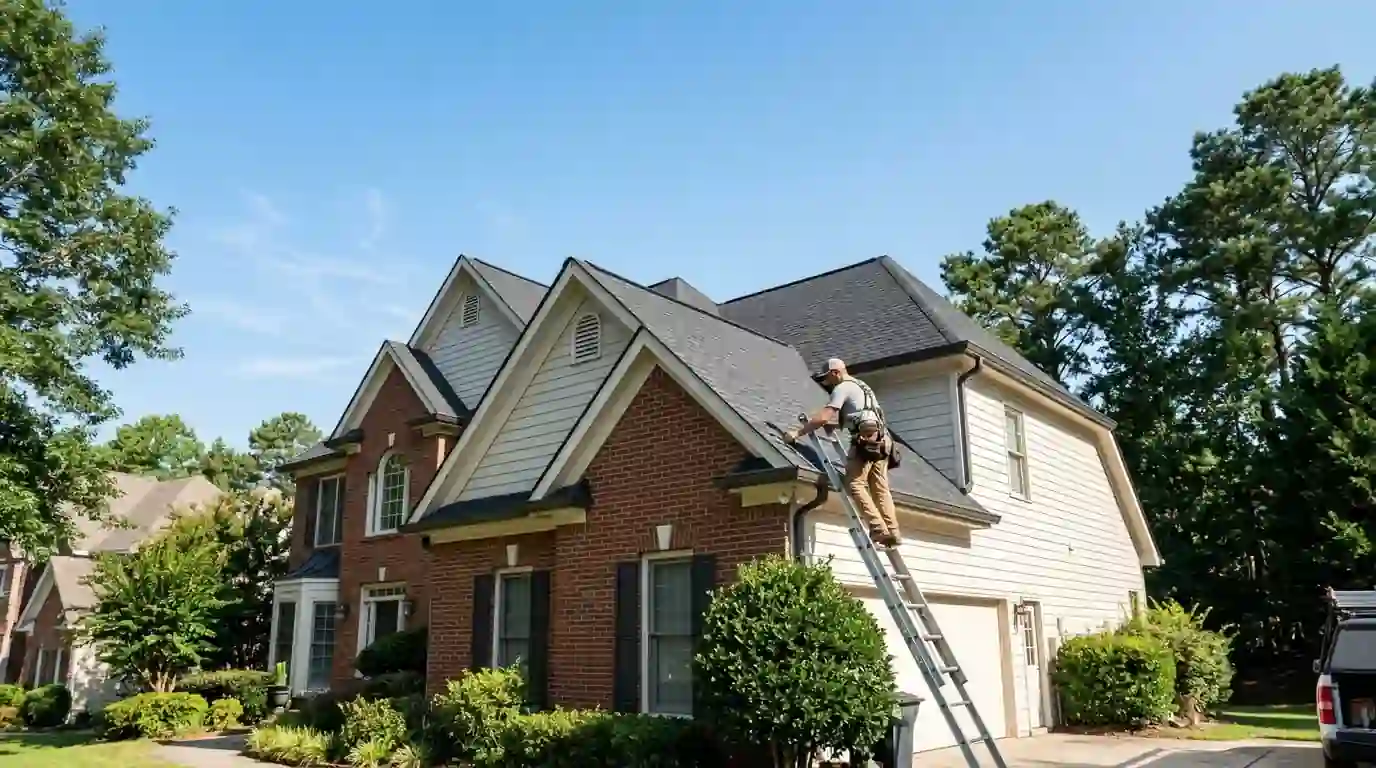
Gutter installation means removing old gutters and running new seamless gutters in aluminum, steel or copper with properly placed downspouts. In Atlanta you need it when gutters leak at seams, sag, overflow in heavy rain or are rusting through. Installed aluminum seamless gutters typically run about $8.65 to $14.35 per linear foot, and the final price depends on the home's height, gutter size and downspout count.
Gutters have one job: catch the water coming off your roof and put it somewhere harmless. On many Atlanta homes the original gutters were sized for an average shower, not a summer thunderstorm that drops an inch of rain in half an hour. Water sheets over the front edge, splashes red clay up onto the siding and soaks the soil right against the foundation. We replace tired sectional gutters with seamless gutters shaped on site from a coil, so the only joints are at corners and end caps. Fewer joints means fewer drips, and the gutters line up cleanly along the fascia.
Good installation is mostly about the details you never see from the street. We check the fascia boards first, since hanging new gutters on rotten wood just moves the failure down the road. We set the pitch so water actually reaches the downspouts, use hidden hangers spaced close enough to hold the weight of wet leaves, and tuck the back of the gutter behind the drip edge so roof runoff cannot slip down the fascia. Downspouts get placed where the yard can take the water, with extensions or splash blocks that move it away from the crawlspace or basement walls.
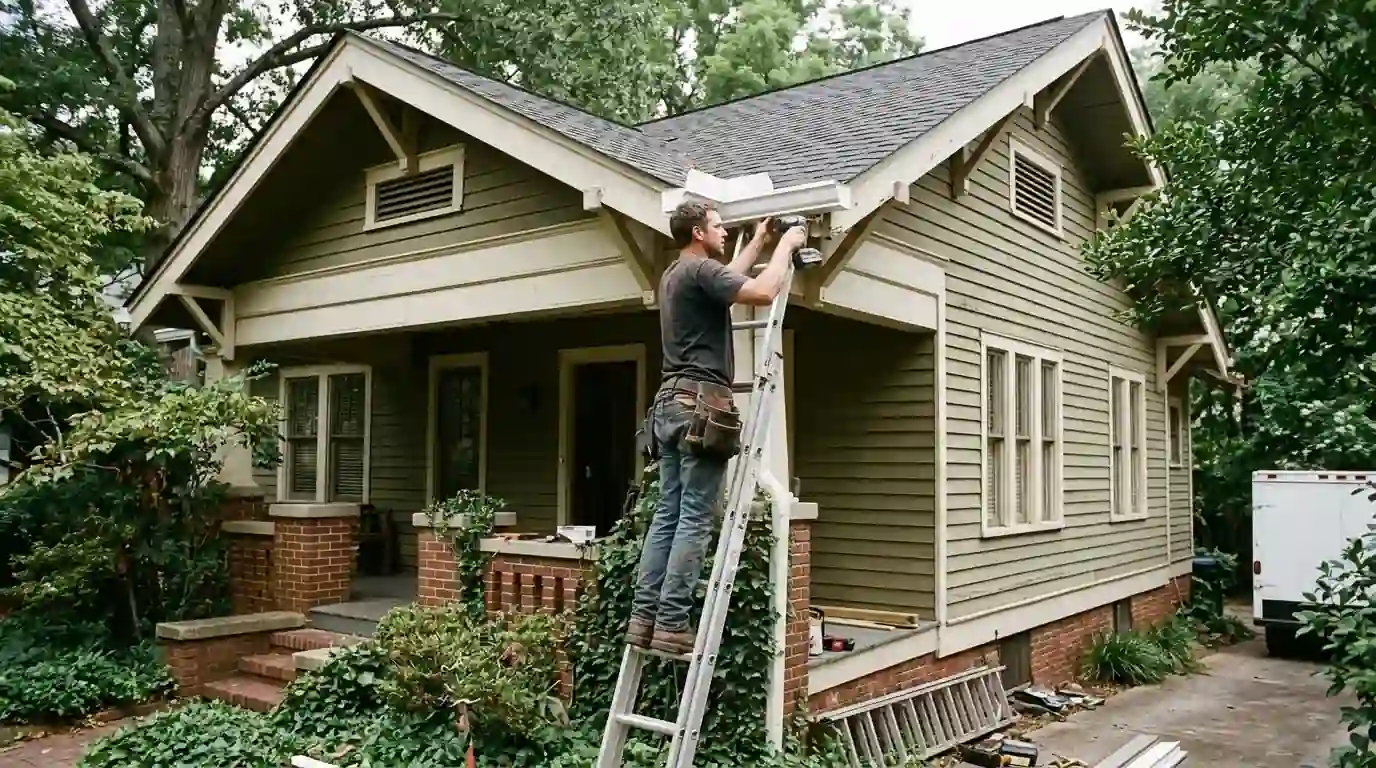
Gutter Installation on a metro Atlanta home.
Gutter styles and materials for Atlanta homes
Aluminum K-style seamless gutters
The most common choice in the metro. It holds more water than half-round gutters of the same width, comes in many colors and resists rust, making it a good fit for most suburban homes.
Six-inch oversized gutters
Wider gutters paired with larger three-by-four inch downspouts suit big roof areas, steep slopes and the spots below valleys. They handle the Atlanta cloudbursts that regularly overwhelm standard five-inch gutter systems.
Galvalume steel gutters
Heavier gauge steel with a zinc and aluminum coating that resists corrosion. It stands up better to ladders, falling limbs and ice than aluminum, which helps on homes with large oaks overhead.
Copper half-round gutters
Round copper gutters with round downspouts fit historic intown homes and high-end builds. They weather to a warm brown and then green patina and can last for decades with very little upkeep.
What gutter installation costs in metro Atlanta
Gutter size
Six-inch gutters cost more than five-inch but carry far more water, and they are often worth it below valleys or on large steep roof slopes.
Material choice
Aluminum is the most common and least costly. Galvalume steel costs more for strength, and copper runs several times higher for historic or high-end homes.
Home height
Two-story and three-story eaves need taller ladders, more setup and slower work, so a tall home costs more per foot than a single-story ranch.
Downspouts and corners
Each downspout, elbow and mitered corner adds material and labor. Complex rooflines with many inside and outside corners raise the total noticeably.
Fascia condition
Rotted fascia must be replaced before new gutters can hang on it, and that carpentry is priced separately based on how many boards are bad.
These are typical ranges from recent Atlanta-area jobs, not a quote. See every service side by side on our roof prices page, or call (470) 876-1496 for a visit.
We install and repair shingles from GAF, Owens Corning, CertainTeed and Atlas, metal panels from Englert, membranes from Carlisle and skylights from Velux, matched to the roof already on your house.
How we install new seamless gutters
Measure and plan
We measure every run, note roof valleys and slopes that send heavy water to certain corners, and plan downspout spots where the yard can actually carry water away from the house.
Remove old gutters
We take down the old gutters, hangers and downspouts carefully, pulling old spikes and fasteners so they do not leave holes or split the fascia boards behind them.
Repair the fascia
Any soft or rotted fascia gets replaced before new gutters go up. We also check that the drip edge is in place so roof water lands inside the gutter.
Shape each run on site
Our gutter machine rolls each run from a coil right at your driveway, cut to length so long walls get one continuous piece with no seams in the middle.
Hang and pitch
We snap a line for pitch toward each outlet, fasten the gutter with hidden hangers spaced closely, and seal corners, end caps and outlets with gutter sealant.
Downspouts and test
We attach downspouts with straps, add elbows and extensions to move water away from the foundation, then run a hose through each run to confirm it drains.
Gutters built for Atlanta rain and red clay
Atlanta gets more rain than a lot of people expect, and much of it falls in short, heavy summer thunderstorms. That is when undersized gutters overflow. The ground makes it worse. Georgia red clay drains slowly, so water dumped beside a foundation sits there, soaks crawlspaces and pushes against basement walls. In older neighborhoods like Decatur and Kirkwood, many houses sit close to the lot line with little room to spread water, so downspout placement takes planning. Newer homes in Cumming and Canton often have long roof runs and tall eaves feeding a single corner. Sizing up to six-inch gutters and adding downspouts below valleys solves most of the overflow we see across the metro.
Photos from the ground, taken safely, help us plan the visit before we arrive.
Are your gutters telling you it is time for new ones?
Overflow in normal rain
Water spills over the front lip even in an ordinary storm, often at inside corners or below roof valleys where runoff from two slopes concentrates into one short stretch.
Leaking seams and corners
Drips at every joint on old sectional gutters, stained fascia below the seams and puddles under the corners all point to sealant that has failed and will keep failing.
Sagging or pulling away
Gutters that dip between hangers or lean out from the house hold standing water, rot the fascia behind them and can tear loose under the weight of wet leaves.
Rust or split metal
Older steel gutters rust through along the bottom, and thin aluminum splits at corners. Patching one hole usually means the next one is not far behind.
Washed-out beds and erosion
Trenches in the mulch, exposed roots and red clay splashed onto siding show where water is pouring off the roof without a working gutter to catch it.
Wet crawlspace or basement
Musty smells, damp crawlspace soil or water seeping through basement walls after storms often trace back to downspouts that dump water right at the foundation.
Gutter Installation across the Atlanta metro
These are the largest places we cover. Every one of our 71 service areas gets the same service.
- Atlanta 30305
- Sandy Springs 30328
- Roswell 30075
- Johns Creek 30022
- Alpharetta 30004
- Marietta 30060
- Smyrna 30080
- Dunwoody 30338
- Brookhaven 30319
- Duluth 30096
- Lawrenceville 30043
- Kennesaw 30144
- Peachtree Corners 30092
- Decatur 30030
- Milton 30004
- Woodstock 30188
- Cumming 30028
- Stockbridge 30281
- McDonough 30252
- Douglasville 30134
Gutter Installation questions from Atlanta homeowners
What size gutters should a new Atlanta gutter installation use?
Most homes here do well with five-inch K-style gutters, but six-inch gutters make sense on large roof areas, steep slopes and below valleys where two slopes drain into one corner. Atlanta storms can drop a lot of water fast, so we size based on roof area and pitch, not just what the house had before.
How many downspouts does a gutter installation need?
A common target is one downspout for every 30 to 40 feet of gutter, but roof valleys, slope size and where the yard can take water all change that. We add downspouts where heavy runoff collects, and we place them so water flows away from walkways, driveways and the foundation rather than pooling.
Do seamless gutters really leak less than sectional gutters?
Yes, in most cases. Sectional gutters have a joint every 10 feet or so, and each joint relies on sealant that dries out over time. Seamless gutters are formed in one piece per run, so the only joints are at corners, end caps and outlets. Fewer joints means fewer places for drips to start.
Can new gutters go up the same day as old gutter removal?
On most average homes, yes. We remove the old system, replace any bad fascia and hang the new seamless gutters in a single day. Larger homes, steep three-story walls or a lot of fascia carpentry can push it into a second day, and we let you know that before the work starts.
Services that often go with this one
Gutter Guards
Gutter guards that keep pine needles, oak leaves and seed pods out so your gutters keep flowing through every season.
Learn more ›Fascia & Soffit Repair
Replacement of rotted fascia boards and damaged soffit panels, closing the gaps that let water, squirrels and birds into the attic.
Learn more ›Drip Edge Installation
Metal drip edge along eaves and rakes that steers runoff into the gutter and keeps water off your fascia and roof deck.
Learn more ›Need gutter installation in Atlanta?
Call (470) 876-1496. A person answers 24/7 and a roofer from our Alpharetta office follows up with a visit and photos.