EPDM Rubber Roofing in Atlanta, GA
A rubber roof that has shrunk away from the edges, opened at the seams or started leaking over the garage does not always need to be torn off, but it does need someone who knows EPDM.
- Phones answered 24/7 at (470) 876-1496
- Photos of every problem spot before any work
- Line-item written scope
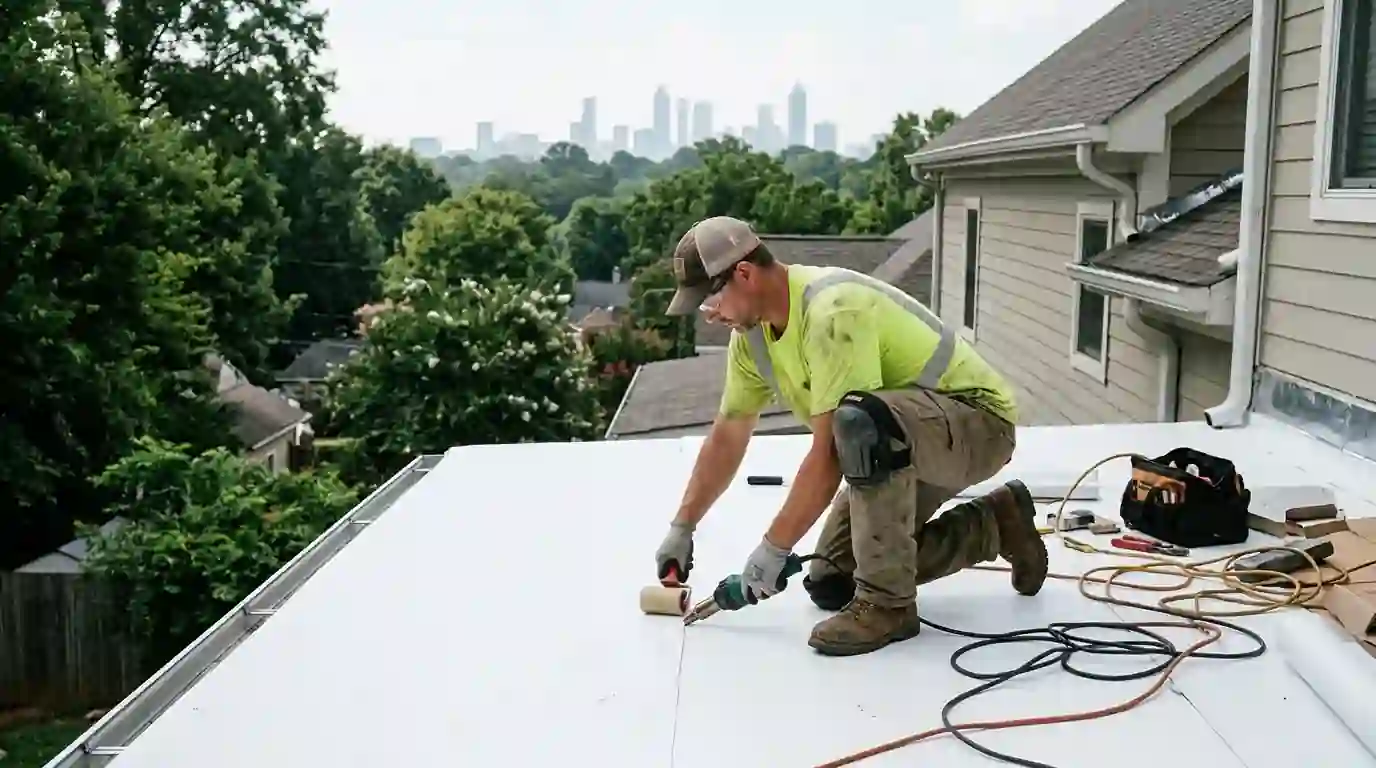
EPDM roofing is a synthetic rubber membrane, usually black, laid in large sheets over flat and low-slope roofs and glued or fastened in place. In Atlanta it is a good fit for garages, carports, porches and additions, and it is worth repairing or replacing when seams lift, edges pull back or leaks appear. A new EPDM roof here typically runs $7.15 to $11.90 per square foot.
EPDM has been on flat roofs for decades, and plenty of the rubber roofs in the metro are older than the people living under them. It is a simple, forgiving material. Sheets come in wide rolls, so a small residential roof may have only one or two seams. Rubber stays flexible through summer heat and the occasional hard freeze, and it shrugs off hail better than many other low-slope options. When EPDM fails, it is usually at seams, flashings and edges, not in the middle of the sheet. That makes good detail work the key to a long-lasting rubber roof.
We install new EPDM roofs using fully adhered sheets on most homes, which keeps the membrane tight and quiet in wind. Seams get primer and factory seam tape instead of the old liquid adhesives that tended to let go after a decade. We also repair existing rubber roofs, cleaning and priming the surface, then applying cover tape and patches that bond to aged rubber. If your EPDM roof is chalky but still sound, cleaning and resealing the seams can often add years before a replacement is needed. We will show you where it stands before you decide.
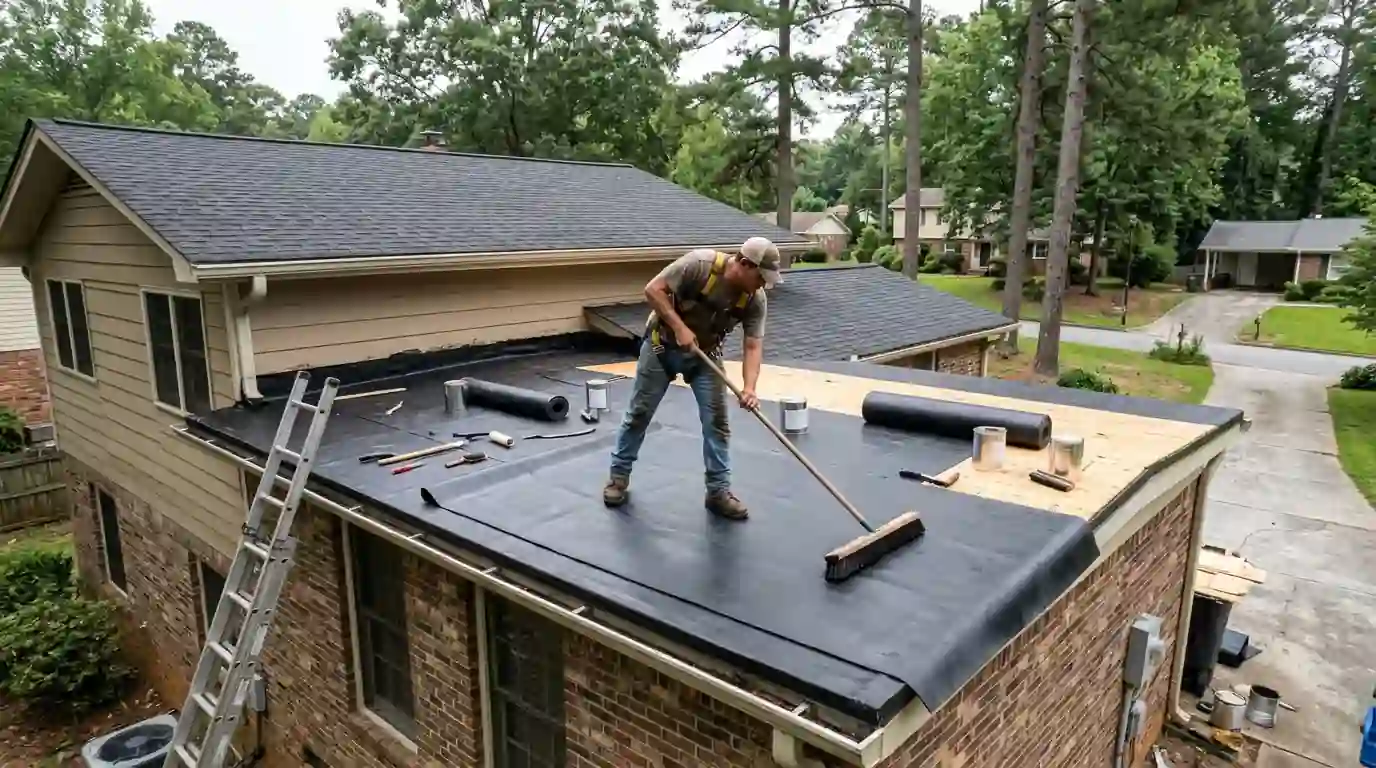
EPDM Rubber Roofing on a metro Atlanta home.
EPDM options for homes and small buildings
Fully adhered black EPDM
The standard residential rubber roof, glued to a cover board or insulation. It lies flat, handles wind well and is easy to repair years later with primer and patches. Most homes start here.
White-on-black EPDM
A rubber sheet with a white top layer that reflects more sun. It costs more than standard black EPDM but helps rooms below stay cooler in long Atlanta summers. It suits sunrooms.
90 mil reinforced EPDM
Heavier rubber that resists punctures from branches, hail and foot traffic. A smart upgrade for roofs under big oaks and pines or for decks that see regular service work. It lasts longer.
Seam and flashing restoration
For aging roofs that are still mostly sound, we clean the rubber, retape seams and redo flashings. It costs far less than a new roof and can add several more years.
What epdm rubber roofing costs in metro Atlanta
Sheet thickness
60 mil EPDM is the residential standard, while 90 mil rubber costs more but adds puncture resistance on roofs under trees or with foot traffic.
Adhered or ballasted
Fully adhered rubber costs more in adhesive and labor, while ballasted systems use stone to hold the sheet but are rare on homes due to weight.
Insulation and cover board
Adding new insulation boards or a cover board improves comfort and gives the rubber a smooth base, adding materials and labor to the job.
Old roof removal
Pulling off one rubber roof is straightforward. Removing several layers, gravel, tar or wet insulation adds hours of labor and extra disposal fees.
Flashings and edge details
Walls, chimneys, skylights and many pipes each need flashing and corners, so a small, busy roof costs more per foot than a wide open garage roof.
These are typical ranges from recent Atlanta-area jobs, not a quote. See every service side by side on our roof prices page, or call (470) 876-1496 for a visit.
We install and repair shingles from GAF, Owens Corning, CertainTeed and Atlas, metal panels from Englert, membranes from Carlisle and skylights from Velux, matched to the roof already on your house.
How we install and repair EPDM rubber roofs
Inspect seams and edges
We check every seam, edge, drain and flashing, probe for loose areas and wet insulation, and decide whether repair or a new EPDM roof makes the most sense.
Prepare the deck
For a new roof, we remove the old membrane and wet insulation, replace rotted decking, and install insulation or a cover board to give the rubber a smooth base.
Lay out and relax the sheet
EPDM sheets are rolled out and left to relax in the sun so wrinkles settle before we glue them, which helps the finished roof lie flat.
Bond the membrane
We apply bonding adhesive to the deck and sheet, fold the rubber into place and roll it down firmly, working in sections to avoid trapping air.
Seal seams with tape
Seams are cleaned, primed and joined with factory seam tape, then rolled. Any T-joints and corners get extra cover strips and lap sealant for added protection.
Flash and terminate edges
We flash walls, curbs and pipes with EPDM accessories, install termination bar or edge metal, and leave the roof clean with drains and scuppers clear.
Why EPDM still makes sense on many Atlanta flat roofs
EPDM rubber handles a few Atlanta conditions especially well. It stays flexible in summer heat and in the cold snaps that occasionally bring ice to the metro, so it does not crack from movement the way old built-up roofs do. It also takes hail better than many low-slope materials, which matters when spring storms drop ice across Cobb and Gwinnett. We see a lot of rubber on detached garages and carports behind 1950s and 1960s homes in places like Avondale Estates and Chamblee, often installed decades ago with glued seams that are now letting go. Under heavy tree cover, falling limbs are the biggest threat, which is why we often suggest thicker rubber in wooded yards.
If you are comparing scopes from more than one roofer, ask each for the same line items: underlayment, flashing, vents, decking allowance and disposal. It makes the numbers comparable.
How do you know your rubber roof needs repair or replacement?
Seams peeling open
Older EPDM seams were glued with liquid adhesive that dries out. If you can lift a seam edge with a fingertip, water can wick under it during heavy rain.
Membrane shrinking from edges
Aging rubber can shrink and pull tight at walls and edges, tenting over corners and tearing flashings loose. This is common on EPDM roofs over 20 years old.
Punctures and tears
Falling branches, dropped tools and careless foot traffic can puncture rubber. Small holes are easy to patch if caught early, before water soaks the insulation underneath.
Bubbles under the sheet
Loose areas or bubbles under adhered EPDM mean the adhesive has let go or moisture is trapped. Wind can then lift the membrane and stress nearby seams.
Chalky, cracked surface
A gray, chalky film and fine surface cracks show the rubber is weathering. It may still keep water out, but it is a sign to plan ahead for repair or replacement.
Leaks at pipes and curbs
Flashing around vent pipes, skylights and HVAC stands is often the first spot to leak, especially where an earlier repair used roofing tar on rubber.
EPDM Rubber Roofing across the Atlanta metro
These are the largest places we cover. Every one of our 71 service areas gets the same service.
- Atlanta 30305
- Sandy Springs 30328
- Roswell 30075
- Johns Creek 30022
- Alpharetta 30004
- Marietta 30060
- Smyrna 30080
- Dunwoody 30338
- Brookhaven 30319
- Duluth 30096
- Lawrenceville 30043
- Kennesaw 30144
- Peachtree Corners 30092
- Decatur 30030
- Milton 30004
- Woodstock 30188
- Cumming 30028
- Stockbridge 30281
- McDonough 30252
- Douglasville 30134
EPDM Rubber Roofing questions from Atlanta homeowners
Can you put a patch on my EPDM rubber roof or does it need replacing?
Most small punctures, tears and loose seams can be patched. We clean the rubber, apply primer and use cured EPDM tape or patches that bond to the old sheet. If the membrane is shrinking, cracking all over or soaked underneath, replacing that roof is usually the better use of money.
Why should I avoid roofing tar on a rubber roof?
Asphalt roofing tar and many general sealants do not bond well to EPDM and can soften or damage the rubber. They also make proper repairs harder, because we must remove the tar before primer and tape will stick. EPDM should be repaired with products made for rubber roofs.
How long does an EPDM roof last on an Atlanta garage?
A well-installed EPDM roof often lasts 20 to 30 years here, and some go longer. Seams and flashings usually need attention before the field of the sheet does. Keeping drains clear, trimming branches back and checking seams every couple of years helps a rubber roof reach the long end of that range.
Is EPDM rubber roofing safe to walk on for gutter or HVAC work?
Yes, if people walk carefully and avoid sharp tools or debris underfoot. Rubber can be punctured by screws, glass or gravel pressed into it by a boot. For roofs that see regular service, we add walkway pads along the paths technicians use most often. Those pads cost little.
Services that often go with this one
TPO Roofing
White heat-welded TPO membrane roofs for flat additions, sunrooms and light commercial buildings that need to stay cooler in summer.
Learn more ›Flat Roof Repair
Fast repairs for leaking flat and low-slope roofs: ponding, split seams, blisters, failed drains and worn flashing at walls.
Learn more ›Silicone Roof Coatings
Silicone coatings that seal and restore aging flat and low-slope roofs, adding years of life without a full tear-off.
Learn more ›Need epdm rubber roofing in Atlanta?
Call (470) 876-1496. A person answers 24/7 and a roofer from our Alpharetta office follows up with a visit and photos.