Silicone Roof Coatings in Atlanta, GA
An aging flat or metal roof that is still mostly dry but leaking at seams, fasteners and old patches may not need a tear-off yet, and a silicone coating can buy it many more years.
- Phones answered 24/7 at (470) 876-1496
- Photos of every problem spot before any work
- Line-item written scope
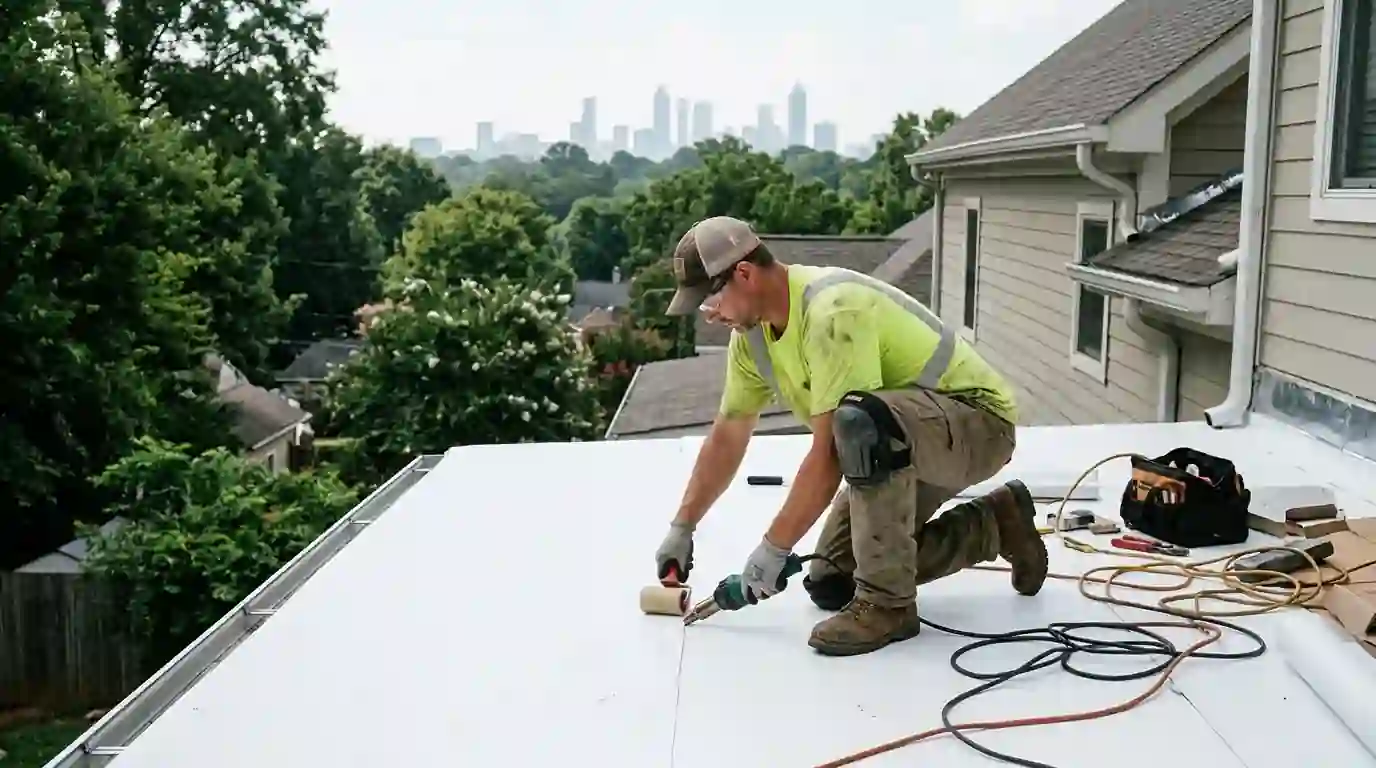
Silicone roof coatings are thick liquid layers rolled or sprayed over an existing low-slope roof to seal seams, fasteners and small cracks and reflect sun. In Atlanta they make sense when a TPO, EPDM, modified bitumen or metal roof is aging but the insulation underneath is still dry. A silicone restoration here typically runs $3.85 to $6.70 per square foot, far less than replacement.
Not every tired flat roof needs to be torn off. If the deck and insulation are dry and the membrane is mostly intact, a silicone coating can seal the whole surface in one continuous layer, covering seams, fastener heads and small cracks where leaks usually start. Silicone holds up to standing water better than acrylic coatings, and it stays flexible as the roof heats and cools. The bright white finish reflects a lot of sunlight, which keeps the surface cooler and slows further aging. On the right roof, it delays a replacement for years at a fraction of the cost.
The key word is the right roof. Silicone does not fix wet insulation, rotted decking or a roof that is already falling apart, and coating over those problems just hides them for a while. That is why we start with a close inspection, moisture checks and sometimes test cuts. If the roof qualifies, our roofers clean it thoroughly, repair seams and damaged spots, treat rust on metal roofs, and then apply silicone at the thickness the coating maker specifies. We measure that thickness as we go, because a thin coat is the most common reason coatings fail early.
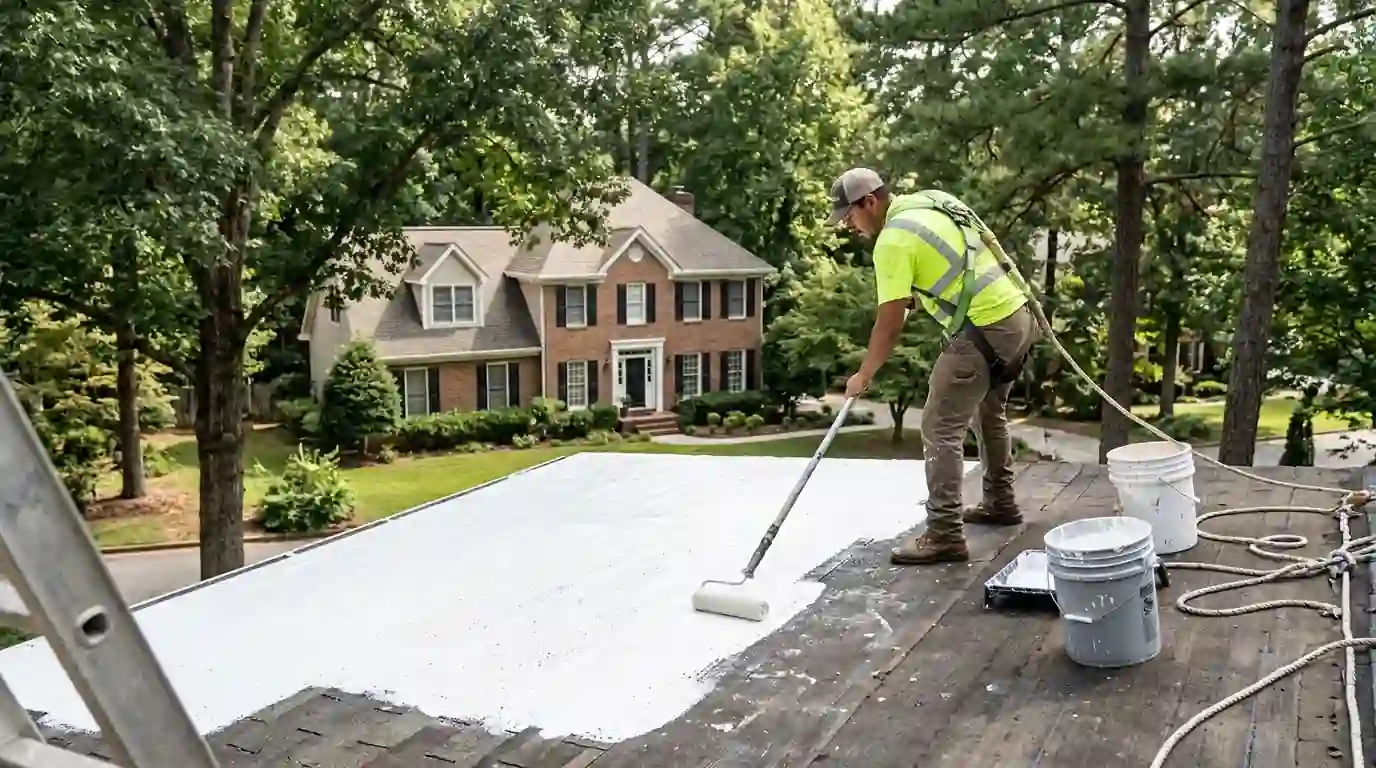
Silicone Roof Coatings on a metro Atlanta home.
Is your roof a good candidate for a silicone coating?
Mostly dry insulation
Moisture checks show the insulation and deck are dry across most of the roof. Small wet areas can be cut out and replaced before coating, but widespread soaking rules it out.
Aging but intact membrane
TPO that is chalky, EPDM with weathered seams or modified bitumen losing granules can be coated if the sheet is still attached and not split or brittle throughout.
Leaks at seams and fasteners
On many older flat and metal roofs, leaks come from seams, laps and screw heads. A continuous silicone layer seals those spots across the entire roof at once.
Ponding that cannot be fixed easily
Silicone handles standing water better than most coatings. Where adding slope is not practical, it can protect low spots that would quickly break down other materials.
Rusting metal roof panels
Older metal roofs on barns, shops and commercial buildings with surface rust and loose fasteners can be cleaned, treated and coated if the panels are still structurally sound.
Avoiding tear-off disruption
For businesses that cannot shut down or homeowners who want to delay a big project, coating work goes on without removing the roof or exposing the building to rain.
How silicone coatings handle Atlanta sun, rain and pollen
Long summers with strong sun and high humidity are hard on low-slope roofs here, especially older dark membranes and metal panels on warehouses and shops along Peachtree Industrial Boulevard and Buford Highway. Silicone reflects much of that sunlight, keeping roof surfaces cooler and slowing aging. It also stands up to the ponding that follows heavy afternoon storms, which is where acrylic coatings often struggle. On the other hand, our yellow spring pollen and tree debris can leave silicone looking dingy and hold dirt, so a gentle cleaning every year or two keeps it reflective. We schedule most coating jobs for late spring through early fall, when dry days and warm nights help the coating cure fully.
Photos from the ground, taken safely, help us plan the visit before we arrive.
We install and repair shingles from GAF, Owens Corning, CertainTeed and Atlas, metal panels from Englert, membranes from Carlisle and skylights from Velux, matched to the roof already on your house.
Our silicone roof coating process, step by step
Inspect and moisture test
We walk the roof, check seams, flashings and drains, and use moisture checks or test cuts to confirm the insulation and deck are dry enough for a coating.
Repair wet and damaged areas
Wet insulation and rotted deck sections get replaced, blisters are cut out, and loose seams are repaired so the coating goes over a sound, stable surface.
Clean the surface
The roof is power washed or scrubbed to remove dirt, chalk, pollen and loose granules. Clean surfaces are the most important part of getting silicone to stick.
Prime and reinforce details
Where the coating maker calls for it, we apply primer. Seams, fasteners, penetrations and flashings get extra silicone and fabric reinforcement before the main coat.
Apply silicone at full thickness
We roll or spray silicone across the roof, checking wet thickness with a gauge as we go so the coating meets the specified mils everywhere.
Final check and care plan
After curing, we inspect the coating for thin spots and holidays, touch them up, and give you a simple plan for cleaning and inspections to keep it performing.
What silicone roof coatings costs in metro Atlanta
Coating thickness
Thicker silicone layers cost more in material but last longer. Many systems come in options sized for different expected service lives and warranty terms.
Repair before coating
Replacing wet insulation, fixing blisters and reworking flashings adds to the cost, but skipping those steps leads to early coating failure and new leaks.
Roof type and condition
Metal roofs may need rust treatment and fastener work. Old modified bitumen may need granule removal or primer before silicone will bond well.
Roof size and access
Larger roofs spread setup costs over more area. Small roofs, steep access or tight spaces can raise the per square foot price for coatings.
Number of penetrations
Each pipe, curb, skylight and HVAC stand needs detail work with fabric and extra coating, so busy roofs take more labor than open ones.
These are typical ranges from recent Atlanta-area jobs, not a quote. See every service side by side on our roof prices page, or call (470) 876-1496 for a visit.
Coating choices and when silicone is the right one
High-solids silicone
Thick, single-pass silicone that builds film quickly and resists ponding water well. A strong choice for most flat roofs in the metro that see long, heavy summer rains and lingering puddles.
Silicone over metal roofs
Used on commercial and agricultural metal roofs after cleaning, rust treatment and fastener sealing. It can stop many leaks and keep the panels cooler in direct Georgia sun all summer.
Acrylic coatings
Water-based coatings that work best on roofs with good slope and little ponding. They cost less up front, but they break down faster where water stands on the surface for long stretches.
Coating versus replacement
When a roof has widespread wet insulation, many failed seams or a sagging deck, a coating will not hold. In those cases we show you the numbers and recommend replacement instead.
Silicone Roof Coatings across the Atlanta metro
These are the largest places we cover. Every one of our 71 service areas gets the same service.
- Atlanta 30305
- Sandy Springs 30328
- Roswell 30075
- Johns Creek 30022
- Alpharetta 30004
- Marietta 30060
- Smyrna 30080
- Dunwoody 30338
- Brookhaven 30319
- Duluth 30096
- Lawrenceville 30043
- Kennesaw 30144
- Peachtree Corners 30092
- Decatur 30030
- Milton 30004
- Woodstock 30188
- Cumming 30028
- Stockbridge 30281
- McDonough 30252
- Douglasville 30134
Silicone Roof Coatings questions from Atlanta homeowners
How long does a silicone roof coating last on an Atlanta flat roof?
Many silicone systems are designed to last 10 to 20 years, based on the thickness applied and the condition of the roof underneath. Recoating later can extend that further. Good prep and correct thickness matter more than the brand name, which is why we measure the coating as we apply it.
Can you put silicone coating over a leaking flat roof?
We can coat a roof that has a few leaks, but only after we find and fix those leaks and confirm the insulation is mostly dry. If water has soaked large areas, coating would trap it and hide damage. In that case, we recommend repairs or a replacement instead of a coating.
Is silicone coating slippery or hard to walk on?
Silicone can be slick when wet, and it scuffs and holds dirt more than some other surfaces. For roofs with frequent foot traffic, we add walkway pads or granules on service paths. That gives technicians safer footing and keeps wear from building up in one place over time.
Will a silicone coating help with my building's cooling bills?
A white silicone coating reflects much more sunlight than a dark membrane or bare metal, so the roof surface stays cooler. Many building owners notice the difference in rooms or warehouse space under the roof. Actual savings depend on insulation, how the space is cooled and how clean the coating stays.
Services that often go with this one
Commercial Roof Repair
Leak repair for small commercial roofs: strip centers, offices, churches and warehouses with TPO, EPDM, mod bit or metal.
Learn more ›Flat Roof Repair
Fast repairs for leaking flat and low-slope roofs: ponding, split seams, blisters, failed drains and worn flashing at walls.
Learn more ›Roof Maintenance Plans
Yearly or twice-yearly roof checkups with minor sealing, debris clearing and gutter care to stretch the life of your roof.
Learn more ›Need silicone roof coatings in Atlanta?
Call (470) 876-1496. A person answers 24/7 and a roofer from our Alpharetta office follows up with a visit and photos.