Copper Roofing in Atlanta, GA
A copper bay roof or porch canopy that is leaking at the seams, or a plain shingle accent that never fit the house, calls for a roofer who actually solders and folds copper.
- Phones answered 24/7 at (470) 876-1496
- Photos of every problem spot before any work
- Line-item written scope
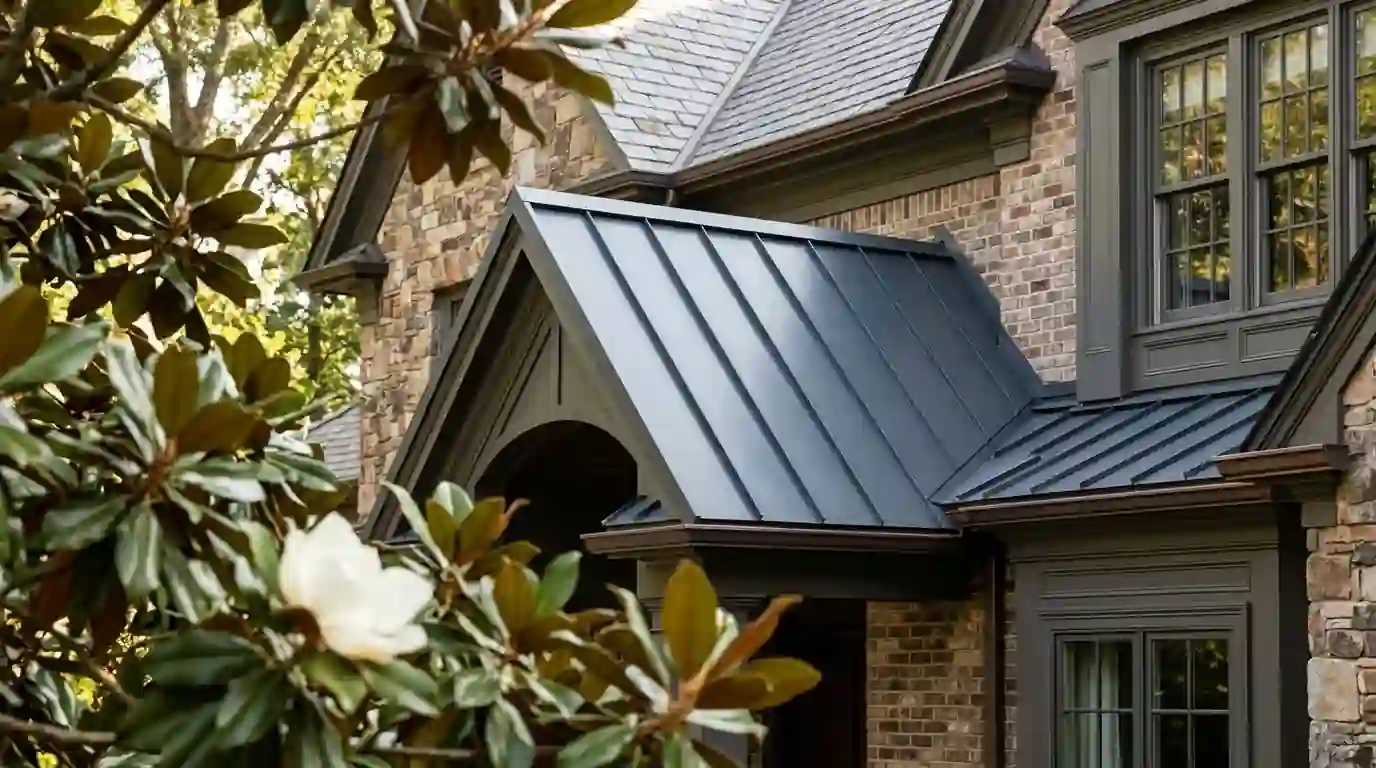
Copper roofing is sheet copper formed into standing seam, flat-lock or batten panels, most often used on bay windows, porch roofs, dormers, cupolas and entry canopies around Atlanta. You need it when an existing copper roof leaks at seams or solder joints, or when you want a long-lasting accent that ages to brown and green. A typical copper accent roof runs $4,860 to $13,940.
Copper is the metal people picture on old courthouses and church steeples, and for good reason. Properly installed, it can last well over 60 years, it does not rust, and it takes on a deep brown and then a blue-green patina as it weathers. On homes, we install it most often on smaller roofs where it does the most for curb appeal: a curved bay window, a front porch, an eyebrow dormer or an entry canopy above the door. Those small, low-pitch roofs are also exactly where shingles tend to leak, so copper solves a practical problem as well as a design one.
Our roofers shape copper on site and in the shop, using standing seams on steeper sections and soldered flat-lock seams on low slopes and curves where water lingers. We also repair older copper work that has cracked solder joints, split seams from expansion, or holes worn by years of dripping water. One thing we always plan for is contact with other metals. Copper next to steel or aluminum, or water running off copper onto galvanized gutters, causes corrosion, so we keep the whole water path compatible from the roof edge to the downspout.
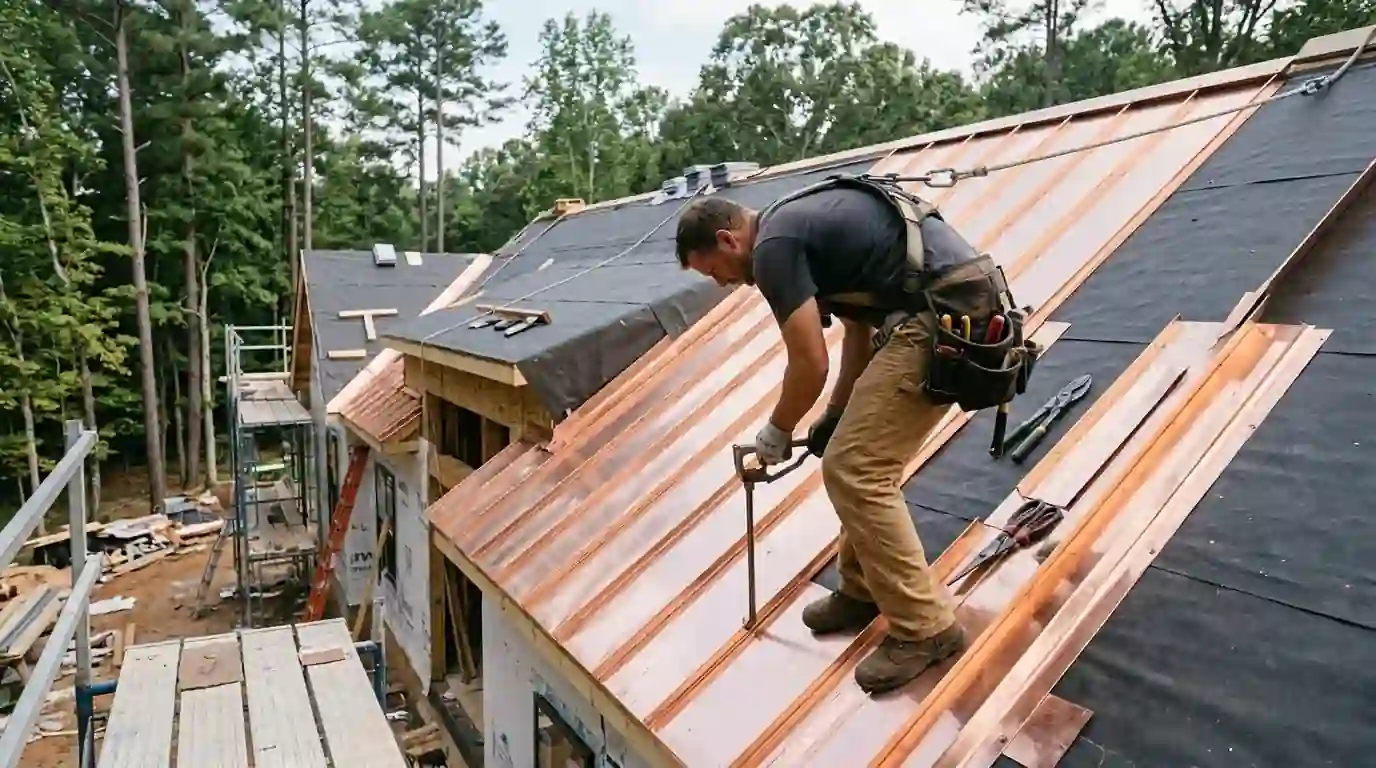
Copper Roofing on a metro Atlanta home.
Copper seam styles and finishes to choose from
Standing seam copper
Vertical raised seams with hidden cleats. It is the cleanest look for porch roofs, dormers and full roof sections with enough slope, and it sheds water quickly while allowing thermal movement.
Flat-lock soldered copper
Small interlocking panels soldered at every seam, used on low slopes, curved bays and domes. It handles standing water better than any other seam style but takes the most skilled labor.
Batten seam copper
Panels formed over wood battens for a bold, traditional profile seen on historic homes and estates. The deep ribs add shadow lines and suit larger, steeper copper roofs. Expect a longer build time.
Pre-patinated or natural copper
Natural copper starts bright and darkens to brown in a few months, then slowly turns green over many years. Pre-patinated sheets give the green look right away for a higher cost.
What copper roofing costs in metro Atlanta
Copper weight and market price
Most residential work uses 16 or 20 ounce copper. Heavier sheet costs more, and copper prices move with the metals market from month to month.
Seam style
Standing seam goes faster on simple slopes. Soldered flat-lock seams and batten seams take more hand time, especially on curved or very low sections.
Curves and custom shapes
Barrel roofs, eyebrow dormers and round bay windows need tapered pans cut and formed one by one, which takes far longer than flat rectangular panels.
Access and height
A porch roof off a first floor is simple to reach. A second-story bay or cupola needs staging and careful material handling to avoid denting soft copper.
Copper gutters and flashing
Copper gutters, downspouts and flashing cost more than aluminum, but mixing metals invites corrosion, so many jobs include copper for the whole water path.
These are typical ranges from recent Atlanta-area jobs, not a quote. See every service side by side on our roof prices page, or call (470) 876-1496 for a visit.
We install and repair shingles from GAF, Owens Corning, CertainTeed and Atlas, metal panels from Englert, membranes from Carlisle and skylights from Velux, matched to the roof already on your house.
How we design, fabricate and install copper roofing
Measure and plan the seams
We measure the roof, note the slope and any curves, and decide between standing seam, flat-lock or batten seam. We also map every place copper will meet other metals.
Prepare the substrate
Old roofing comes off, rotted wood gets replaced, and we install a high-temperature underlayment with a slip sheet so the copper can move without sticking to the membrane.
Fabricate the pans
Copper pans are cut and formed to fit, either on a brake on site or in the shop for curved and tapered pieces like bay roofs and eyebrow dormers.
Fasten with hidden cleats
Panels are held with copper or stainless cleats folded into the seams, never nailed through the face, so the metal can expand and contract freely in Georgia heat.
Solder and fold seams
Low-slope seams are pre-tinned and soldered watertight. Standing seams are folded with hand tools or a seamer, and every wall and siding transition gets matched copper flashing.
Check the water path
We tie the copper into gutters and downspouts made of compatible metal, rinse the work, and walk you through how the finish will change color over the coming years.
Copper accents on Atlanta's older and newer homes
Copper shows up all over the metro, from bay windows on Tudor and Colonial Revival homes in Druid Hills and Ansley Park to front porch roofs on new builds in Milton and Johns Creek. Many of those older copper roofs are now 50 to 80 years old and have been patched with tar or caulk over the decades, which hides the real problem and traps water. Newer homes often have shingled bay windows and porch roofs pitched too low for shingles, and those spots leak in the long, heavy summer downpours we get. Pine needles and oak leaves also hold acidic water against metal, so we pay attention to drip lines and gutters under trees when we design copper work here.
If you are comparing scopes from more than one roofer, ask each for the same line items: underlayment, flashing, vents, decking allowance and disposal. It makes the numbers comparable.
When does a copper roof or accent need a roofer?
Cracked solder joints
Seams on flat-lock and low-slope copper rely on soldered joints. Cracks from years of expansion and contraction let water seep in, often showing up as stains around a bay window.
Split or buckled panels
Copper that was fastened too tightly cannot move with heat. It buckles, then splits at the fold lines. You may see ripples or hear popping on hot afternoons.
Pinholes from drip lines
Water dripping from an upper roof or tree onto the same spot for years can wear pinholes in copper, especially where acidic runoff from shingles or pine needles collects.
Corrosion at mixed metals
White or crusty buildup where copper meets steel flashing, aluminum gutters or plain nails means galvanic corrosion is eating the weaker metal, and a leak usually follows.
Loose cleats and seams
Standing seams that open up or panels that lift at the edge mean hidden cleats have pulled loose. Wind can then peel the copper back during a strong summer storm.
A tired shingle accent
Shingled bay windows and low porch roofs leak often because the slope is too shallow for shingles. That is a good time to look at a copper roof for that section.
Copper Roofing across the Atlanta metro
These are the largest places we cover. Every one of our 71 service areas gets the same service.
- Atlanta 30305
- Sandy Springs 30328
- Roswell 30075
- Johns Creek 30022
- Alpharetta 30004
- Marietta 30060
- Smyrna 30080
- Dunwoody 30338
- Brookhaven 30319
- Duluth 30096
- Lawrenceville 30043
- Kennesaw 30144
- Peachtree Corners 30092
- Decatur 30030
- Milton 30004
- Woodstock 30188
- Cumming 30028
- Stockbridge 30281
- McDonough 30252
- Douglasville 30134
Copper Roofing questions from Atlanta homeowners
How long does a copper bay window roof last?
A properly formed and soldered copper bay roof commonly lasts 60 years or more, and some historic copper in the metro is closer to a century old. Its weak points are solder joints and spots where other metals touch it, so a quick check every few years catches small issues early.
Will my new copper porch roof turn green, and how fast?
It starts bright, turns penny brown within months, and darkens over the next few years. The blue-green patina takes much longer in a mostly inland climate like ours, often 15 years or more. If you want green from day one, pre-patinated copper sheet is an option.
Can you repair a leaking copper roof instead of replacing it?
Often, yes. Cracked solder joints can be cleaned and resoldered, small holes can be patched with soldered copper, and loose seams can be refolded. When panels are thin from decades of wear or split along many seams, replacing that section makes more sense than chasing leaks.
Can copper roofing go next to my aluminum gutters?
We do not recommend it. Water running off copper onto aluminum or galvanized steel speeds up corrosion of the other metal, and the gutters can wear through. We usually pair copper roofs with copper gutters and downspouts, or design the drainage so the metals never share a water path.
Services that often go with this one
Standing Seam Metal Roofing
Concealed-fastener standing seam metal roofs with crisp lines and long life, for full homes, porches and low-slope sections.
Learn more ›Historic Home Roofing
Careful roofing for older Atlanta homes, from Victorian and craftsman details to slate, standing seam and period-look shingles.
Learn more ›Gutter Installation
New seamless gutters and downspouts sized for Atlanta downpours, pitched right and routed to carry water away from your foundation.
Learn more ›Need copper roofing in Atlanta?
Call (470) 876-1496. A person answers 24/7 and a roofer from our Alpharetta office follows up with a visit and photos.