Commercial Roof Repair in Atlanta, GA
A leak dripping onto a sales floor, office desk or church pew costs more every day it runs, and most commercial roofs leak at the same few seams, drains and curbs again and again.
- Phones answered 24/7 at (470) 876-1496
- Photos of every problem spot before any work
- Line-item written scope
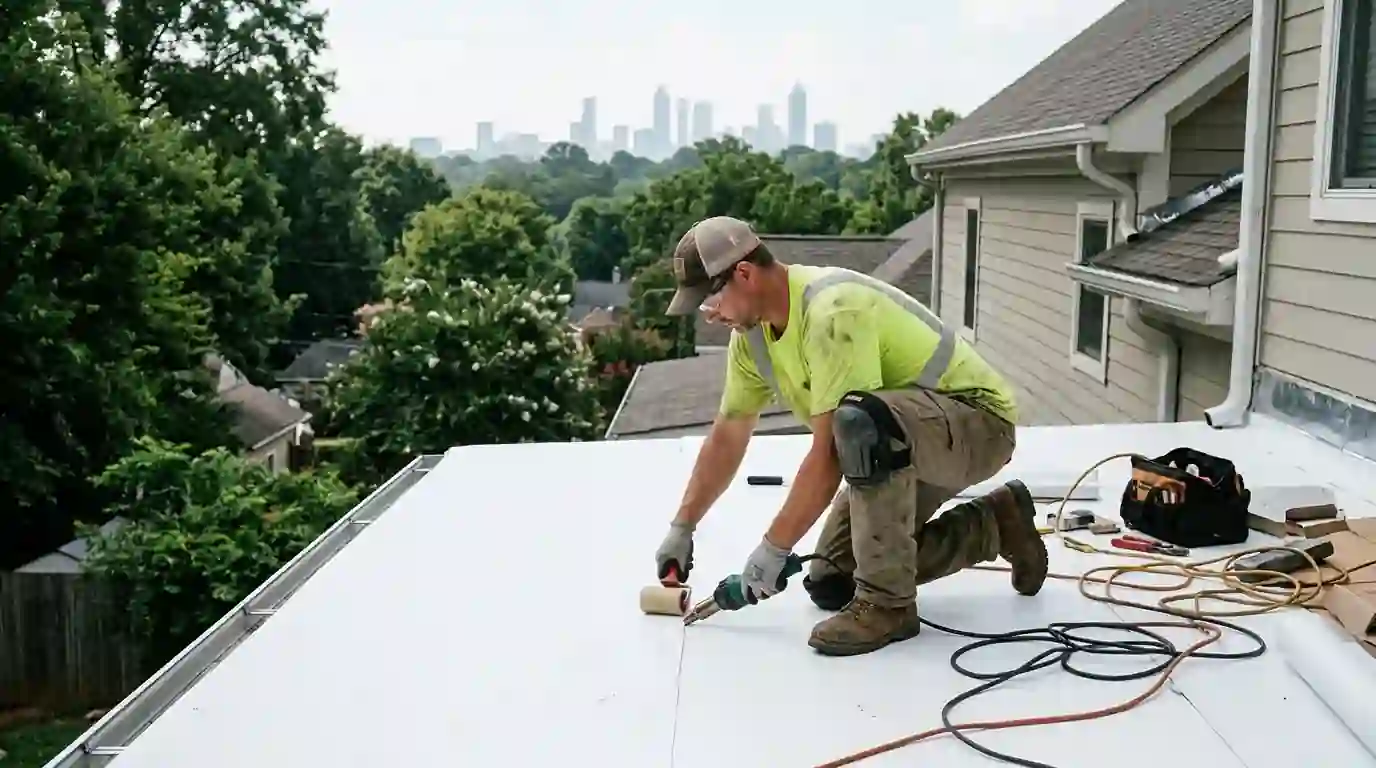
Commercial roof repair covers leaks and wear on low-slope and metal roofs for strip centers, offices, restaurants, churches and small warehouses. In Atlanta you need it when water drips inside after storms, seams or flashings open, drains clog or HVAC curbs leak. Most light commercial roof repairs here run $685 to $4,960 per visit, based on the roof system and how much wet insulation must be replaced.
Commercial roofs are usually large, flat and out of sight, which makes small problems easy to miss until water reaches a ceiling tile or a stack of inventory. Most leaks start at the same handful of places: seams that have been stressed by heat and foot traffic, flashing at walls and parapets, curbs around rooftop HVAC units, and drains or scuppers that clog with leaves and trash. Ponding water around those spots speeds everything up. Left alone, a single leak can soak a wide area of insulation and rust out metal decking over time.
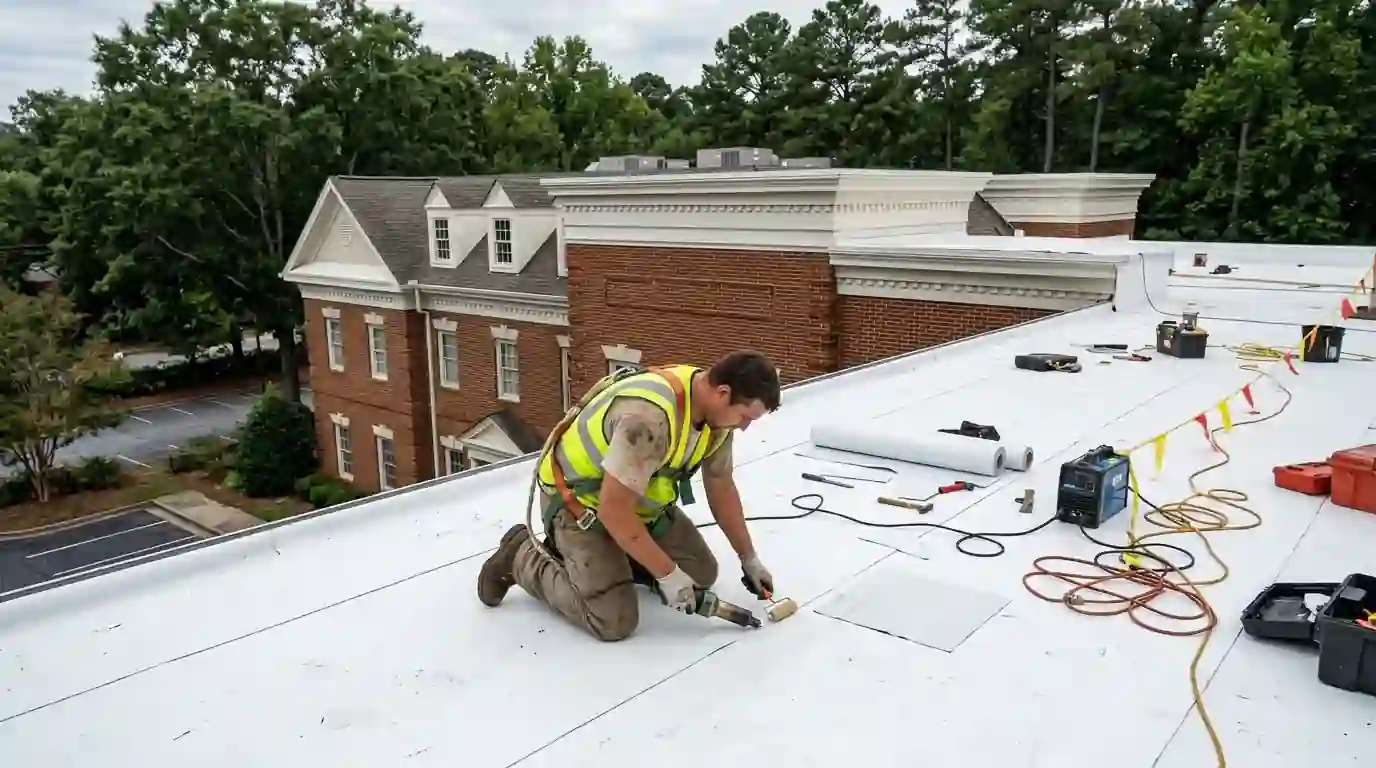
We repair light commercial roofs across the metro, working on TPO, EPDM, modified bitumen, built-up and metal systems. Our roofers trace each leak to its entry point, cut out wet insulation, and repair with materials that bond to the existing roof. We work around business hours when needed, protect interiors with plastic and buckets during repairs, and document what we find with photos for owners and property managers. If repeated repairs no longer make sense, we can lay out options for coatings or replacement with clear numbers, so you can plan instead of reacting to the next storm.
Commercial Roof Repair on a metro Atlanta home.
Which commercial roof problems need attention right away?
Active leaks inside the building
Stained ceiling tiles, drips onto floors and wet walls during storms mean water is already inside. The sooner a leak is traced, the less insulation and decking need replacing.
Ponding near drains and curbs
Water standing around drains, HVAC units or walls for days after rain points to blocked drains or sagging areas, and those ponds speed up membrane wear.
Split seams and loose flashing
Membrane seams that open, flashing pulling off parapet walls and curbs that look loose all give water a direct path under the roof and into the building.
Rust and loose fasteners
On metal roofs, rusted screws, backed-out fasteners and corroded panel laps let water in at hundreds of small points, especially around skylights and roof vents.
Damage from rooftop work
HVAC service, sign installers and satellite crews often drop screws or drag equipment. Punctures and torn membrane around units are common after rooftop work. We look there first.
Debris and clogged drains
Leaves, trash and pine needles can block drains and scuppers, especially near trees. Overflowing gutters and stains on exterior walls are early warning signs. Clear them often.
How we handle a commercial roof repair call
Protect the interior
When water is coming in, we first place plastic, buckets and tarps inside where needed, and help facility staff move inventory or equipment away from the leak.
Walk and document the roof
We inspect the entire roof, not just the area above the leak, photographing seams, flashings, curbs, drains and damage so owners understand what is happening.
Trace the leak path
Using the interior stain location, roof conditions and sometimes water testing, we track the leak back to its true source, which is often away from the drip.
Cut out wet materials
Wet insulation and damaged decking around the leak are removed and replaced. This keeps the roof from holding water that could cause new leaks or decking rust.
Repair with matched systems
We use compatible materials for each roof type: welded TPO patches, EPDM tape, modified bitumen patches, metal sealants and new fasteners where needed. Patches lap well past the damage.
Report and plan next steps
After the repair, you get a short report with photos and recommendations, including any areas that may need attention soon or a long-term roof plan.
We install and repair shingles from GAF, Owens Corning, CertainTeed and Atlas, metal panels from Englert, membranes from Carlisle and skylights from Velux, matched to the roof already on your house.
What commercial roof repair costs in metro Atlanta
Roof system type
TPO, EPDM, modified bitumen, built-up and metal roofs all use different repair materials and methods, which changes both labor and material cost.
Extent of wet insulation
Replacing a small patch of wet insulation is simple. Larger saturated areas take more removal, new boards and membrane, which raises the repair price.
Access and safety setup
Roofs without permanent ladders, buildings in tight lots or tall structures may need lifts, extra ladders or added fall protection for safe work.
Business hours and scheduling
Work done at night, early mornings or weekends to avoid customer traffic or noise can add to labor costs, but it often saves lost business time.
Number of problem areas
Repairing a single seam or curb costs less than addressing several leaks, multiple failed flashings and drains on the same roof in one visit.
These are typical ranges from recent Atlanta-area jobs, not a quote. See every service side by side on our roof prices page, or call (470) 876-1496 for a visit.
Commercial roofs in Atlanta's mix of old and new buildings
The metro is full of light commercial buildings with very different roofs: 1970s and 1980s strip centers along Roswell Road and Buford Highway with built-up or modified bitumen, newer offices in Alpharetta and Duluth with white TPO, and metal-roofed shops and warehouses on the edges of Marietta and Norcross. They all face the same summer heat and sudden thunderstorms that test seams and drains. Many sit under mature oaks and pines, so leaves and needles clog drains every fall and spring. Roof traffic is another local issue, with HVAC units serviced often in our long cooling season. We focus on drains, curbs and service paths because that is where we see most commercial leaks start.
Photos from the ground, taken safely, help us plan the visit before we arrive.
Repair paths for different commercial roof systems
TPO and PVC roof repairs
Heat-welded patches and new flashings for white single-ply roofs on strip centers and offices. We clean and prep the old sheet carefully so new welds bond well to aged membrane.
EPDM and rubber roof repairs
Primer and tape patches, new seam cover strips and fresh flashings for black or white rubber roofs. We also check for shrinking at walls and curbs that can tear flashing loose over time.
Built-up and modified bitumen repairs
Blister repairs, new plies over damaged areas and reflashing at walls for tar and gravel or modified bitumen roofs. We remove loose gravel and old patches to reach a sound surface first.
Metal roof leak repairs
Fastener replacement, lap sealing and flashing work for metal roofs on warehouses and shops. Where rust is widespread, we can discuss coatings or panel replacement as longer-term options. Each has tradeoffs.
Commercial Roof Repair across the Atlanta metro
These are the largest places we cover. Every one of our 71 service areas gets the same service.
- Atlanta 30305
- Sandy Springs 30328
- Roswell 30075
- Johns Creek 30022
- Alpharetta 30004
- Marietta 30060
- Smyrna 30080
- Dunwoody 30338
- Brookhaven 30319
- Duluth 30096
- Lawrenceville 30043
- Kennesaw 30144
- Peachtree Corners 30092
- Decatur 30030
- Milton 30004
- Woodstock 30188
- Cumming 30028
- Stockbridge 30281
- McDonough 30252
- Douglasville 30134
Commercial Roof Repair questions from Atlanta homeowners
Can you repair our commercial roof without closing the business?
In most cases, yes. We plan noisy or messy work around your hours, protect interior spaces with plastic and coordinate with staff. Many repairs can be done while the business stays open. For larger jobs or work over occupied spaces, we may suggest early mornings, evenings or weekends.
How do we know when to stop repairing and replace our commercial roof?
If leaks appear in new places every few months, large areas of insulation are wet, or repair bills each year approach a large share of replacement cost, it is time to plan. We can give you a side by side comparison of continued repairs, coating options and full replacement for budgeting.
Do you work with property managers on multiple commercial buildings?
Yes. We regularly work with property managers who oversee several buildings. We can document each roof, prioritize repairs and keep a simple record of past work and recommendations. That makes it easier to plan budgets and respond quickly when a tenant calls about a leak.
What should we do when a commercial roof starts leaking during a storm?
Move people, inventory and equipment away from the leak, place buckets or plastic, and shut off power to any wet electrical equipment. Do not send staff onto the roof in the storm. Call us, and we will make the roof safe as soon as conditions allow, then plan proper repairs.
Services that often go with this one
TPO Roofing
White heat-welded TPO membrane roofs for flat additions, sunrooms and light commercial buildings that need to stay cooler in summer.
Learn more ›Silicone Roof Coatings
Silicone coatings that seal and restore aging flat and low-slope roofs, adding years of life without a full tear-off.
Learn more ›Emergency Roof Repair
Emergency roof repair around the clock when water is coming in, a section is torn open or a storm just hit.
Learn more ›Need commercial roof repair in Atlanta?
Call (470) 876-1496. A person answers 24/7 and a roofer from our Alpharetta office follows up with a visit and photos.