Flat Roof Replacement in Atlanta, GA
When a flat roof has more patches than original membrane, soft spots underfoot and water standing for days, more repairs only delay the leak, and replacement starts to cost less.
- Phones answered 24/7 at (470) 876-1496
- Photos of every problem spot before any work
- Line-item written scope
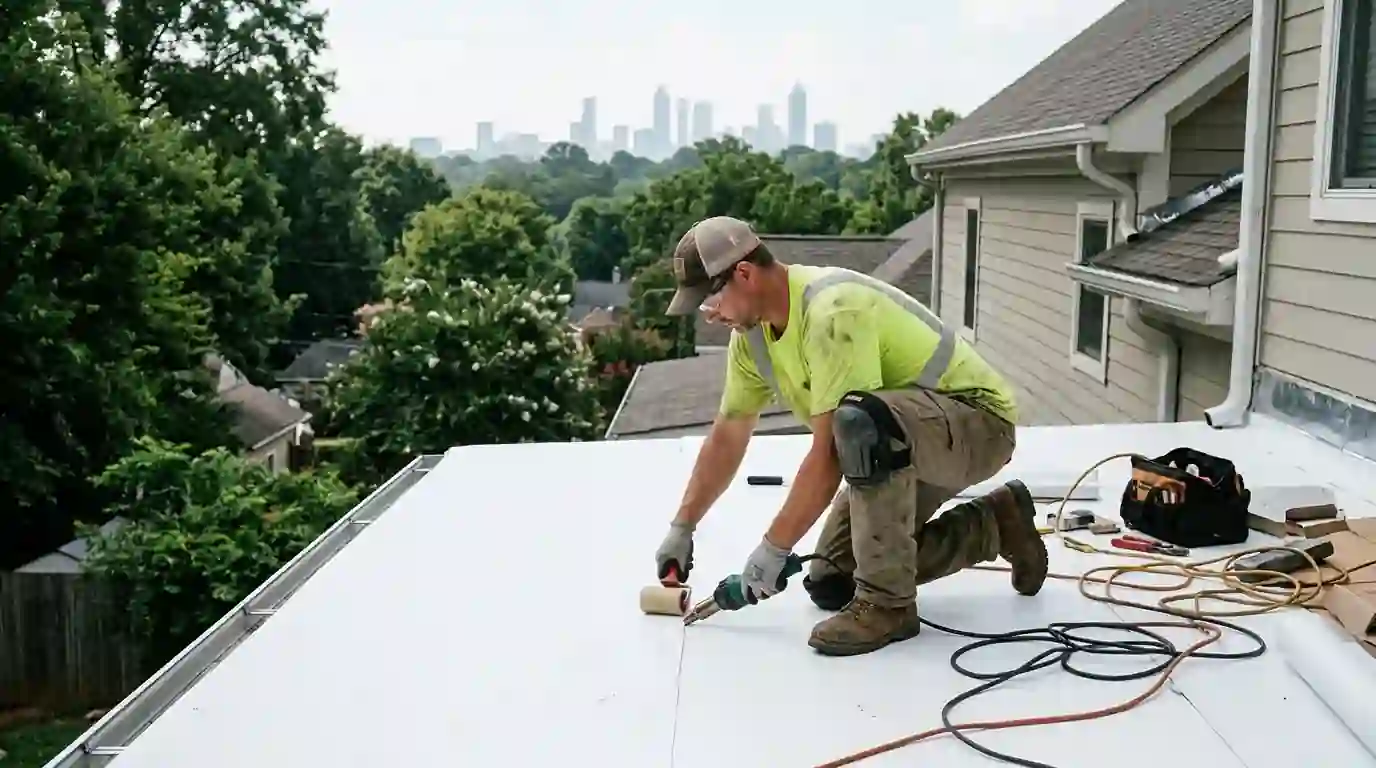
Flat roof replacement removes a worn low-slope roof down to the deck and installs a new membrane system, usually TPO, EPDM or modified bitumen. In Atlanta it is time when the roof is 20 years old or more, leaks keep coming back, or insulation underneath is soaked. A typical residential flat section of 600 to 1,500 square feet runs $6,840 to $17,920 to replace.
Replacing a flat roof is a chance to fix whatever made the old one fail. Most low-slope roofs we tear off did not wear out evenly. They broke down at ponding spots, at walls with poor flashing, or around drains that were set too high. If the new membrane goes back on the same sagging deck with the same drainage, it will fail in the same places. So before we price a replacement, we study how water moves across the roof, where it collects, and what the framing and decking look like underneath.
From there we recommend a system that fits the house and how you use it. TPO is a bright white single-ply that reflects summer sun and welds at the seams. EPDM is a durable black rubber that handles foot traffic and hail well. Modified bitumen is a tough, layered asphalt roof that suits porches and small sections tied into shingles. On many jobs we also add tapered insulation to build slope toward drains, new edge metal and fresh wall flashings, so the roof sheds water the way it should have from the start.
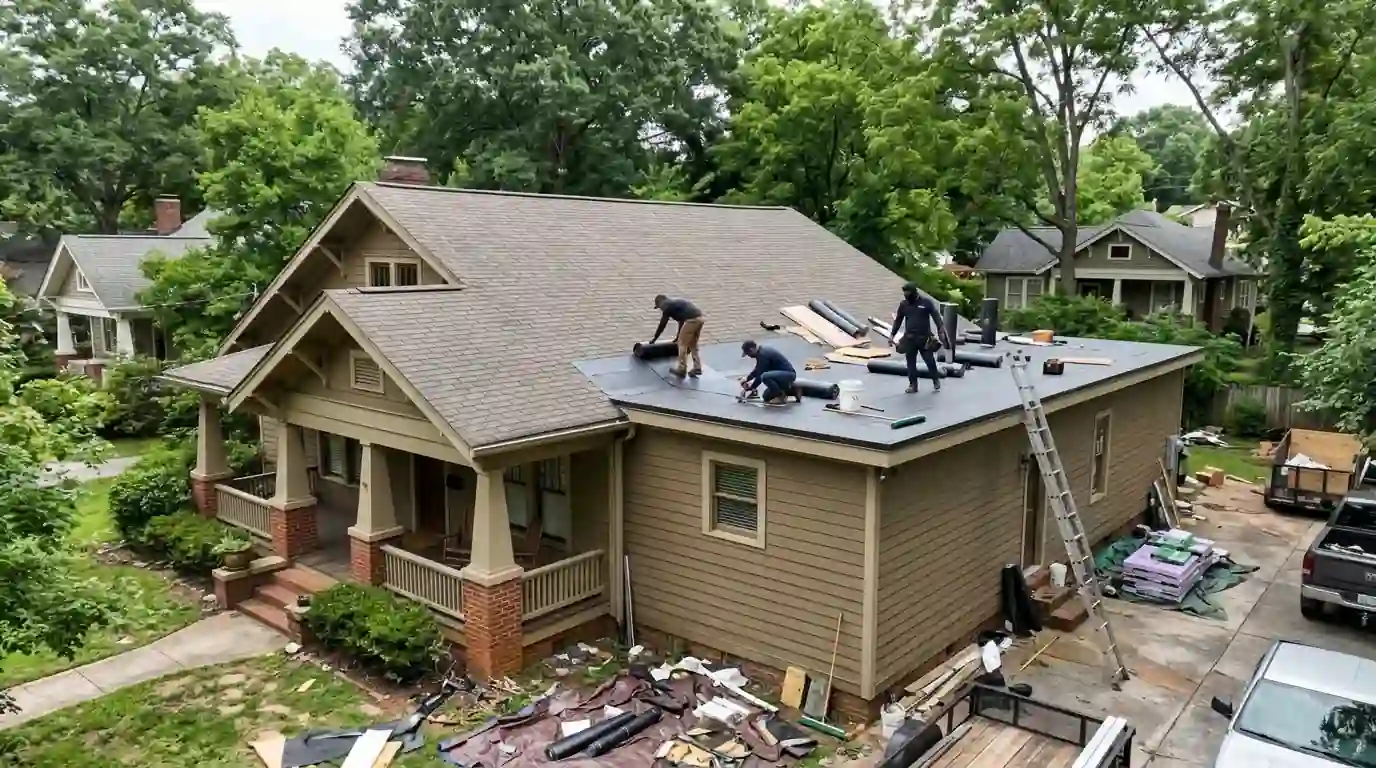
Flat Roof Replacement on a metro Atlanta home.
Choosing the right membrane for a flat roof replacement
TPO single-ply
A white, heat-welded membrane that reflects sun and keeps rooms below cooler in Atlanta summers. Welded seams are strong, and it is a common pick for additions, sunrooms and light commercial roofs.
EPDM rubber
A black rubber membrane installed in large sheets with few seams. It stays flexible in heat and cold, handles hail well and can be patched easily years later when needed.
Modified bitumen
Asphalt-based sheets reinforced with polyester or fiberglass, applied by torch, cold adhesive or self-adhered. Two-ply systems are tough underfoot and blend well next to shingle roofs. They also hide small scuffs well.
Tapered insulation upgrade
Sloped foam boards under any membrane give water a path to the drains. It adds a little to the cost but is the best way to stop chronic ponding on low-slope roofs.
What flat roof replacement costs in metro Atlanta
Membrane system
EPDM and TPO usually price close together, while multi-ply modified bitumen costs a bit more but adds thickness and foot traffic resistance.
Tapered insulation
Building slope with tapered boards adds material cost but often ends ponding for good, which saves money on future leaks and repairs.
Layers to remove
Tearing off one membrane is quick. Pulling up two or three old layers, gravel and soaked insulation adds labor hours and extra dump fees.
Deck and framing repairs
Rotted plywood, sagging joists and damaged edge boards are priced per sheet or per run once the old roof is off and the deck is exposed.
Edges, walls and penetrations
Parapets, tall walls, skylights, HVAC curbs and many pipes all take custom flashing, so a busy roof costs more per square foot than an open one.
These are typical ranges from recent Atlanta-area jobs, not a quote. See every service side by side on our roof prices page, or call (470) 876-1496 for a visit.
We install and repair shingles from GAF, Owens Corning, CertainTeed and Atlas, metal panels from Englert, membranes from Carlisle and skylights from Velux, matched to the roof already on your house.
How we replace a flat roof from the deck up
Survey drainage and structure
We map the slope, ponding spots, drains, scuppers and wall heights, and check the deck from below where possible, so the new roof design solves the old problems.
Choose system and slope plan
We walk you through TPO, EPDM and modified bitumen options and, when needed, lay out tapered insulation that moves water toward drains, scuppers or gutters.
Tear off to the deck
The old membrane, wet insulation and loose gravel come off down to the wood or concrete deck. We protect landscaping and haul debris away the same day.
Repair deck and framing
Rotted plywood or planks get replaced, and sagging areas are shimmed or reinforced. We fix this before insulation goes back, because the deck is the foundation of the roof.
Install insulation and membrane
New insulation boards or tapered panels go down, followed by the membrane, which is mechanically fastened, adhered or torch-applied by hand to match the system you chose.
Flash edges, walls and drains
We install new edge metal, wall and curb flashings, pipe boots and drain or scupper details, then clean the site and walk the finished roof with you.
Building flat roofs that handle Atlanta heat and downpours
Low-slope roofs in the metro deal with a tough mix: long, hot summers that bake membranes, heavy afternoon storms that test every drain, and leaves and pine needles that block scuppers almost year round. We see a lot of flat roofs on mid-century modern homes in neighborhoods like Northcrest and Sherwood Forest, over rear additions on intown bungalows in Kirkwood and Grant Park, and on small commercial buildings along older corridors. Many were built with almost no slope and covered in tar and gravel or roll roofing. When we replace them, a white TPO or a well-drained EPDM roof with real slope toward the edges makes a big difference in summer heat and leak frequency.
Photos from the ground, taken safely, help us plan the visit before we arrive.
When is a flat roof past repair and ready for replacement?
Repeat leaks in new places
If you fix one leak and another starts a few feet away within months, the membrane is likely worn across the roof, and patching is now chasing a moving target.
Patches over patches
A roof covered in tar, tape and mismatched membrane patches has lost its original seal. Each patch edge becomes one more spot where water can work underneath.
Widespread cracking or crazing
Alligator cracks on built-up roofs, chalking and cracking on old TPO, and shrinking EPDM pulling away from edges all mean the material has reached the end of its life.
Wet insulation over large areas
When moisture readings or test cuts find soaked insulation across much of the roof, it cannot dry in place. That much wet material calls for a tear-off.
Sagging deck and lasting ponds
Ponds that never fully drain point to sagging decking or framing. Replacement lets us fix the structure and add tapered insulation to restore real slope.
Roof age past 20 years
Many residential flat roofs here were installed 20 to 30 years ago. Even without major leaks, a roof that old is often brittle and due for planned replacement.
Flat Roof Replacement across the Atlanta metro
These are the largest places we cover. Every one of our 71 service areas gets the same service.
- Atlanta 30305
- Sandy Springs 30328
- Roswell 30075
- Johns Creek 30022
- Alpharetta 30004
- Marietta 30060
- Smyrna 30080
- Dunwoody 30338
- Brookhaven 30319
- Duluth 30096
- Lawrenceville 30043
- Kennesaw 30144
- Peachtree Corners 30092
- Decatur 30030
- Milton 30004
- Woodstock 30188
- Cumming 30028
- Stockbridge 30281
- McDonough 30252
- Douglasville 30134
Flat Roof Replacement questions from Atlanta homeowners
How long does a flat roof replacement take on a typical home addition?
Most residential flat sections take one to three days, based on size, the number of old layers and how much decking needs work. Larger roofs with tapered insulation or many walls and curbs can take longer. We tarp at the end of each day if work runs past a single shift.
Which membrane lasts longest on an Atlanta flat roof replacement?
With good installation and drainage, EPDM, TPO and two-ply modified bitumen can all last 20 to 30 years here. Drainage and flashing details usually matter more than the brand. We weigh sun exposure, foot traffic and how the roof ties into the rest of the house when we recommend one.
Can a new flat roof be installed over the old one?
Sometimes a single old layer that is dry and firm can be covered, but we rarely recommend it on homes. Trapped moisture, hidden rot and added weight cause problems later. A tear-off lets us fix the deck and add slope, which is why we price it that way for most homes.
Will a white TPO flat roof lower cooling costs in my Atlanta home?
A white roof reflects much more sun than black rubber or dark roll roofing, so rooms under it often run cooler in summer. The difference is most noticeable on sunrooms and additions with little insulation. Your actual savings depend on insulation, shade and how the space is cooled.
Services that often go with this one
Flat Roof Repair
Fast repairs for leaking flat and low-slope roofs: ponding, split seams, blisters, failed drains and worn flashing at walls.
Learn more ›TPO Roofing
White heat-welded TPO membrane roofs for flat additions, sunrooms and light commercial buildings that need to stay cooler in summer.
Learn more ›Modified Bitumen Roofing
Torch-down, cold-applied and self-adhered modified bitumen roofs for porches, additions and low-slope sections tied into shingles.
Learn more ›Need flat roof replacement in Atlanta?
Call (470) 876-1496. A person answers 24/7 and a roofer from our Alpharetta office follows up with a visit and photos.