Ridge Vent Installation in Atlanta, GA
Rows of rusty box vents, a noisy gable fan or a ridge vent that leaks in sideways rain are all signs your roof peak is not venting the way it should.
- Phones answered 24/7 at (470) 876-1496
- Photos of every problem spot before any work
- Line-item written scope
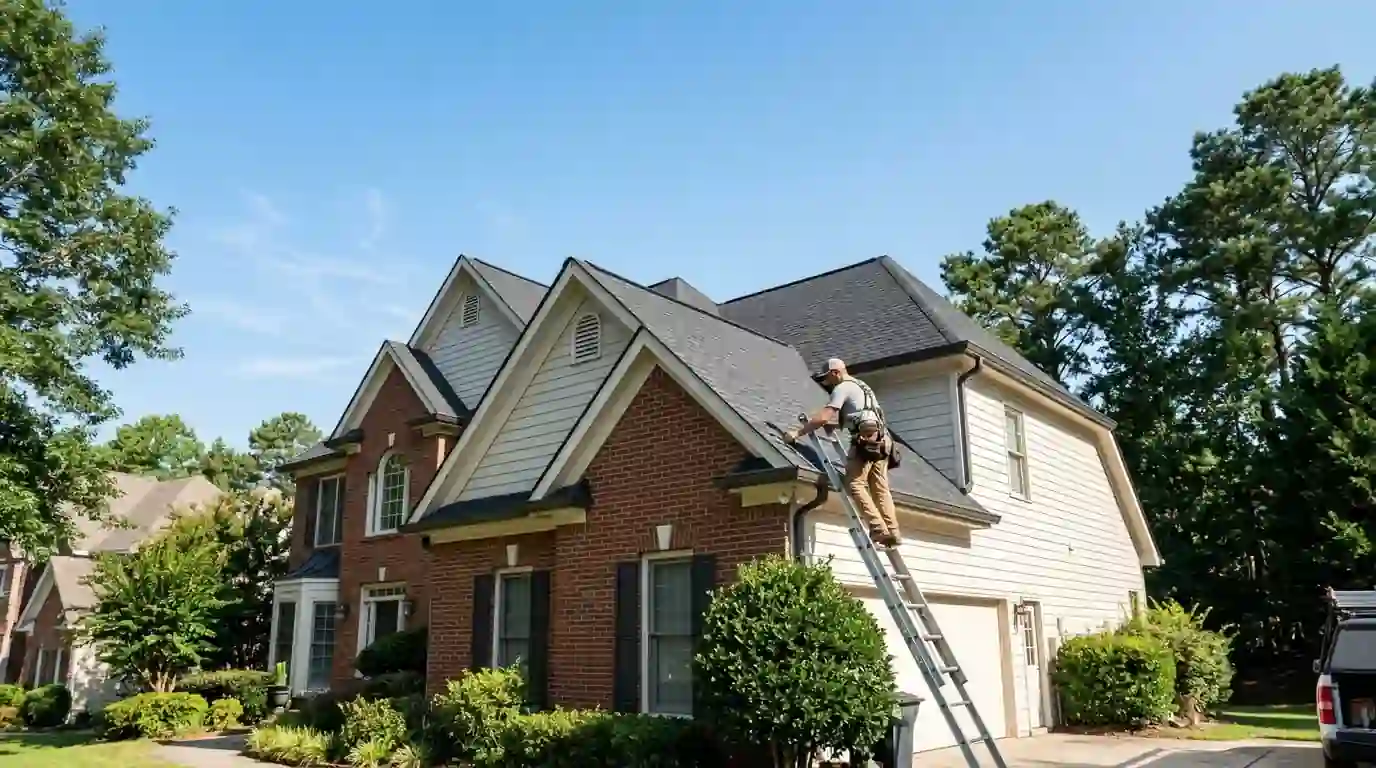
Ridge vent installation means cutting a slot along the roof peak and covering it with a low-profile vent capped in shingles, so hot, damp air leaves the attic evenly along the whole ridge. In Atlanta it makes sense during a reroof, when box vents leak or rust, or when the attic overheats. A typical ridge vent install here runs $640 to $1,870, based on ridge length.
A ridge vent is the quiet workhorse of attic ventilation. Instead of a few scattered openings, it runs along the peak of the roof, so heat and moisture rise and exit across the full length of the attic. From the street it nearly disappears under a row of cap shingles. When it is paired with open soffit vents at the eaves, it creates a steady, natural airflow without motors or wiring. That steady draw helps shingles stay cooler in summer and keeps winter condensation off the underside of the decking.
Our roofers cut the ridge slot to the width the vent maker specifies, stopping short of the ends and of any hips or walls so wind-driven rain has no easy way in. We use externally baffled vents from makers like Lomanco, Air Vent and GAF, which pull air out even when wind blows across the ridge. Before we install anything, we check the soffits, because a ridge vent with no intake can pull air from the house or simply sit idle. When needed, we close off old box vents and gable fans so they do not fight the new ridge.
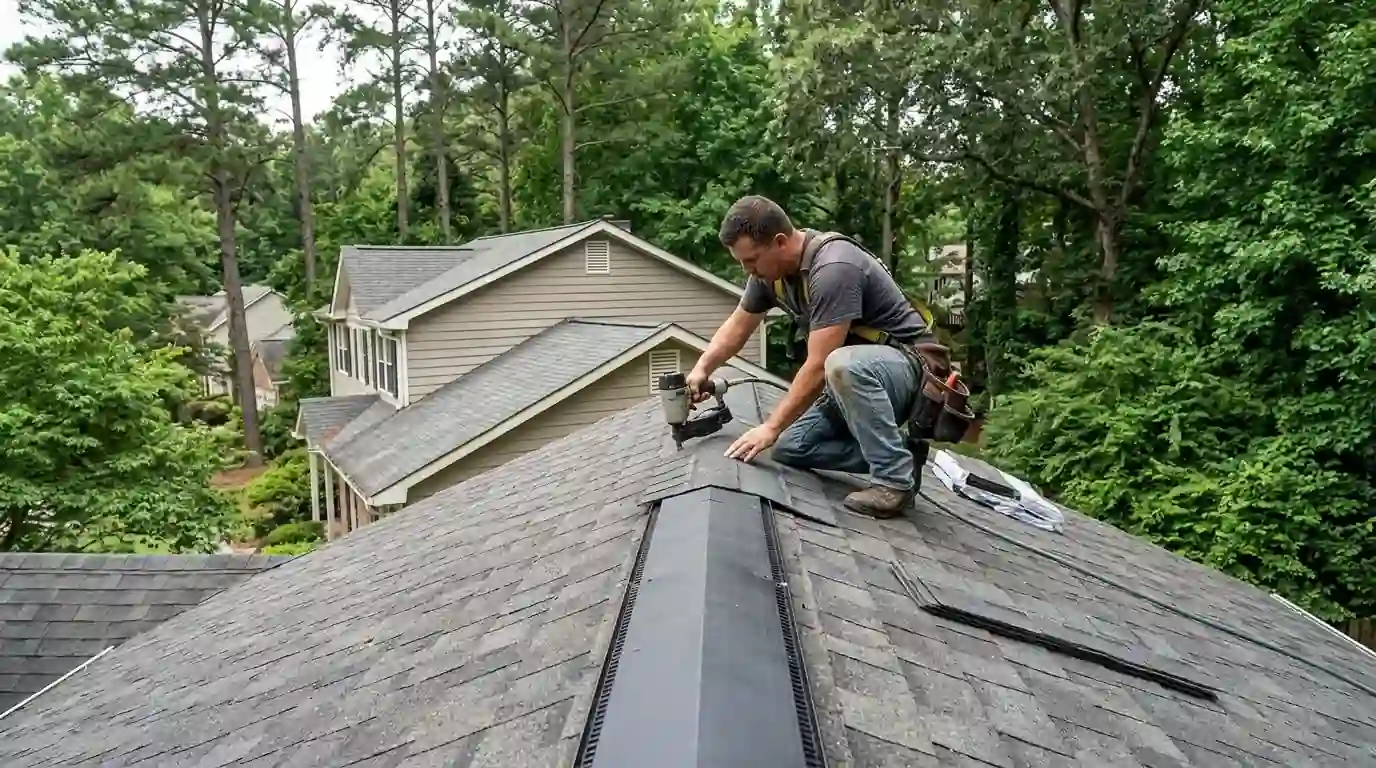
Ridge Vent Installation on a metro Atlanta home.
When a ridge vent is the right exhaust for your roof
Long, simple ridges
Gable roofs and long ranch rooflines are ideal for ridge vents. The longer the ridge, the more exhaust area you get without adding vents across the roof surface.
Old box vents leaking or rusting
Metal box vents near the top of the roof can rust, crack or lose their seal. Replacing them with ridge vent removes many penetrations and gives smoother airflow.
Gable fans that run constantly
A gable fan that always seems to be on may be pulling conditioned air from the house. A passive ridge vent with good soffit intake often replaces it with less noise.
Attic heat at the peak
If the hottest air seems trapped at the top of the attic, with dark, dry decking near the ridge, an evenly spaced exhaust along the peak helps that heat escape.
Roof replacement on the calendar
A reroof is the best time to add or replace ridge vent. The old cap shingles are already coming off, and the slot can be cut cleanly before new caps go on.
Leaks at an older ridge vent
Early ridge vents without baffles, or vents cut too wide, can let in wind-driven rain. Replacing them with a modern baffled vent and proper slot stops those leaks.
Ridge vents and Atlanta's long summers and humid nights
Many homes around Atlanta have long, simple ridges that are perfect for ridge vents, especially 1960s and 1970s ranches in Tucker, Smyrna and Doraville and split-levels in parts of Cobb and DeKalb. Newer homes in Alpharetta, Suwanee and Woodstock often have more complex rooflines with shorter ridges and many hips, which may need a mix of ridge vent and low-profile box vents. Our long, hot summers make it important to move attic heat out, while humid nights and the occasional hard freeze make it just as important to keep moisture from condensing on wood. A properly installed ridge vent, combined with clear soffits, helps keep shingles, decking and attic framing in better shape over the life of the roof.
If you are comparing scopes from more than one roofer, ask each for the same line items: underlayment, flashing, vents, decking allowance and disposal. It makes the numbers comparable.
We install and repair shingles from GAF, Owens Corning, CertainTeed and Atlas, metal panels from Englert, membranes from Carlisle and skylights from Velux, matched to the roof already on your house.
How we install a ridge vent that breathes and stays dry
Check intake first
We look at soffits, insulation and baffles from the attic. If intake is weak or blocked, we plan soffit improvements so the ridge vent has air to pull through.
Measure the ridge
We measure each ridge run, note hips, chimneys and walls, and decide how far to stop the slot from the ends to keep wind-driven rain out.
Remove caps and cut the slot
Old ridge cap shingles come off, and we cut a slot in the decking along the peak, keeping it the right width and avoiding rafters and ridge boards.
Seal old exhaust vents
Box vents, turbines or gable fans that would compete with the ridge vent are removed or sealed, and the holes are patched with decking and shingles.
Install the ridge vent
We fasten the ridge vent over the slot with the correct length nails, keeping it straight and tight, and seal the ends so insects and rain cannot get in.
Cap with shingles and check
Ridge cap shingles in your roof color go over the vent. We check that the vent sits evenly, airflow is clear and the finished ridge looks clean from the ground.
What ridge vent installation costs in metro Atlanta
Total ridge length
Longer ridges need more vent material and cap shingles. Multiple short ridges on a hip roof may cost more in labor than one long ridge.
Removing old vents
Taking out several box vents, turbines or a gable fan and patching those spots adds time and materials but improves overall ventilation balance.
Soffit intake work
Opening painted-over soffit vents or adding new soffit vents helps the ridge vent work properly, and that work adds to the total project cost.
Roof pitch and height
Steep, tall roofs require more safety setup and careful movement on the ridge, which can increase labor compared with low, simple ranch roofs.
Cap shingle style
Standard ridge cap shingles cost less than thick designer caps or special ridge pieces used on some architectural and impact-resistant shingle roofs.
These are typical ranges from recent Atlanta-area jobs, not a quote. See every service side by side on our roof prices page, or call (470) 876-1496 for a visit.
Ridge vent styles and how we choose them
Shingle-over baffled ridge vent
The most common style, a low-profile plastic vent with external baffles covered by cap shingles. It blends into the roof and pulls air out well when wind crosses the ridge.
Roll-style ridge vent
A flexible ridge vent that comes in rolls and conforms to the ridge. It can work on roofs with slight ridge irregularities but needs careful installation to avoid sagging spots.
Ridge vent with filters
Vents with built-in mesh or filters that help keep out insects, dust and wind-driven snow or rain. Useful in very windy or exposed areas and under heavy tree pollen. They cost a little more.
Ridge vent on metal roofs
Special ridge vents and closures made for standing seam and other metal roofs. They require profile-matched foam closures and flashing so air can escape without letting water in. We fit them by hand.
Ridge Vent Installation across the Atlanta metro
These are the largest places we cover. Every one of our 71 service areas gets the same service.
- Atlanta 30305
- Sandy Springs 30328
- Roswell 30075
- Johns Creek 30022
- Alpharetta 30004
- Marietta 30060
- Smyrna 30080
- Dunwoody 30338
- Brookhaven 30319
- Duluth 30096
- Lawrenceville 30043
- Kennesaw 30144
- Peachtree Corners 30092
- Decatur 30030
- Milton 30004
- Woodstock 30188
- Cumming 30028
- Stockbridge 30281
- McDonough 30252
- Douglasville 30134
Ridge Vent Installation questions from Atlanta homeowners
Can a ridge vent be added to my existing shingle roof?
Yes, in many cases. We remove the existing ridge caps, cut the ridge slot, install the vent and cover it with new ridge cap shingles that match as closely as possible. We also check soffit intake and may suggest removing older box vents so the new ridge vent can do its job.
Do ridge vents leak in heavy Atlanta rainstorms?
A well-designed, properly installed baffled ridge vent should not leak in normal storms. Leaks usually come from slots cut too wide, vents that lack baffles or ends that were not sealed. When we install ridge vents, we follow the maker's slot width and end details closely to keep rain out.
Should I keep my gable vents if I install a ridge vent?
Often, it is better to close or reduce gable vents when adding ridge vent, especially if soffit intake is limited. Gable vents can short-circuit airflow, pulling air in and out at the gable ends instead of from soffit to ridge. We look at your attic to recommend the best mix.
Is a ridge vent enough by itself to ventilate my attic?
A ridge vent works best with good soffit intake and the right amount of exhaust area for your attic size. On some roofs, especially with short ridges or many hips, we may combine ridge vent with low-profile vents. Balanced intake and exhaust matters more than any single vent type.
Services that often go with this one
Roof Ventilation
Attic ventilation upgrades that balance soffit intake and roof exhaust to cut attic heat, moisture and shingle wear.
Learn more ›Solar Attic Fans
Roof-mounted solar fans that pull hot, damp air out of your attic on sunny Atlanta afternoons without adding to the power bill.
Learn more ›Fascia & Soffit Repair
Replacement of rotted fascia boards and damaged soffit panels, closing the gaps that let water, squirrels and birds into the attic.
Learn more ›Need ridge vent installation in Atlanta?
Call (470) 876-1496. A person answers 24/7 and a roofer from our Alpharetta office follows up with a visit and photos.