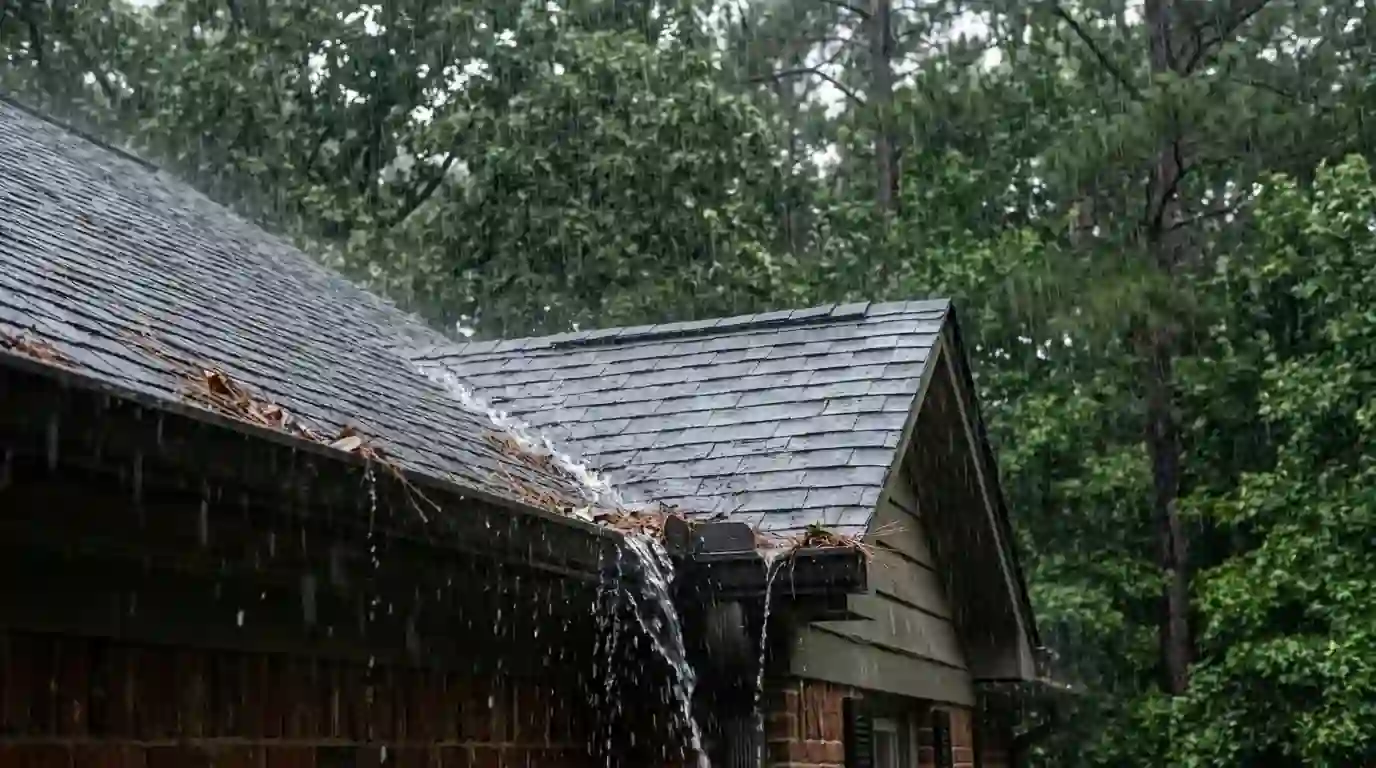
Stay off the roof and away from water near outlets or light fixtures. If water is reaching anything electrical, shut off that circuit at the breaker only if you can do it standing on dry ground. Then catch the water with buckets and towels, move belongings, relieve any ceiling bulge with a small hole over a bucket, photograph everything and call us 24/7 at (470) 876-1496.
Safety first: water, electricity and lightning
Summer storms in metro Atlanta tend to arrive fast in the late afternoon, with heavy rain, gusty wind and plenty of lightning. When a leak starts in the middle of one, the first job is keeping people safe, not saving the drywall. Water dripping from a ceiling light, running down a wall near outlets or pooling under a ceiling fan can carry current. Keep kids and pets out of that room. If water is near anything electrical, turn off that circuit at the panel, but only if the panel area is dry and you are not standing in water.
If you are unsure which breaker controls the room, or the panel itself is wet, leave it alone and stay out of the room until the storm passes. Do not unplug devices that are sitting in water. Lightning is the other risk people forget. While thunder is still rolling, stay off ladders, out of the attic near metal ducts and away from windows on the side the storm is coming from. Nothing in your house is worth a fall or a shock. The water damage can be dried and repaired. Injuries are much harder to fix.
Catch the water and protect your things
Once the room is safe, slow the damage. Water from a roof leak rarely falls in one spot. It runs along rafters, ceiling joists and drywall seams before it drips, so the wet spot on your ceiling may be several feet from the actual hole in the roof. Put a bucket, trash can or storage tote under each drip, and lay a towel inside it to cut down on splashing. Move furniture, rugs, electronics and boxes out of the way, or cover them with plastic sheeting or trash bags if they are too heavy to move.
- Buckets and towels. Use every container you have. A towel in the bottom stops splashing, and a second towel ring on the floor catches whatever bounces out.
- Move or cover belongings. Shift furniture and electronics away from the leak and drape plastic over anything you cannot move, such as a piano or a built-in cabinet.
- Check the attic if safe. If the attic is easy to reach, set a bucket on a board across the joists under the drip. Never step between joists onto the ceiling drywall.
If the ceiling starts to bulge
A sagging, bubbled patch in the ceiling means water is collecting on top of the drywall. Left alone, that pocket can grow heavy enough to break through all at once, dumping gallons of water and wet drywall onto whatever is below. If you see a bulge growing and the area is clear of light fixtures and wiring, put a bucket directly under the lowest point. Then use a screwdriver to poke a small hole in the center of the bulge. The water will drain in a steady stream instead of bringing the ceiling down.
Stand to the side while you do it, wear eye protection if you have it, and keep a second bucket ready because the first one can fill quickly. If the bulge is next to a light fixture, a ceiling fan or a smoke detector, or it is spreading faster than you can keep up with, leave the room and call us. A small drain hole is easy to patch later. A collapsed ceiling means new drywall, new insulation and often new flooring. Keep checking the spot every few minutes until the rain stops and the drip slows to nothing.
Take photos and call us
Before you mop anything up, take photos and short videos. Capture the ceiling stain, the drip, the bulge, wet flooring, damaged belongings and the buckets filling, with the date and time on. Step outside only when the lightning has passed and look for shingles in the yard, a downed limb on the roof or a loose gutter, and photograph those too. These records help us find the leak faster and help your insurance adjuster if the storm caused the damage. Then call us at (470) 876-1496. We answer 24/7, nights and weekends included.
- Interior damage. Ceilings, walls, floors and any wet belongings, in wide shots and close-ups, taken before anything is moved, mopped or cleaned up.
- Outside the house. Missing or lifted shingles, fallen branches, bent gutters and debris, photographed from the ground once the storm has fully moved on.
- The timeline. Note when the leak started, how fast it dripped and what the weather was doing, which helps us trace where the water got in.
What not to do during a storm leak
The worst injuries we hear about after storms come from homeowners trying to fix a leak from the roof. Do not climb on a roof while it is raining or wet. Wet shingles are slick, metal roofs are worse, and wind gusts during a thunderstorm can knock a person off a ladder in a second. Do not try to tarp a roof in the dark or with lightning nearby. Wait for the storm to pass and let us handle it with safety lines and the right gear. A tarp put on properly after the storm holds far better anyway.
Inside, skip the fixes that cause more trouble later. Do not use a regular household vacuum on standing water, and keep extension cords and space heaters out of wet rooms. Do not cut big holes in the ceiling looking for the source, since one small drain hole is enough. Do not pile wet carpet or boxes in a closed room, where mold can start within a day or two in Georgia humidity. Once we arrive, we will tarp or patch the roof to stop the water and set up the permanent repair when the roof is dry.