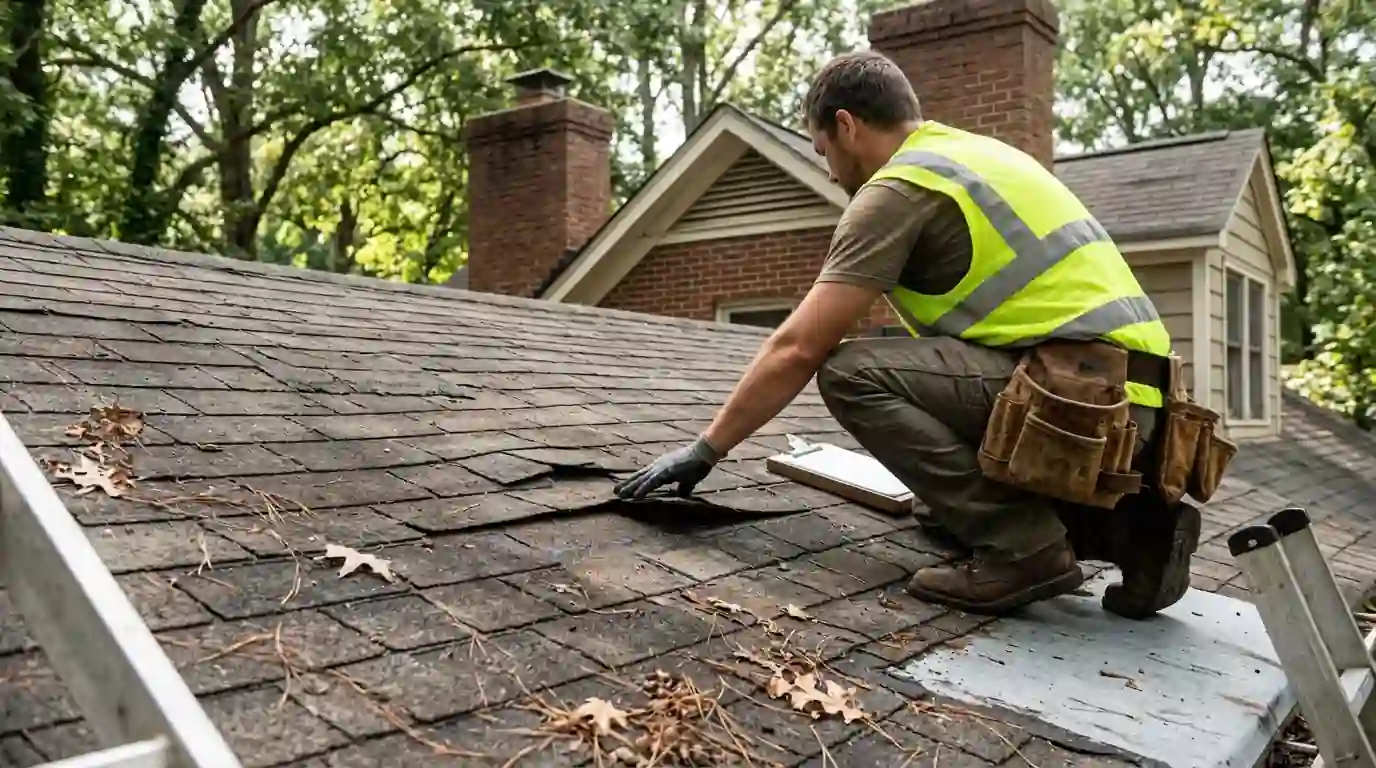
Repair makes sense when the roof is under about 15 years old, damage is limited to one area and the decking is sound. Replacement usually wins when the shingles are near the end of their life, damage covers a large share of the roof, leaks show up in several places, or a second layer is already on. Insurance and shingle match can tip the decision either way.
Start with the age of the roof
Age is the first question we ask, because it frames everything else. In Atlanta's heat, most standard architectural shingle roofs give somewhere around 20 to 30 years, and older three-tab roofs often less. If your roof is 8 or 10 years old and a storm tore off a few shingles, a repair is almost always the right call. The rest of the roof has plenty of life left, and putting replacement money into it would not make sense. A good repair on a young roof should blend in and last as long as the shingles around it.
Once a roof passes about 18 to 20 years, the math changes. The shingles have lost flexibility and granules, so they crack when we lift them to make a repair, and new shingles sit beside tired ones that will fail soon anyway. Paying for several repairs on a roof near the end of its life often costs close to a share of a new roof without adding many years. If you do not know the age, a permit search with your county or a look at the shingle style during an inspection usually narrows it down.
How much of the roof is damaged
A small, contained problem is a repair: a lifted section at the ridge, a cracked pipe boot, a single valley that took on water, or a limb strike over one room. Typical Atlanta-area repairs often run about $410 to $1,280, and larger ones with decking and flashing work can run higher. These are ranges that depend on the roof, not a quote, but they show how far a repair dollar can go. Compare that with a full replacement, which on a typical metro home often lands somewhere around $9,740 to $17,380, and a targeted fix on a sound roof is easy to justify.
When damage spreads across many slopes, repairs stop making sense. Widespread hail bruising, granule loss on every side, curling shingles throughout or blistering on the south and west faces all point to a roof that is wearing out as a whole. A common rule of thumb in the trade is that once roughly a quarter to a third of the roof needs work, replacement is usually the better value. At that point you are paying for labor, setup and disposal on a big job anyway, but you end up with a patchwork of old and new shingles instead of one uniform roof with fresh underlayment, flashing and vents.
- Repair territory. One or two problem spots, a roof under about 15 years old, sound decking and shingles that still lie flat and bend without cracking when we lift them.
- Gray area. A roof in its late teens with a single leak or some storm damage. A careful inspection and an honest talk about your plans for the house settles it.
- Replace territory. Damage across several slopes, curling or brittle shingles throughout, soft decking in more than one spot, or a roof near or past its expected service life.
Leaks in more than one place
One leak usually has one cause, and a good repair fixes it. A cracked boot, a loose piece of step flashing or a nail that backed out are all quick fixes. When we find leaks in two or three unrelated places, though, it usually means the whole roof system is aging, not just one detail. Underlayment dries out, sealant strips stop holding and flashing that was fine for years starts letting water by. Those are all signs of age, and they tend to show up together after twenty or so Georgia summers. Fixing one spot often just moves the leak somewhere nearby.
Chasing leaks one by one on that kind of roof gets expensive and frustrating, and each new leak risks wet insulation, stained drywall and soft decking. If you have paid for more than one leak repair in the last couple of years, it is worth asking for a full inspection and pricing both options side by side before the next storm makes the choice for you. An emergency replacement after a ceiling comes down is far more stressful and often more costly than one you plan on your own schedule in the fall or spring.
Layers, decking and shingle match
Some Atlanta homes, especially those built in the 1970s and 1980s, already have two layers of shingles. Building codes generally allow no more than two, so a roof like that has to be torn off down to the decking at replacement time. Repairs on a two-layer roof are also harder, because the top shingles sit unevenly and hide problems underneath. A full tear-off lets us see and replace soft decking instead of covering it up. It also gives us a chance to install new drip edge, underlayment and ventilation details the right way.
Shingle match is the other practical limit. Shingle colors and styles change over the years, and many older lines are discontinued. Even when the same color is still sold, new shingles look brighter than ones that have weathered for a decade. On a back slope that may not matter to you. On the front of the house, a patch that does not blend can bother you every day and can come up when you sell. When we cannot find a close enough shingle, we will tell you before any work starts, so you are not surprised.
- Two layers already. Plan on a full tear-off at replacement. Codes generally allow only two layers, and the extra weight and trapped heat shorten the life of the top layer.
- Soft decking. Spongy spots underfoot mean wet or rotted plywood. Small areas can be cut out during a repair; widespread soft decking points toward replacement.
- Discontinued shingles. If your shingle line is no longer made, we look for the closest color and profile. On front slopes, a poor blend may push you toward a full roof.
Where insurance fits in
If the damage came from a sudden event like hail, wind or a falling limb, your homeowners policy may help pay for the repair or replacement, minus your deductible. The insurer makes that decision after an adjuster inspects the roof. We are roofers, not public adjusters, so we cannot promise what a claim will pay, but we can document what we find and explain it in plain terms. Some policies may pay for a full replacement when hail damage covers most slopes, while others pay only for the damaged areas. Your policy wording and the adjuster's scope decide that, not the roofer.
Insurance does not cover wear and tear, so an old roof that is simply worn out is usually a replacement you plan and budget for yourself. Either way, the best next step is the same: an honest inspection, clear photos and prices for both repair and replacement on your actual roof. Call us any time, day or night, and we will tell you which one we would choose if it were our house. You get the facts and make the call; we never push a full roof when a repair will do.