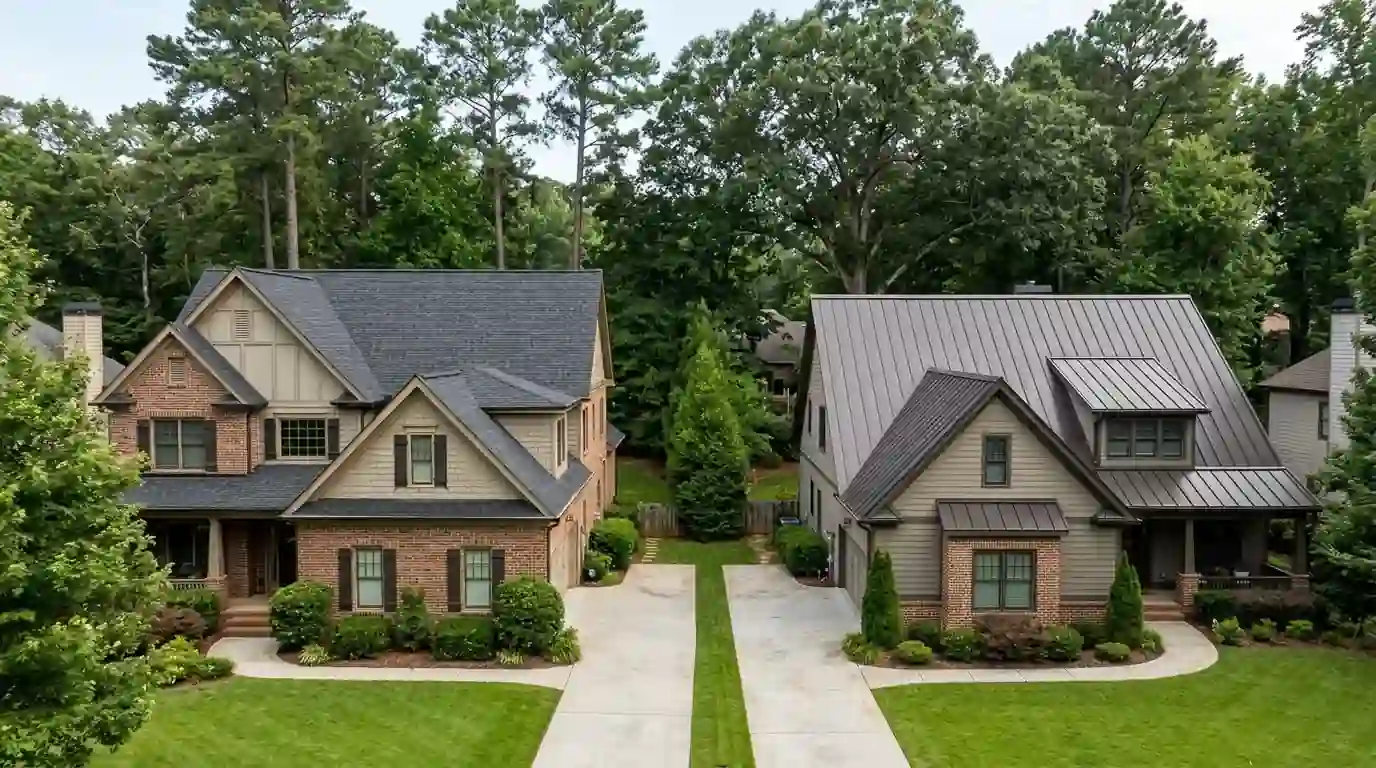
Architectural shingles cost far less up front and handle Atlanta weather well for roughly 20 to 30 years. Standing seam metal costs about two to three times as much but can last 40 to 60 years, sheds heat better and shrugs off wind. Metal is not noticeably louder over solid decking. If you plan to stay a long time, metal often pays off; if not, shingles usually win.
How Atlanta heat treats each roof
Georgia summers are hard on any roof. A dark shingle roof in July can run well above the air temperature, and that heat slowly cooks the oils out of the asphalt. Over the years the granules loosen, the shingles curl at the edges and the roof starts to look tired on the south and west slopes first. Good attic ventilation slows that aging, but it never stops it. That is a big reason we tell homeowners to expect the lower end of a shingle's advertised life here rather than the top end.
Metal handles heat differently. A painted steel or aluminum panel reflects a good share of the sun, especially in lighter colors, and it cools off quickly once the sun drops. The panels do expand and contract every day, which is why standing seam systems use clips that let the metal move. When those details are done right, the heat that wears out asphalt has very little effect on a metal roof over its long service life. Modern factory finishes also hold their color for decades, so a metal roof tends to look much the same at year twenty as it did the week we finished it.
Hail, wind and summer storms
Spring hail and summer thunderstorms are part of life in the metro, from Marietta to Lawrenceville. Standard architectural shingles take moderate hail reasonably well, but large stones can bruise the mat and knock off granules, which is what usually leads to an insurance claim. Impact-resistant shingles that pass the UL 2218 Class 4 test are a middle option if you want shingles but worry about hail. Wind is the other summer threat. Architectural shingles hold well when nailed correctly, but straight-line winds from a strong storm can lift tabs on older roofs where the sealant strips have dried out, and a few missing shingles can let in a lot of water.
Metal resists punctures and high wind very well, and a properly fastened standing seam roof rarely loses panels in a storm. The tradeoff is cosmetic: big hail can dent softer panels, and some policies treat dents as cosmetic damage that is not covered. Ask your agent about that before you choose. Heavier 24-gauge steel and textured or matte finishes help hide minor marks, and a dented panel still keeps water out. For many owners, a few small dings are an easy trade for a roof that will not lose shingles every time a line of storms rolls through.
- Architectural shingles. Good wind performance when nailed to the manufacturer's pattern, but heavy hail can bruise them and shorten their life even when the damage is hard to see from the yard.
- Impact-resistant shingles. Built to pass the Class 4 hail test, they cost somewhat more than standard shingles and may earn an insurance discount, based on the carrier and policy.
- Standing seam metal. Excellent against wind and punctures. Large hail can leave dents, especially on thinner gauges, so heavier panels and textured finishes help hide minor marks.
The noise myth
The most common worry we hear is that a metal roof will sound like a tin barn every time it rains. That picture comes from metal installed over open purlins on sheds and old farm buildings. On a house, we install metal over solid plywood or OSB decking with underlayment, and the attic and insulation sit between the roof and your bedroom ceiling. Each of those layers soaks up sound. The decking stops the panels from drumming, the underlayment softens the impact of each drop and the insulation on the attic floor does the rest before any sound reaches the rooms below.
With that assembly, most homeowners tell us rain on metal sounds about the same as rain on shingles, maybe a little crisper and brighter during a hard afternoon downpour. Hail is louder on any roof. If you have a bonus room or vaulted ceiling directly under the roof deck, it is worth talking about extra underlayment or insulation, but for a typical Atlanta ranch or two-story, noise should not be the deciding factor. Plenty of owners actually end up liking the soft, steady patter of a summer shower on metal.
Cost and lifespan side by side
Price is where the two roofs separate. For a typical Atlanta-area home, architectural shingles often run about $4.85 to $7.35 per square foot installed, including tear-off and new underlayment. Standing seam metal commonly runs about $11.60 to $17.85 per square foot, and exposed-fastener metal panels fall in between. Steep pitches, many valleys, skylights and chimneys push either number higher, so these are typical Atlanta-area ranges that depend on the roof, not a quote. Metal also usually needs more lead time, since panels are often formed to length for each job, and the crew needs specific training to handle trim and flashing.
Lifespan narrows the gap. In our heat, many architectural shingle roofs give 20 to 30 years. A well-installed standing seam roof can last 40 to 60 years with little more than periodic checks of sealants and fasteners. If you divide cost by years of service, metal can come out close to even, or ahead, for an owner who stays put. Shingles also need replacing sooner after a major hail event, and each new roof brings another tear-off, another dumpster and another week of noise in the driveway. Those costs rarely show up in a simple price comparison, but they add up over decades.
- Up-front cost. Shingles win clearly. Metal often costs two to three times as much for the same roof, which matters if you are budgeting for other repairs too.
- Expected life. Metal wins. Plan on two shingle roofs, sometimes three, during the life of one standing seam roof if both are installed and ventilated properly.
- Repairs. Shingles are easier and cheaper to patch after storm or tree damage. Metal repairs need the right panel profile and color, which can take longer to source.
Resale and how long you plan to stay
Resale value depends on the neighborhood more than the material. In many metro subdivisions, buyers expect architectural shingles and will not pay much extra for metal. In other areas, especially farmhouse styles, lake houses and homes north of the perimeter with larger lots, a standing seam roof can be a real selling point. A newer roof of either type helps a sale; a worn one hurts it. Home inspectors flag curling, granule loss and soft decking, and buyers often use those notes to ask for credits or repairs at closing.
So the honest question is how long you expect to own the house. If you may sell within ten years, a new architectural shingle roof usually gives you most of the benefit for far less money. If this is the house you plan to stay in, metal deserves a serious look. We are happy to price both on the same roof so you can compare real numbers instead of guesses. Give us a call any time and we will walk the roof and explain what we see in plain terms.